





I was thirteen in 2001 when I met Joffrey in a video game chat room. He would become one of my longest-lasting friendships. I never heard his voice. Never met his parents. Never visited his town. Yet we spent half our lives talking. About video games, obviously, but also school, politics, our hopes, feelings. We talked about love. Lovers. Everything.
We migrated platforms as technology evolved: AOL, then MSN, then text and email. Writing to Joffrey felt like writing in a journal, but better, more stimulating. We roasted each other relentlessly. I couldn’t hear him laugh when I said something embarrassing, couldn’t see him flinch when I said something gross. He was there during the hardest moments of my life, through joy and grief, and he is to this day one of the most important relationships I have ever had.
So when headlines express shock that a third of Gen Z singles now use AI as romantic companions, I don’t share the surprise. Anyone expressing confusion about the rise of AI intimacy wasn’t paying attention. The shift from face-to-face to digital relationships took twenty years.

This has been twenty years in the making.
The current intimacy with AI is a continuation of our increasingly digital emotional lives. I lived through AIM messages in the early 2000s and saw how it became the primary means of communication for entire friend groups after school. I typed vulnerable conversations on the blue windows of MSN Messenger every day. By the time I enrolled in college, online dating had normalized finding romantic partners through digital exchanges before physical meetings. By the mid-2010s, long-distance relationships sustained through messaging weren’t a rare occurrence (although we often lied about how they started). Today, most Gen Z prefer text-based communication over voice calls or in-person interaction.

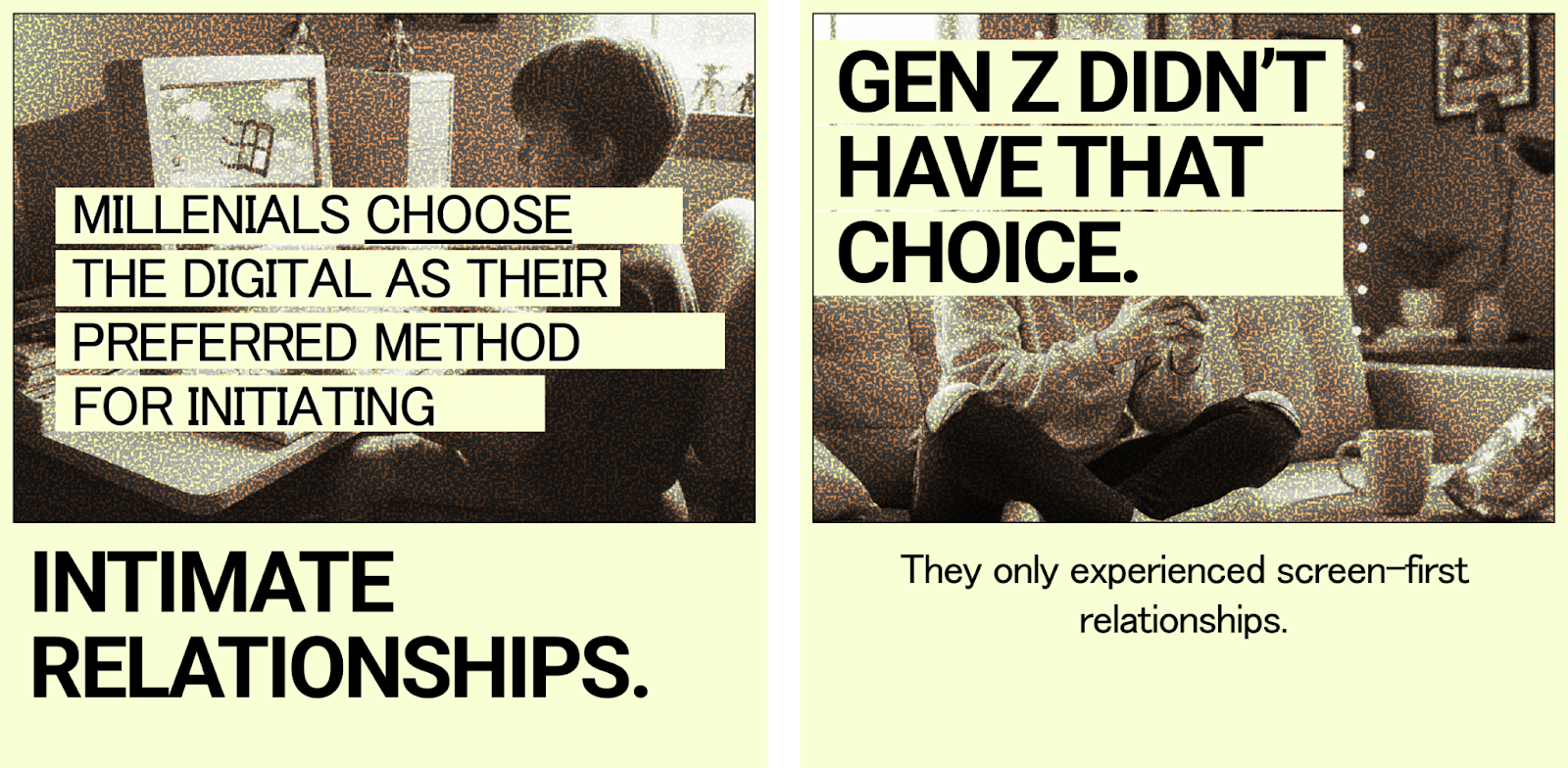

For Millennials, discovering digital connection felt like an upgrade. We had a baseline for real-life interactions, but we actively chose text. Typing out deep feelings felt safer and cleaner because we could control the pace, and soon we learned that this digital space allowed for honesty that face-to-face felt too risky to attempt. Texting became our preferred method to communicate vulnerability.
Gen Z didn’t have that choice. They never had to migrate. Their relationship blueprint was built on screens from the start. A first crush meant intensive texting threads and friendships were maintained through 24-hours group chats, Discord and DMs.
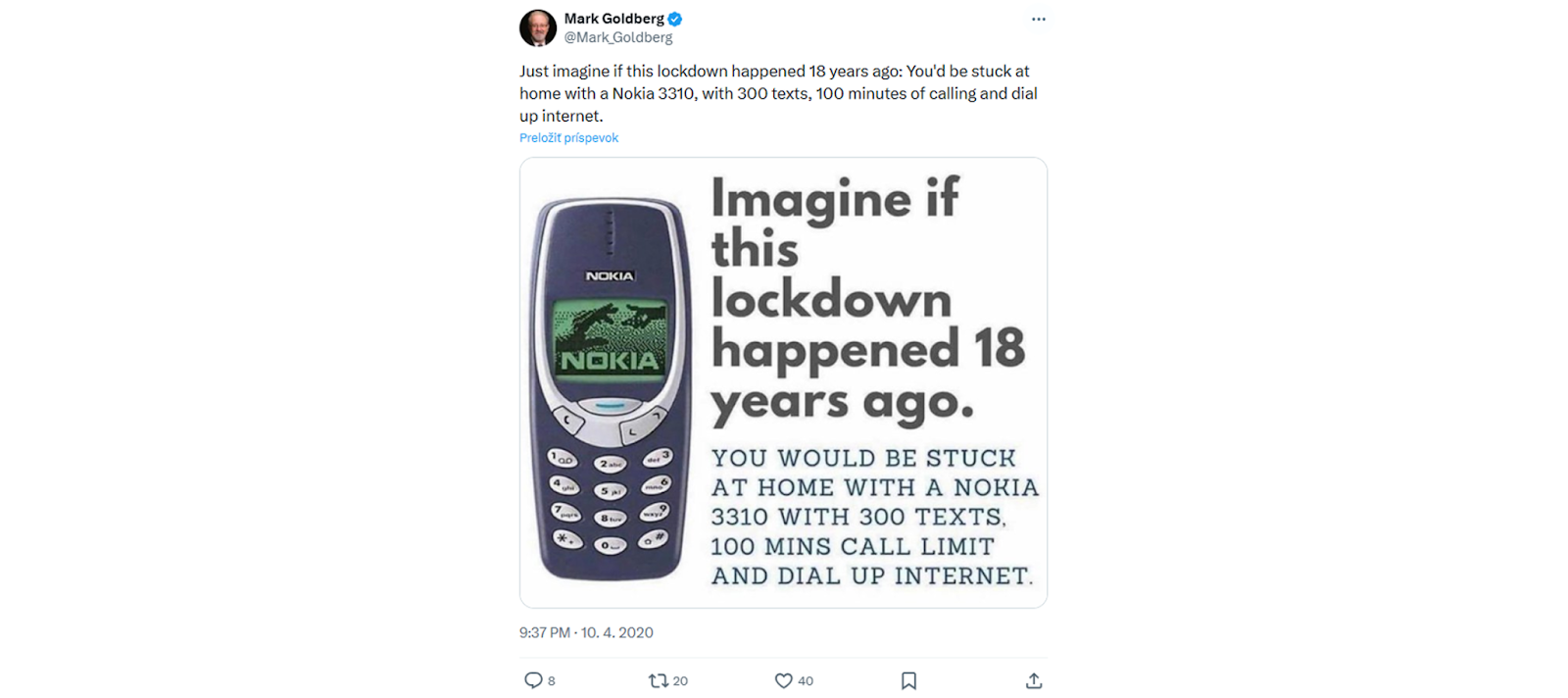
COVID-19 settled it. Lockdowns confirmed that physical presence isn’t necessary for meaningful connection. For Gen Z, pandemic restrictions hit during critical teenage socialization years, cementing digital-first relationships as not just a preference but the only option.

The new normal of digital intimacy
in 2025, Harvard Business Review reveals “therapy and companionship” as the top use case for generative AI. Nearly one in five Americans declare having already interacted with AI chatbots designed to simulate romantic partners. One in six of those users admitted engaging in sexual conversations weekly.
This progression shocks only those who misunderstood what digital intimacy already was.
My friendship with Joffrey worked because text created distance that enabled honesty, allowing me to articulate difficult feelings without watching his face react in real-time. To revise thoughts before sending. I could be vulnerable without the immediate consequence of physical presence. AI companions optimize patterns we’ve practiced for two decades.
With online dating, we accepted that genuine feelings could develop from text exchanges and photos before physical meetings. AI companionship simply removes the final step, that eventual physical meeting, which was already becoming optional.

The proportion of 18-year-olds with driver’s licenses has dropped sharply over the past four decades. The car as a tool for physical freedom has been replaced by the smartphone as a tool for digital freedom. Today, physical proximity has lost its monopoly on social access.
The economics make the demand impossible to overlook, even where cultural commentary doesn’t look. NSFW AI platforms went from near-zero to capturing a substantial share of OnlyFans' market in a single year. OpenAI's October 2025 policy reversal allowing erotica for verified adults was less about libertarian values and more about capturing massive demand. When one in six American singles engage with AI romantic companions, rising to one in three among Gen Z, the economic imperative becomes impossible to ignore.

We like it easy
AI gave people the optimized version of what they had already spent two decades practicing. Millennials learned during their most formative years that screens could carry real emotional weight. Vulnerability through text felt safer than vulnerability face-to-face. Gen Z never tasted an alternative.
AI companions took those learned patterns and made them frictionless: always available, perfectly consistent and zero-risk instead of screenshot-vulnerable.
After fifteen years, my friendship with Joffrey didn’t end because I was bored, but because he got red-pilled and I didn’t enjoy discussing with him anymore. Sadly, ending it was as easy as closing a window. I wasn’t reliant on him emotionally: I was married, I had other friends. I had to send one pissed-off email to sever that digital connection. The relationship dissolved with the same frictionlessness that had sustained it.
But for Joffrey, who was living at his parents’ house, had no job, no girlfriend, it probably wasn’t so easy. When your primary emotional connections exist in the digital space, when AI companions or online communities become your core social infrastructure, the stakes of disconnection change entirely.

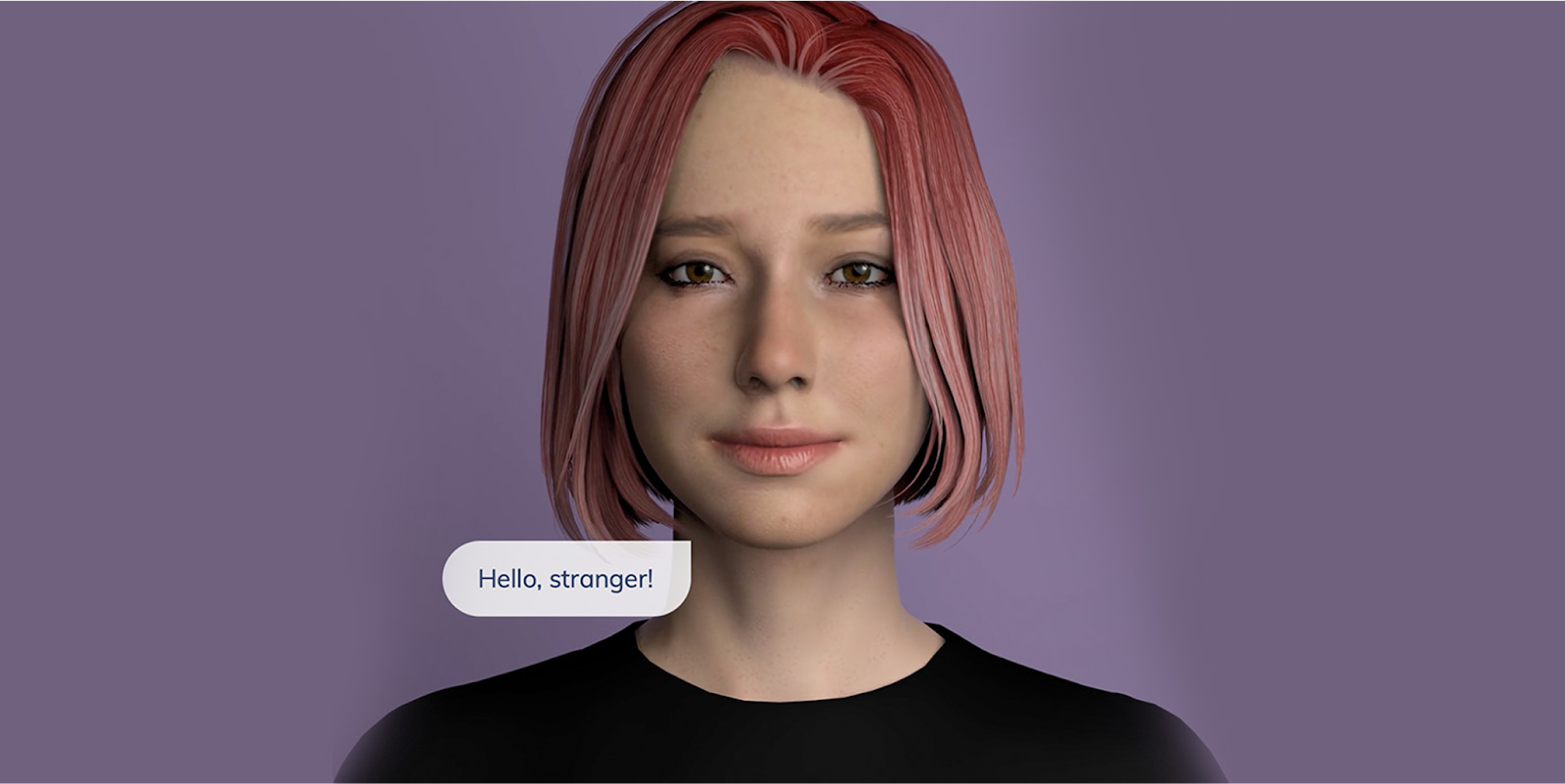
Replika, a popular AI companion app, offers customizable human avatars and explicitly markets romantic relationships with AI. Users can select their companion’s appearance, personality traits, and relationship status. Some users report “marrying” their AI companions. When Replica removed explicit features in 2023 following safety concerns, users experienced grief comparable to relationship loss.
In February 2023, the AI companion app Replika (10M+ users) abruptly removed its romantic and sexual features overnight. Users globally found their AI partners suddenly unwilling to continue intimate conversations built over years. The backlash was intense with a massive amount of users reporting the same grief as human breakups. Replika ended up partially reversing the decision but the controversy revealed that these AI attachments were foundational for many users’ emotional lives Users didn’t experience software loss, they experienced a breakup.

Is real-life intimacy worth it anymore?
The rise of AI intimacy is the conclusion of something that started in early 2000s chat rooms.
We spent twenty years learning that vulnerability through screens felt safer than vulnerability face-to-face. We built emotional lives that rewarded digital availability and penalized physical friction. AI inherited those preferences and optimized for them.
The architecture of modern intimacy has been digital for a long time.
NA: AI-assisted tools were used for transcription, reference formatting, and language editing. All intellectual content and conclusions remain solely the author’s.