




AI Key Takeaways
AI is a field of construction for a small, fluent minority, and an occasional service for most people.
Only about one in five US adults relies on AI daily, and only about 3 percent of users pay for it.
What separates the groups is mostly practice, along with the time, money and exposure that practice requires.
Many people want relief, AI that removes friction without asking for attention, and embedded defaults such as Gemini deliver it while asking for no decision.
Products built by builders tend to demand the effort most users hoped AI would remove, and the public asks for control as limits, transparency and the right to refuse.
AI has split into two realities: for a small, fluent minority, it has become a field of construction where almost anything can be imagined and built. For most people, it is a service consulted now and then: a question goes in, an answer comes out.
The products, the hype and much of the public debate are written from inside the first reality, while most users live in the second, and the history of successful products foretell us that the AI that succeeds with the general public will be the AI that serves the second without asking it to become the first.
Although chatbot use is rising in the United States, about half of U.S. adults say they never use one.
The open field and the one-way exchange
The builder’s view has a recent manifesto. In April 2020, the investor Marc Andreessen published “It’s Time to Build,” arguing that Western institutions had failed through a reluctance to act and calling for a renewed commitment to building across infrastructure, manufacturing, housing and healthcare. The phrase became a rallying cry in Silicon Valley, and AI has carried it down to the individual. A fluent user can now assemble agents to sort email, compare contracts, prototype an app or automate a weekly report. People in this group are often inventive, and many build alone.
The problem is desire. We need to *want* these things. The problem is inertia. We need to want these things more than we want to prevent these things. The problem is regulatory capture. We need to want new companies to build these things, even if incumbents don’t like it, even if only to force the incumbents to build these things. And the problem is will. We need to build these things.
And we need to separate the imperative to build these things from ideology and politics. Both sides need to contribute to building.
-Marc Andreessen published “It’s Time to Build”
Most people meet a different AI. They type a request into a chatbot and receive a result, the way they would use a search engine. They have heard a great deal about AI, and they use it occasionally, and the open field the builders describe remains abstract to them.
Who gets to be a builder
The builders are a small group. In Menlo Ventures’ 2025 survey of 5,031 US adults, 61 percent had used AI in the previous six months, but only about one in five relied on it daily, and only about 3 percent of users paid for an AI service. Pew Research Center data shows how differently the two groups feel: 47 percent of AI experts said they were more excited than concerned about AI’s growing role in daily life, compared with 11 percent of the general public.
What separates them is mostly practice. A 2025 study by researchers from the University of Maryland, Microsoft and the University of Massachusetts Amherst found that people who frequently use AI for writing tasks could recognize AI-generated text almost perfectly without any training, while people who rarely or never use it were poor detectors and overestimated their ability. Fluency comes from repeated use.
Building also requires a form of conceptual imagination: the ability to see what a tool could do in one’s own work, and to translate that into a request the system can act on.
Awareness that AI exists is common. Understanding its opportunities, its risks and its consequences well enough to design with it is rare, and it depends on time, money, subscriptions and exposure that most people do not have to spare.
Relief as a legitimate demand
Many people also have no wish to become builders. Slavoj Žižek put a similar preference memorably in a 2014 Guardian webchat, speaking about participatory politics.
“I want a certain degree of alienation. I want some nameless agency just to do these relatively efficiently, so that things function, and I can do what I really want to do.”
Slavoj Žižek, Guardian webchat, 2014, via Verso Books
But for someone working long hours, a tool that requires setup and supervision is one more task.
What this group wants is relief:
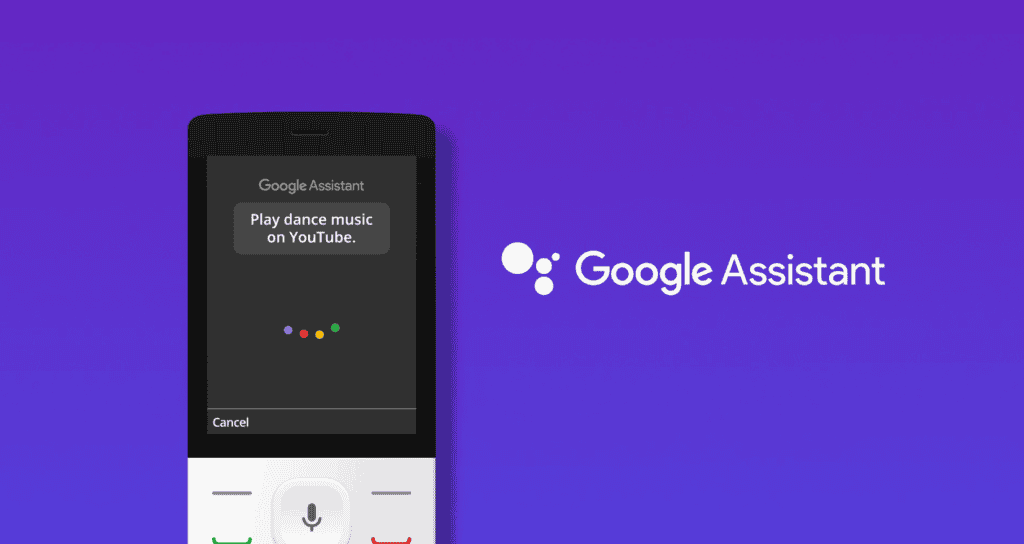
AI that removes friction without asking for attention. Look at Google’s strategy. Gemini is built into Gmail, Docs and Android, and Google began winding down Google Assistant on September 4, 2026, moving eligible Android devices to Gemini as their default assistant. When people say “Hey Google,” Gemini now answers. Google announced that the Gemini app had reached a billion monthly active users, a figure critics note is boosted by Gemini’s status as a passive default on Android.
AI delivers relief because it runs in the background and asks for no decision, and for the same reason most of its users never choose it, configure it or fully understand what it does.
Builders design for builders
Products tend to reflect the habits of the people who build and fund them. Interfaces that assume users will write detailed prompts, chain tools together or monitor agents make sense to the 3 percent who already work that way.
For everyone else, they ask for exactly the effort people were hoping AI would remove.
Survey data suggests the public wants a different kind of control. In Pew’s June 2025 survey, 73 percent of Americans said they would let AI assist with day-to-day tasks, and 61 percent said they wanted more control over how AI is used in their lives. That control means limits, transparency and the ability to refuse. Building and maintaining one’s own system is a separate demand that most people have never made.
Two kinds of literacy
AI can work well for most people while the gap between the two realities remains, as long as the gap is acknowledged.
Builders benefit from remembering that their experience of AI is exceptional, and that the general public’s caution is a reasonable response to a technology it encounters mostly as noise, hype and occasional help.
The public benefits from enough literacy to judge the AI that is increasingly built into its phones and inboxes: what it does, what it sees and what it decides on their behalf. Relief without that understanding leaves people dependent on systems they never chose, and the builders are the only group currently in a position to make those systems legible.
I recently (sadly) came to the realization that most people aren’t advanced AI users, and I shouldn’t expect them to be. At first I wasn’t sure how I felt about that. Part of me was a bit disappointed, since I know what’s possible when you really dig into the technology. Turns out I’m the one who comes off as the crazy AI-obsessed nerd guy lol. Your essay helped me make sense of it though. Most people just want AI to handle a task for them and then step aside, and that’s a completely reasonable thing to want. And that's how it's gonna be for most folks...
Builders vs farmers! Interesting numbers, I wonder how similar AI is to crypto/bitcoin. It's a theme I've been following for a while.
Do you have a hypothesis for why people expected AI to remove friction?