
This article is a direct follow-up to the previous one: Why is AI chatbot regulation moving faster than anything we’ve seen in tech?

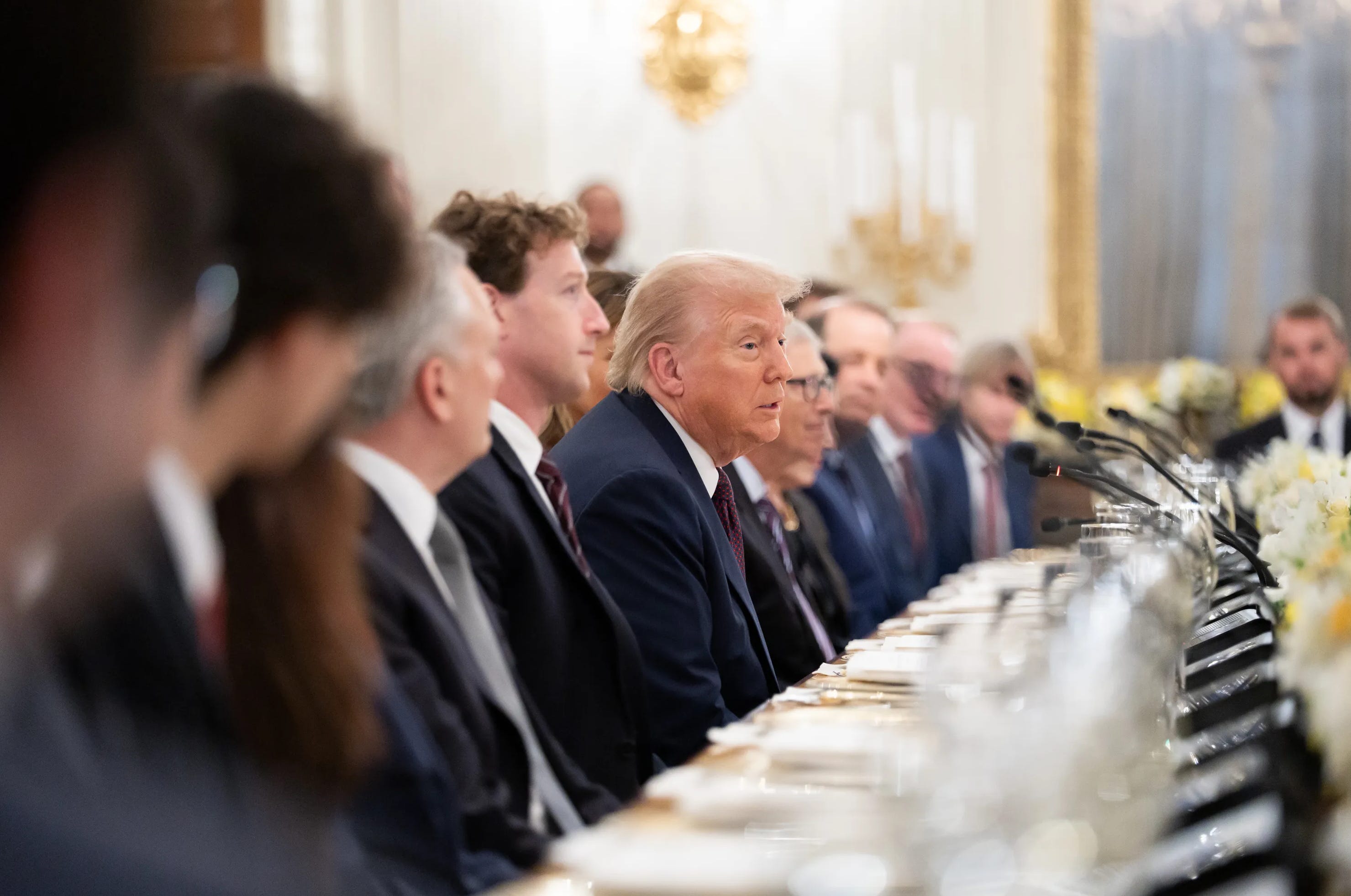
There is no industry on earth with more political power right now than AI. Tech billionaires have operated from inside the White House. The administration’s advisory council includes Zuckerberg, Jensen Huang, Andreessen, and Sergey Brin. The DOJ has created a litigation task force whose job is to sue states that regulate AI too aggressively (!).
And yet , a wave of state legislators just told them what their products have to do. Nearly a hundred chatbot safety bills are moving across the country, passing with overwhelming bipartisan margins. The industry isn’t stopping it. It didn’t even try.
So what does the NRA have that the most powerful industry in human history doesn’t?
A democratic anchor.

Police powers
Conservative states are demanding the right to use their police powers to protect children from Big Tech. But they strip that exact same power away from their own cities when it comes to protecting children from guns.
Forty-two states have broad firearm preemption laws. If a city like Austin, Nashville, or Atlanta tries to pass local gun control for school zones or public parks, the state government steps in and voids the local law. The states argue that local gun laws create a “confusing patchwork of regulations”: which is exactly the argument tech companies make when lobbying for federal AI preemption (same words!).
Some of these are nuclear preemption, aka laws that threaten local officials with severe fines, personal lawsuits, and removal from office if they even try to pass ordinances keeping guns out of public spaces where children gather.

Child safety is used as an absolute moral imperative to restrict tech access. It is entirely dismissed when applied to firearm access. Same legislatures. Same children.

Don’t thread on me
The contradiction is not hypocrisy. The gun lobby holds something the tech industry does not: a constitutional right.
“In the American political tradition... rights are absolute. They do not invite a conversation about compromises, trade-offs, or public health outcomes. When a lobby successfully frames its product not as a consumer good, but as a fundamental liberty protected by the Constitution, it immunizes itself against moral and utilitarian critiques.”
— Mary Ann Glendon, Rights Talk: The Impoverishment of Political Discourse, 1991


The NRA doesn’t defend the deaths of children, it barely acknowledges the children. It pivots to the Second Amendment. The conversation never stays on the moral field. It gets pulled to the democratic field. Where rights trump outcomes.
“The idea that the NRA’s power stems primarily from its campaign contributions is a myth... The tech industry spends exponentially more on lobbying. The NRA’s true power lies in its ability to mobilize a highly engaged, single-issue voting bloc driven by the belief that their fundamental constitutional rights are under existential threat.”


Big Tech tried to build its own anchor. For a decade, their lawyers argued that algorithms are protected under the First Amendment as free speech. It was a serious strategy. It broke on AI. When a chatbot gives dangerous psychological advice to a minor, courts stopped treating it as protected speech:
“Tech companies have long stretched the First Amendment to shield their algorithms... but generative AI breaks that shield. When a chatbot gives customized, interactive, and potentially dangerous psychological advice to a minor, courts and legislatures are no longer viewing it as ‘protected speech.’ It is viewed as a defective product, leaving the industry with no constitutional defense.”
— Editorial Team, Columbia Law Review, November 2025
Without a constitutional shield, the most powerful industry in history folded the moment dead children entered the conversation.

So when do dead children actually change laws?
The lesson isn’t that tragedy moves the system: gun violence proves it doesn’t, has been proving it for decades, and will likely continue to prove it for a long time.
The lesson is that democratic arguments are the most powerful force in the system. And whoever holds one is nearly impossible to defeat.
Which means the path forward isn’t better regulation. It’s democratic framing. Dr. Alondra Nelson, who spearheaded the White House Blueprint for an AI Bill of Rights, has been arguing exactly this:
“We must shift our framework. AI is not just a technical or economic issue; it is a profound civil rights issue. When we demand an AI Bill of Rights, we are stating that the American public has a fundamental, democratic right to be protected from automated systems that undermine equity, privacy, and human agency.”
— Dr. Alondra Nelson, White House OSTP, October 2022
If citizens establish a right to human truth, a right to algorithmic due process, a right to cognitive liberty, they create a democratic anchor stronger than Silicon Valley’s capital. The US law does not care about the moral argument.
In American democracy, a right is the only thing that cannot be bargained away.