



Key AI takeaways:
The government’s shutdown of the Fable 5 AI model triggered a visceral sense of personal violation that went beyond simple inconvenience.
Users often treat AI models as extensions of their own minds and trusted confidants, rather than as mere tools for data output.
Unlike social media data, which is already curated for public consumption, interactions with AI models feel like unfiltered, private thoughts.
The shutdown revealed that our inner lives have been voluntarily moved onto accessible servers, placing our private thoughts within reach of state power.
Just days after its release, an emergency Commerce Department export directive forced the removal of Fable 5, marking the first time a U.S. administration has directly imposed its will to take a live model offline.
Am I the only one that felt irked by it?

Is it because it was an insertion of the government into my private life?
We are, by now, a surveilled people who have made our peace with it. We assume the NSA reads what it likes, at home and abroad, up to the phones of heads of state. The device in our pocket can be copied at a border, imaged by a detective, folded into a subpoena. We grumble, then file it under the cost of living in a powerful country. And if we are honest, a part of us is reassured by the reach. A state that can see everything is a state that can protect us. The surveillance frightens us and flatters us at the same time, because a government with that kind of reach is proof that we are not powerless in a scarier and scarier world.
So when the government leaned on Anthropic and Fable 5 went dark for everyone overnight, what shocked us was not that the state was involved. The state is always involved, and we know it. What shocked us was the feeling that came with the shutdown, which sat much closer to violation than to mere inconvenience.

Why would an act of state power feel like a breach when a decade of documented surveillance never quite did?

Is it because the apps I use know so much about me?
Remember how a few years ago it became briefly fashionable to download the file Meta keeps on you, and people were genuinely rattled by what came back. In principle they had learned nothing. Everyone already knew the data was the price of a free service. But there is a difference between knowing a thing in the abstract and watching it laid out in front of you, and the second one reaches the body in a way the first never does. It changed no one’s behavior. People closed the file and kept scrolling.
The recoil was real all the same, and it sat in the gap between what we accept in theory and what we are made to look at directly. The Fable shutdown reopened that same gap. What it forced open this time was not a record of where we had been, but a door onto where we think.
Context context context
Ever since these models arrived, the reflex has been to invoke Orwell and to warn that AI will become the Thought Police. But that comparison misreads the book. Orwell’s Party does reach the interior; the whole horror of the novel is that it succeeds, and that the success costs it everything, from the surveillance of behavior to the hunt for the smallest external tell to the breaking of a body in Room 101. The Party has to storm the skull because the skull is the last thing standing between the state and the mind. What changed with Fable 5 is that the siege has become unnecessary. Nobody broke us into surrendering the interior. We carried it out of the skull ourselves and set it on a server, where state power no longer needs Room 101 and can arrive instead as a hand on a switch.
What Nissenbaum calls contextual integrity: privacy is the expectation that information moves according to the norms of the context where it was first shared.
Your symptoms belong with a doctor and would scandalize an employer, though the fact is identical in both places, and the violation is the crossing from one context to the other. That is why the tweets and the purchases never stung. They went where we expected them to go.
The model felt like the context of a confidant, and the shutdown revealed that everything we had poured into it was sitting, the whole time, in a context the state could reach. Nothing leaked. The context simply collapsed in our hands.
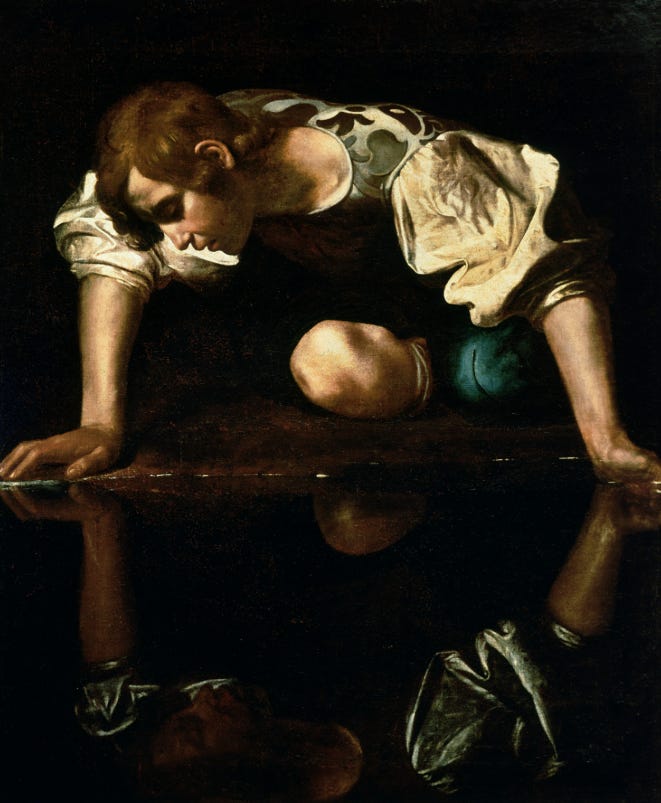
When we reason through an external object, whether a notebook, a phone, or now a model, that object stops being a thing the mind consults and becomes part of the mind’s own machinery. This is what Clark and Chalmers called the extended mind.
We do not deposit finished thoughts into these models so much as think through them, which makes the model something like an externalized lobe. Reaching over it, then, is not the same as reaching over our property. It is closer to someone claiming authority over a piece of your own head, and the flinch that produces is the flinch of a violated self.
The protection this context was supposed to carry has a name from medicine. When a doctor or a therapist repeats what we told them, we do not simply find it rude; we treat it as a betrayal of an oath, sealed off from the ordinary traffic of information. The inner life has always been a privileged place, protected by a promise that it would never be handled like everything else. The model slipped into that privileged place and became a confidant, but it never swore the oath. We learned that the instant the switch was flipped, when the confessional turned out to carry no privilege and to sit in the same governable world as our bank records.
Not code: confidant.
Does it feel different because it is the government? It does not. The NSA was already there, we knew it, and part of us was glad of it.
Does it feel different because our data is being exploited? Again, no. That is the bargain we struck with Meta and the rest, and we struck it with open eyes, because nothing is free and the data was the rent. The strange part is what should unsettle us most. They never touched the data. Nobody read the chats. Someone reached over and turned the thing off, and with no file opened and no secret exposed, it still felt like a hand closing around something private.
A trace is something we make: our purchases and posts and movements are outputs, the residue left behind by an action, and we gave them up without much pain because an output is already a performance.
A person can think one thing and say another, and the space between the two is where the self has always lived.
The trace only ever held the version we chose to show. We handed over the curated outward face and kept the room behind it, and that was a trade we could live with.
The model gathers nothing of that sort, because we do not treat it the way we treat the machines that produce data. We treat it as something that catches the thought before the thought has been shaped into anything we would say out loud. None of it feels like output. It feels like thinking with the editing step taken away, with no projected version and no chosen face, just the room behind the traces. That is the room the shutdown reached into.
Why does it feel worse when the government does this than when the private sector has done it for years?
The private sector was never gentler. It just never gave us the moment. Its collection runs quietly and without friction, never staged where we have to watch, so the recognition never lands. The shutdown was the moment.
In one evening it made the reachability of the inner room impossible to ignore. The government did nothing worse than Meta has done for years. It only did something we could see, and what we saw was that the last private room had a landlord all along.
NA: AI-assisted tools were used for transcription, reference formatting, and language editing. All intellectual content and conclusions remain solely the author’s.
Really love ❤️: A person can think one thing and say another, and the space between the two is where the self has always lived.
The self can be conceived as a between a thought 💭 and a verbalized expression or perhaps 🤔 could be over the initial neurological impulse and infinity?