




Key AI takeaways:
As AI makes execution and engineering more common, companies are elevating design to the boardroom to focus on taste, coherence, and intentional interfaces.
In just over a year, major organizations like Samsung, Microsoft, Meta, and the U.S. government have appointed their first-ever Chief Design Officers.
Companies are hiring these leaders to ensure their products feel unique and opinionated rather than indistinguishable from AI-generated defaults.
While the authority of these new roles varies across companies, the trend confirms that design is no longer just a final styling step in the production process.
When I wrote that the Chief Design Officer would become a C-suite fixture, it was a forecast. I hedged it with “likely.” I shouldn’t have.
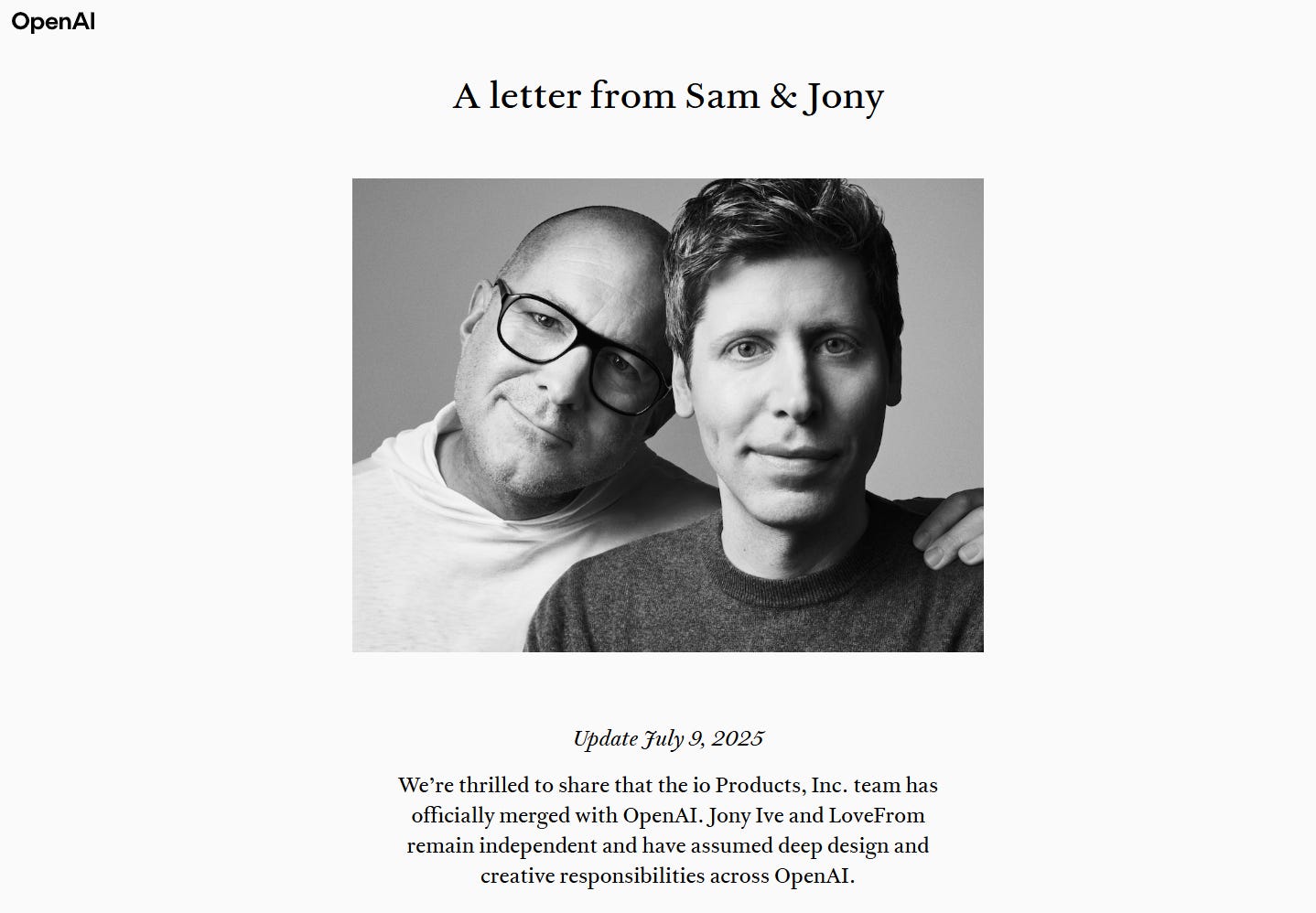
In about thirteen months, four major organizations created the role of Chief Design Officer for the first time in their history. Samsung in April 2025. The United States government in August. Meta in December. Microsoft in May 2026. A fifth, OpenAI, didn’t use the title but spent $6.4 billion to put Jony Ive in charge of design across the company. These are the same bet, placed five times.

When the model writes the code, generates the layout, and ships the average, engineering stops being a moat. What’s left is the thing AI defaults to the mean on: taste, coherence, the feeling of an interface someone actually decided. So companies are buying that judgment and seating it at the top.

The appointments
Microsoft named Jon Friedman its first Chief Design Officer in May 2026, after more than twenty years at the company. He framed the job around building products people can trust in a market where AI makes everything feel the same, and around stitching design, engineering, and product into one thing instead of three. The honest footnote: the role lives inside Microsoft 365 and reports to an EVP, not to Nadella. The title is ahead of the org chart. But the title exists now, at a company that spent decades treating design as the paint you apply after engineering ships.
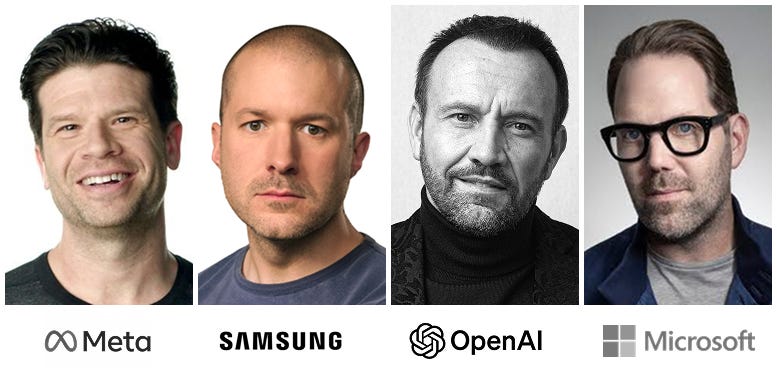
Meta moved in December. It hired Alan Dye, who ran Apple’s human interface design for a decade and shaped Liquid Glass and the Vision Pro, and made him Chief Design Officer of a new studio inside Reality Labs spanning hardware, software, and AI. The same month, OpenAI’s hardware bet came into focus: the $6.4 billion purchase of Jony Ive’s studio, a screenless device, Ive running design across the whole company. The device has since slipped to 2027 and lost its name to a trademark fight. The design bet didn’t change. Two research-and-engineering companies, both deciding the next round is won at the point where a human touches the machine.
Samsung moved first and most bluntly. In April 2025 it gave Mauro Porcini, poached from PepsiCo, a dual title: President and Chief Design Officer, with 1,500 designers under him.
Porcini has spent the months since arguing that tech should drop minimalism for something more expressive and opinionated. a whole strategy: be legibly different, or be interchangeable.
“The entire tech world started to shift towards minimalism and this very essential design aesthetic inspired by this mantra form follow function. I’m proposing a new formula that evolves from form follow function to form and function follow meaning.”
— Mauro Porcini (Chief Design Officer, Samsung), PrintMag: Design Matters
A hardware company that won for years on specs and screen quality, now deciding that specs are table stakes and the premium has to come from somewhere a competitor can’t copy off a spec sheet.
Porcini has spent the months since arguing that tech should drop minimalism for something more expressive and opinionated. a whole strategy: be legibly different, or be interchangeable.
A national imperative
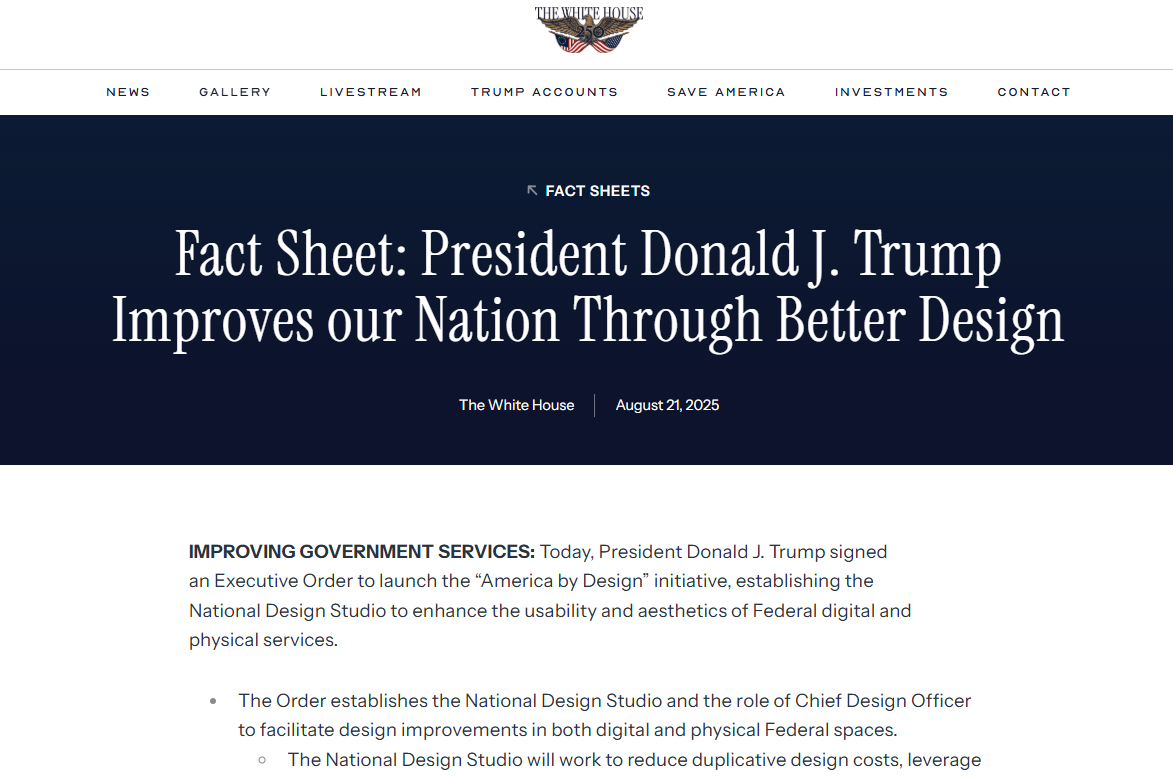
Then there’s the appointment that should stop anyone who thinks this is a tech-sector fad. The United States government created a Chief Design Officer in August 2025 and handed it to Joe Gebbia, Airbnb’s co-founder, reporting to the White House chief of staff out of the Eisenhower Building. The brief: rebuild roughly 26,000 federal websites to be, in his words, as satisfying to use as the Apple Store.
“My directive is to update today’s government services to be as satisfying to use as the Apple Store: beautifully designed, great user experience, run on modern software.”
— Joe Gebbia (U.S. Chief Design Officer), via FedScoop
Strip the politics and the mechanism is the same one the tech boards are acting on. When an institution usually wants to fix how it looks, it hires a communications shop. They change the copy and the logo and call it a rebrand. Putting a product designer at the top, reporting to the chief of staff, is a different claim: that the interface is the institution, and a slow, ugly, confusing one quietly tells every citizen the thing behind it is incompetent. Design as a show of capability, not decoration.
What I got slightly wrong
My prediction said the CDO would shape product direction, technical investment, and market positioning. Some of these appointments are exactly that. Porcini at President level is. Gebbia reporting to the chief of staff is. But Friedman reports to an EVP, and Dye to a CTO. The title arrived first. The full authority is uneven, and in a couple of cases still aspirational.
The direction is unambiguous and the speed surprised me. The era where design was the last station on the assembly line is over, though. You don’t invent a first-ever C-suite role four times in one year for a styling department.
NA: AI-assisted tools were used for transcription, reference formatting, and language editing. All intellectual content and conclusions remain solely the author’s.