




AI Key Takeaways:
Education was never about learning. It was about ranking people in a society that needed hierarchy but could not rely on birthright.
AI destroyed the cost structure that made signals credible. When a resume takes thirty seconds and an essay takes five minutes, effort stops being a differentiator.
The skills we told people to prioritize got commoditized. The skills we told people were impractical became the ones AI cannot replace.
Teachers ask how to make exams AI proof. Wrong question. The right question is how to evaluate when AI makes everyone perform equally well.
We are watching a value system collapse in real time, unable to build its replacement because the replacement would contradict everything we claim to believe about fairness and opportunity.

Index:
Clinging to a value system that already stopped working
The system ranked people. The ranking required shared values.
How AI breaks this
Blue-collar jobs automated away? Morally fine. STEM degrees being useless? Intellectually inacceptable
Enforced mediocrity
Teachers ask how to make exams AI-proof. Wrong question. Students will use AI their entire careers. The real question is how to evaluate when AI makes everyone perform equally well.
They can’t ask this openly because it admits education is about ranking, not learning. So they ban AI and call it academic integrity while knowing students will work in environments where AI is baseline.

My brother is a school teacher, he asked me what I think about AI in the classroom.
Is it cheating? Can students really learn if they use it? Isn’t it making them dumber, encouraging them to be lazy, to cut corners?
My brother is a school teacher, he asked me which AI model I would recommend for his job.
In a taxi to the train station, I showed him how to use Claude to help with lesson planning. “I don’t have twenty euros a month to spend on that.” Fair enough. But he humoured me. He tried it on the train from Paris to Bayonne (a four-hour journey). Before we passed Bordeaux, he had subscribed to the Pro plan. It was two years ago, and he uses it every day. Not to do less. Not to cut corners. To do considerably more.
Both conversations were about effort. So why the contradiction?
Because we treat school and the real world as separate systems with separate rules. In a classroom, using AI looks like evasion. In a workplace, not using it increasingly looks like negligence. But education, beyond the humanist ideal, beyond socialisation, has always served the practical function of preparing students to become citizens, workers. Participants in the economy they will inherit. And AI is already embedded in that economy. It will likely remain so.
“The five-paragraph essay did not die with AI. It had been dying for years, choked by formulaic expectations, grading rubrics, and a lack of real intellectual risk... Students wrote not to explore ideas, but to guess what the professor wanted to hear. Professors graded not for originality, but for structure. ChatGPT simply optimized for that outcome.”
— Ezekiel Njuguna, Writer & Educator, June 2, 2025, ChatGPT Didn’t Destroy College; It Merely Exposed the Worthlessness of Most Higher Education as Delivered Today (Medium)

Clinging to a value system that already stopped working
This ‘economy of the effort’ is embedded in our value system.
Resumes used to be a conversation. Candidates signaled through effort: five hours to craft meant seriousness, care, investment. Employers recognized the signal: well-written resume showed capability, attention to detail, genuine interest. Both sides understood what was being communicated. The time cost made it credible. Individual skills made candidates stand out. The system worked because everyone agreed what the signals meant.
Then employers optimized their side with AI screening to handle volume. Candidates responded by optimizing theirs: use AI to write resumes for AI readers. Not to stand out anymore. To pass the filter. Every candidate who could have differentiated on personal merit now uses AI to meet baseline expectations. When everyone optimizes for the same AI evaluator, everyone looks identical.
Now recruiters complain that AI makes every candidate look equally qualified. They created this. They broke the agreed-upon value system by automating their side, forcing automation on the other side, then acting surprised when mutual comprehension collapsed.
“The average hiring manager today isn’t reading applications so much as grading AI against AI... The result is an arms race in text. Both sides are optimizing for keyword matching... The result is the process becoming less about talent and more about prompt engineering. Employers are already feeling the downside. They’re seeing more volume, [and] less differentiation.”
— Editorial Team, Polsky Center for Entrepreneurship and Innovation, January 15, 2026, The Hiring Process is Now an AI Arms Race
Instead of acknowledging the old signals don’t work, they keep trying to make the system fit. Why are we still pretending the resume means what it used to mean?

The system ranked people. The ranking required shared values.
“Every established order tends to produce the naturalization of its own arbitrariness.”
— Pierre Bourdieu, Outline of a Theory of Practice (1977)
For forty years, the value hierarchy was clear. STEM degrees ranked higher than humanities. Meritocracy ranked higher than nepotism. Hard work ranked higher than connections. Perfect grades signaled intelligence. Flawless writing signaled competence. These weren’t truths. They were shared agreements about how to rank people in a society that needed ranking.
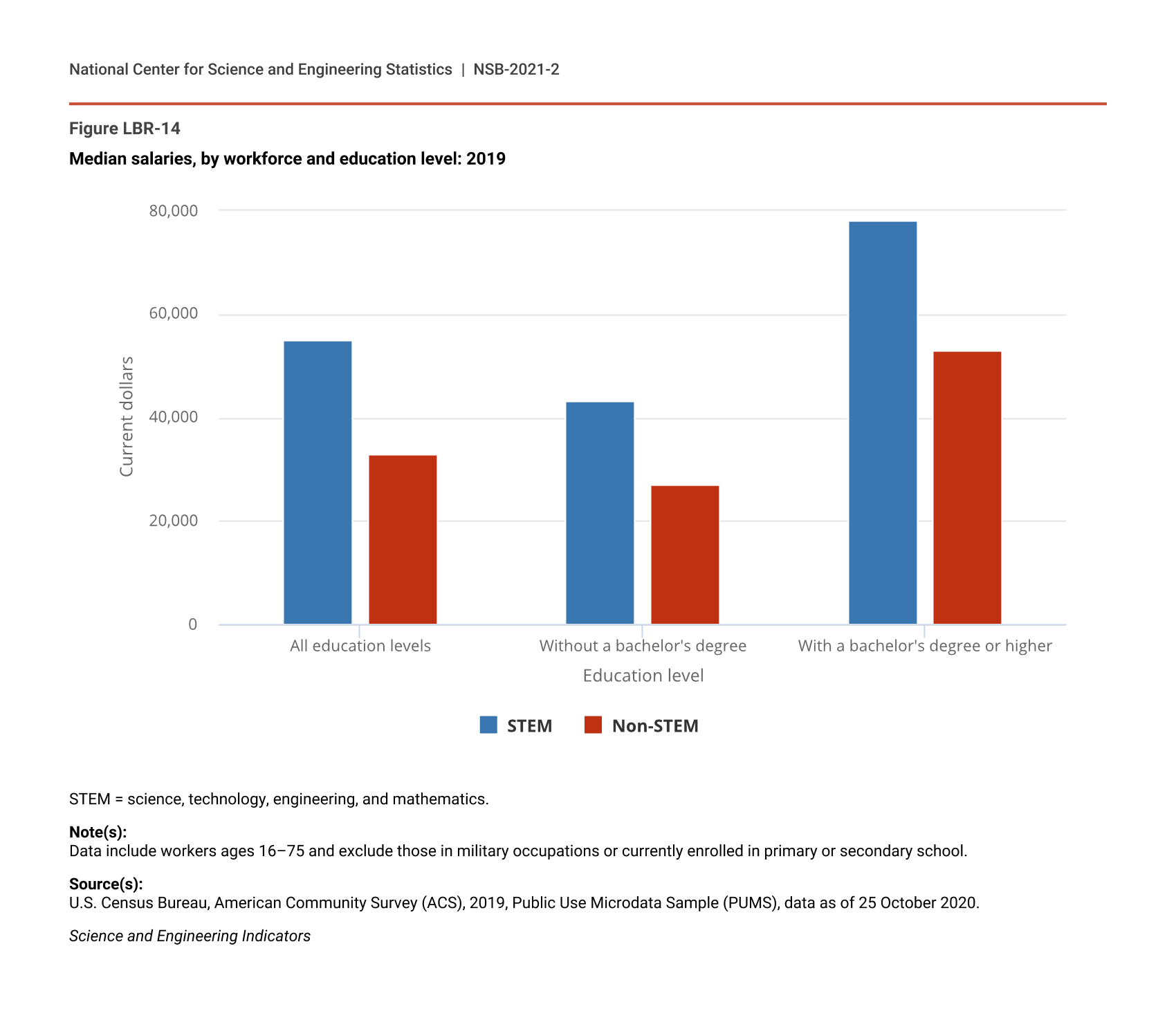

Education was never primarily about learning.
It was about creating hierarchy in a democracy that couldn’t rely on birthright.
You can learn most of what college teaches on YouTube for free. A Yale degree is worth ten times a community college degree despite covering very similar, if not identical material. A PhD signals you’re smarter than someone with a bachelor’s, whether you learned more or not. The system ranked people. The ranking required shared values.
If education was about learning, scholarships would go to struggling students. They go to top performers instead. We don’t fund learning. We reward performance. The system sorts people into hierarchy using metrics we agree to recognize as meaningful.
This worked because signals cost something. A hand-crafted resume took five hours. A personal essay took twenty. The cost was the point. Costly signals are credible signals. They separated people who cared enough to pay the price from people who didn’t. Smart kids, rich or poor, could understand this system and optimize for it. See what gets rewarded, perform to those standards, stand out. Society agreed on what mattered.

It’s a common mindset across western countries, and beyond
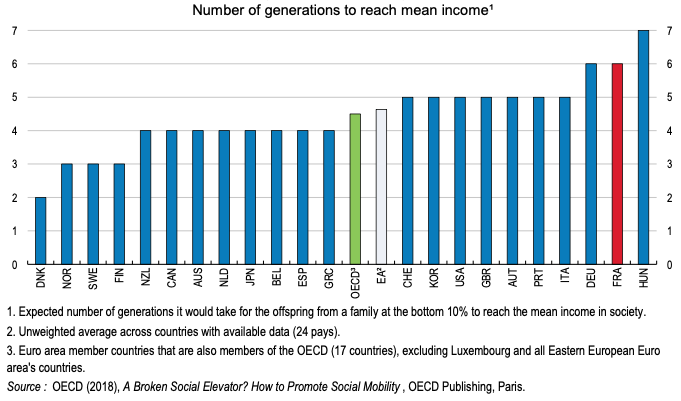
“It takes more than six generations in France for a person at the bottom end of income distribution to reach the mean.”
— Laurence Boone, OECD Chief Economist, CEPR VoxEU
The French data shows this clearly. Social mobility declined every decade since the 1980s. A child born into poverty has less chance of changing class than their parents did. The meritocratic ladder was already broken. But the shared belief system survived because individuals could still see it working. The scholarship student who made it. The immigrant who succeeded. The exceptions maintained the myth even as statistics showed it dying.
This was never fully true. The people who succeed aren’t those with best grades. They’re those with access to decision-makers who can vouch for them, short-circuiting formal evaluation entirely. But the myth was functional enough that individuals could believe credentials mattered. The system told people: work hard, get good grades, master technical skills, achieve credentials, secure employment. Enough people saw this work that the myth survived.

How AI breaks this
AI destroyed the cost structure that made signals credible. A resume now costs thirty seconds instead of five hours. An essay costs five minutes instead of twenty. Perfect performance on standardized tasks costs nothing. When signal costs drop to zero, signals become worthless.
“Everybody knows that STEM is the better investment. Governments know that. Parents know that.”
— Andreas Schleicher, OECD, World Economic Forum > Note: written in December 2014, a decade ago, capturing the height of the STEM-supremacy consensus, before the AI disruption
What used to be respected got commoditized. STEM capabilities that required years to master now take seconds with the right prompts. Technical competence that was supposed to guarantee employment became the baseline everyone has. The skills poor kids optimized for: hard skills, credentials, demonstrable competence, became abundant.

“I promise you, folks can make a lot more potentially with skilled manufacturing or the trades than they might with an art history degree.”
— Barack Obama, speech at GE plant, Waukesha, Wisconsin (January 2014), ABC News. Note: when even a Democratic president with a Columbia degree (which requires art history) reflexively reaches for humanities as the punchline, you know the value hierarchy was deeply entrenched.

Meanwhile the skills we mocked as impractical became differentiators. Art history majors dismissed as future baristas. Philosophy students told they’d never get jobs. Literature degrees considered self-indulgent wastes. These programs developed exactly what AI can’t commoditize: critical thinking, synthesis across domains, ability to question rather than just execute.
The inversion is complete. If AI can do what a STEM student learns, then the STEM student is as capable as anyone with access to AI. But the philosophy student has both the STEM capabilities through AI and the critical thinking philosophy developed. Rich kids went into humanities not through prescience but through privilege, as they could afford degrees that didn’t lead to jobs. They accidentally cultivated the skills that now differentiate while everyone else rationally optimized for skills that got commoditized.
“A thinking class is emerging. They’re reading philosophy and history. The rest of us? Just keep scrolling. Don’t worry about the big words. They’ll handle the big words for us.”
— Brené Brown, Researcher, Author & Podcaster, November 22, 2025, The Thinking Class and the Scrolling Class (Medium)
Teachers ask how to make exams AI-proof. Wrong question. Students will use AI their entire careers. The real question is how to evaluate when AI makes everyone perform equally well.
They can’t ask this openly because it admits education is about ranking, not learning. So they ban AI and call it academic integrity while knowing students will work in environments where AI is baseline.
One side adopts AI to optimize. Other side responds. Signal cost drops to zero. Information value collapses. Nobody planned this. Individual rational choices produced collective dysfunction.

Blue-collar jobs automated away? Morally fine. STEM degrees being useless? Intellectually inacceptable
We could accept automation replacing blue-collar work. Manual labor ranked low in our value system. Technology replacing lesser work fit our beliefs about progress: intellectual work superior to physical work, education superior to training. When factories automated, we told workers to retrain, get degrees, join the knowledge economy. The narrative worked because it aligned with existing values.
We cannot accept AI replacing white-collar work using the same logic. STEM degrees as irrelevant? Expensive colleges as wasted investment? Smart people whose skills got commoditized? This contradicts core beliefs. The people we told to get educated, work hard, master technical skills did everything right according to the value system. Now those signals mean nothing, and the skills that differentiate are ones we told people not to prioritize.
“Companies now view human labor as a constraint rather than a requirement for growth.”
The deeper issue is what these values were really about. We lie to ourselves about education being about learning when it was always about filtering. About salaried employment being about merit when it was often about connections. The system functioned on this lie because the lie was useful. It let democracy maintain hierarchy without admitting hierarchy is inherited.
AI made the dysfunction visible to everyone. Not just in statistics but in lived experience. Your perfect resume gets ignored. So does everyone’s. Your straight-A student can’t find work. Neither can anyone else’s. The system’s inability to differentiate became undeniable.

Enforced mediocrity
Alexis de Tocqueville warned about this in Democracy in America. Aristocracy relied on natural order: some people born better, hierarchy ordained by God or nature, no need to prove worth through achievement. Democracy rejected birthright but still needed hierarchy. The solution: rank by effort and achievement. Work hard, demonstrate capability, earn your place. This preserved hierarchy while claiming equality of opportunity.
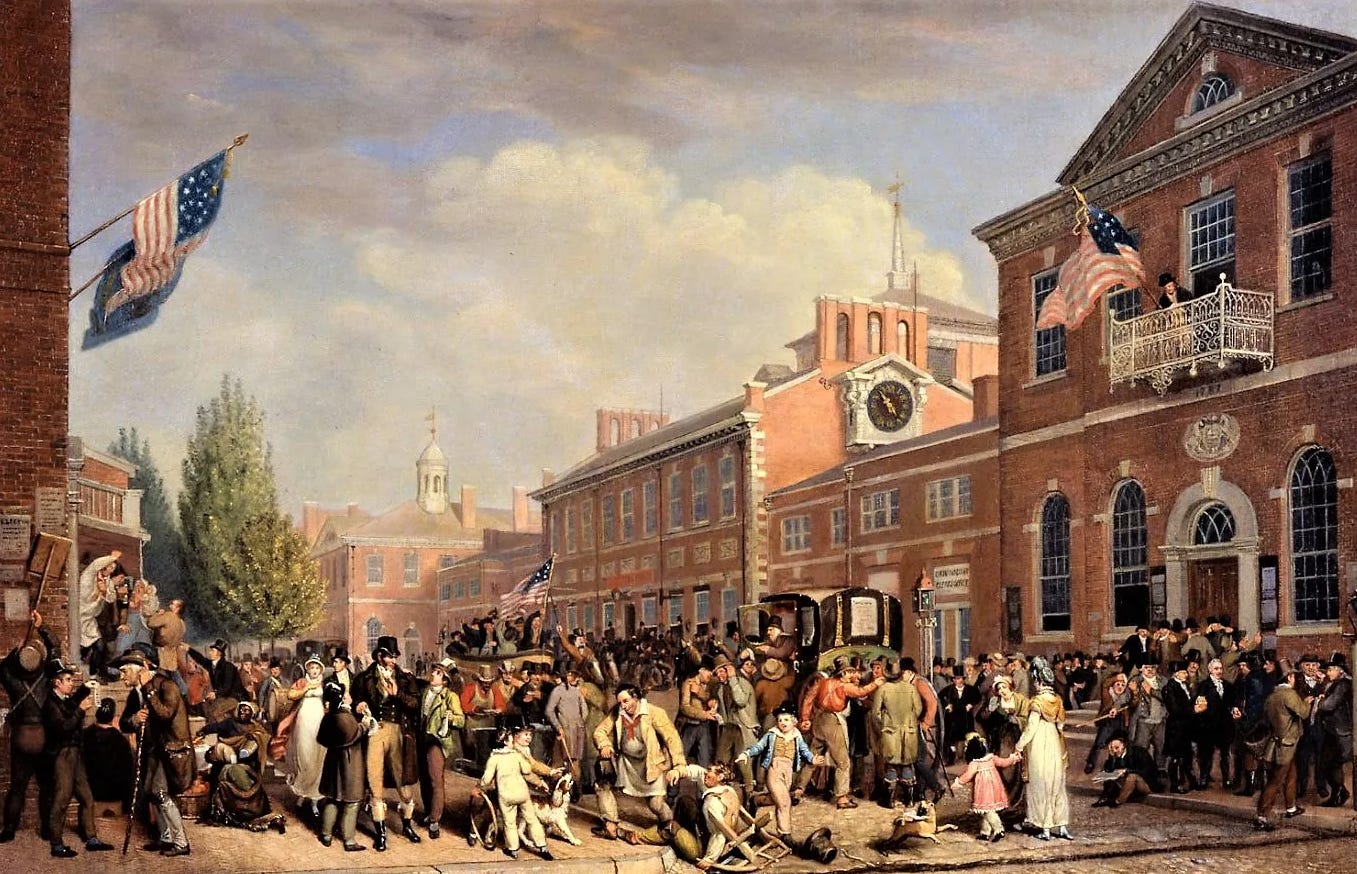
But Tocqueville identified the risk: tyranny of averageness (he called it “tyranny of the majority”, I am dramatizing slightly here). Without birthright to elevate some naturally, everyone gets pulled toward the mean. When effort is the differentiator, what happens when tools make effort invisible? When everyone can perform equally well with AI assistance, we’re back to the problem democracy was supposed to solve: how to create hierarchy among people born equal.
“Our findings indicate that while subjects using AI produce ideas of higher quality... there is a marked reduction in the variability of these ideas compared to those not using AI. This suggests that while GPT-4 aids in generating superior content, it might lead to more homogenized outputs.”
— Fabrizio Dell’Acqua et al., Researchers at Harvard, MIT & BCG, September 10, 2023, Navigating the Jagged Technological Frontier: Field Experimental Evidence of the Effects of AI on Knowledge Worker Productivity and Quality (MIT Sloan)
AI created exactly what Tocqueville feared: enforced mediocrity. Everyone has perfect grades now. Everyone writes flawlessly. Everyone performs technical tasks competently. We’re left with the aristocratic problem (some people need to rank higher than others) but without the aristocratic solution of birthright or the democratic solution of demonstrated merit.
The differentiators that were supposed to make democracy meritocratic got eliminated by tools that made performance universal.

Teachers hold onto old proxies because they need to rank students but the tools for ranking broke. They optimize for a wrong future: one where credentials still matter, where effort is still visible, where individual capability can still be measured. Students will use AI forever. We won’t (and don’t want to) prevent that. So what replaces grades and test scores as sorting mechanisms when AI makes everyone score identically?
“Is the problem really that too many Harvard students are genuinely doing excellent work? Or is the problem that Harvard’s grading system has become less useful as a sorting mechanism for internal honors, awards, and prestige distribution? ... Once you impose an artificial scarcity on top grades, you are no longer just rewarding mastery. You are rationing distinction.”
— Austin Tamargo, Writer & Cultural Commentator, March 13, 2026, The Manufactured Scarcity of Success (Medium)
Schools give computer-based exams that invite AI use, then punish students for using it. Recruiters screen with AI, then complain everyone looks the same. Everyone participating in theater that nobody believes in but nobody can stop. The equilibrium is worse for everyone.

People haven’t changed their value system quickly enough because value systems are social, not individual.
You can’t decide alone that grades don’t matter when society still treats them as meaningful. You can’t stop optimizing for credentials when employers still ask for them. The shared beliefs that organized democratic society for two centuries need to shift collectively. That takes time we don’t have.
AI changed context faster than we could build new shared values. We’re stuck between systems. Old values don’t work anymore. New values aren’t socially agreed upon. We’re in Plato’s cave, optimizing shadows on the wall. The resume game is shadows. The real game happens outside the cave through networks and access we can’t admit matter more than merit. AI didn’t create this. It made the shadows so obviously not-real that we can’t maintain the illusion anymore.
The people who succeed are those who bypass the credential system entirely through relationships. But we can’t build social policy around “get born into the right network.” So we keep pretending credentials matter while knowing they don’t. Keep teaching students to optimize for metrics we know are meaningless. Keep ranking people by proxies that no longer proxy for anything.

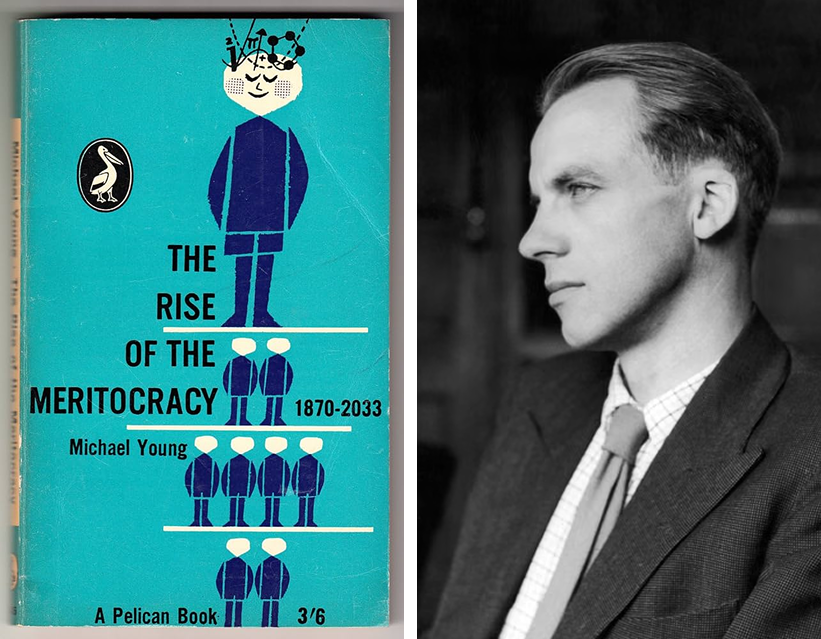
What we’re left with is a question we’ve avoided since the Enlightenment: how do we rank people in a democracy that rejects birthright hierarchy but requires hierarchy to function? The meritocratic answer was rank by achievement, measure achievement by standardized performance, make performance available to anyone through education and effort. This worked when performance was difficult enough that not everyone could do it. It breaks when tools make perfect performance available instantly.
We’re watching a value system collapse in real time, unable to build its replacement because the replacement would contradict everything we claim to believe about fairness and opportunity.