


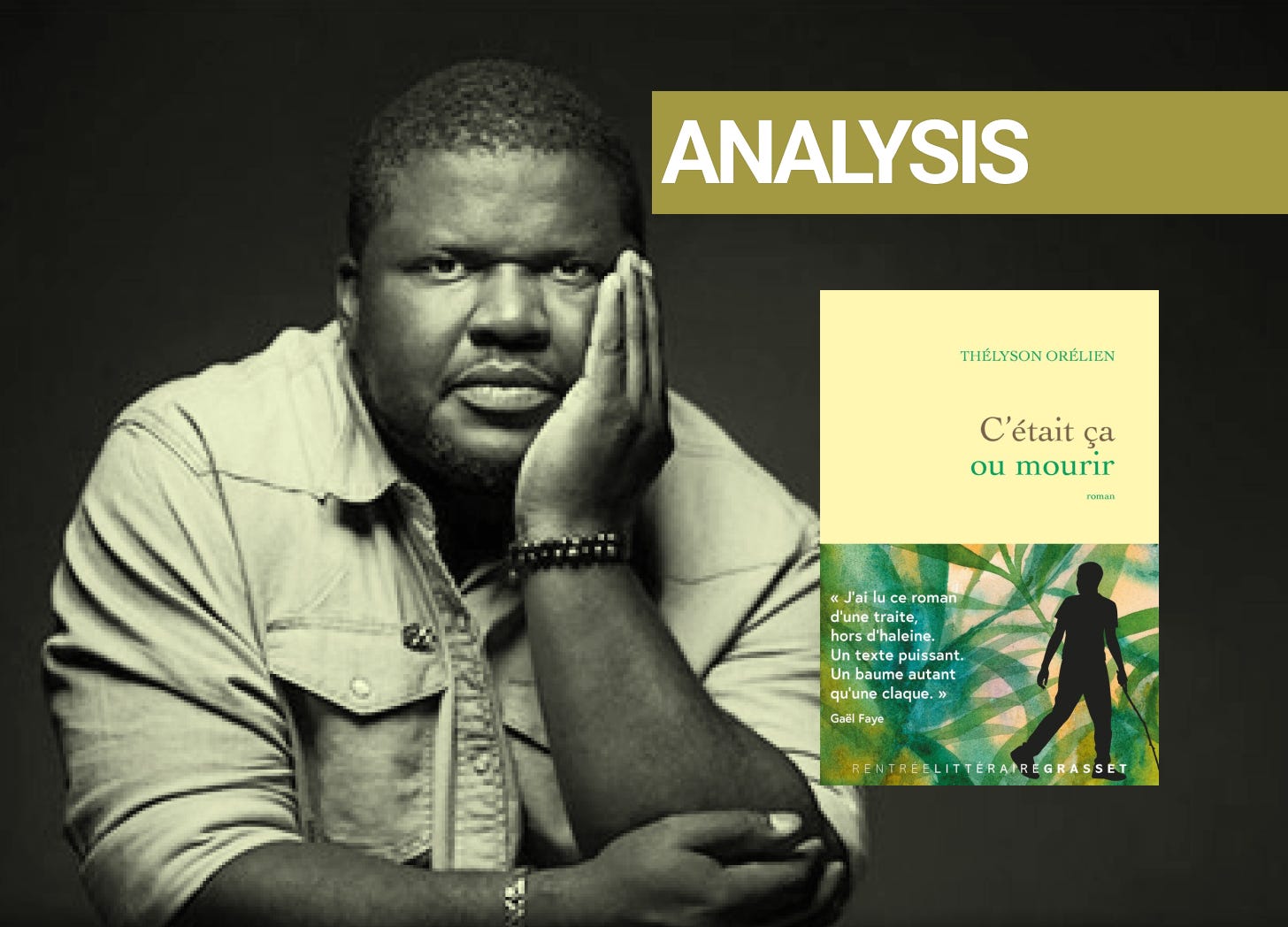
A debut novel topped the French literary season, then tested as machine-written. Whether its author used AI remains unproven. The questions the affair raised about the people who read, sold and shortlisted the book have barely been asked.

AI Key Takeaways
· The affair exposed an industry that could neither recognize AI writing nor discuss it: the Goncourt’s president enjoyed the novel, never suspected it, and says the Académie has no means to verify.
· The Académie removed the book on the strength of outside analyses it never published, and most major French publishers use no detection tools at all.
· Unable to argue about machine prose, much of the debate moved to race, a subject the literary world already knows how to discuss.
· The novel kept moving readers: it reached number one in French bookstores at the height of the scandal, which raises the question of what a reader’s emotion depends on.
· The case surfaces questions the debate has avoided: what prizes judge, what publishers vouch for, and whether authorship matters when no reader can tell.
The Orélien affair is usually told as a story about one author and one novel. Its more lasting content is a set of questions the French literary world found itself unable to ask.
A debut novel by a Haitian-Canadian writer was praised by critics, placed on the first lists of four major prizes and brought to market by two publishers. Then newsroom after newsroom tested it as overwhelmingly machine-written.
Whether Thélyson Orélien used AI is still unproven, and this analysis takes no side on it. What the affair made visible is an industry that could not recognize AI writing, could not talk about it once it was pointed out, and has no answer yet to a harder question: whether it matters, if readers cannot tell and are moved anyway.

The facts, briefly
Thélyson Orélien, 38, was born in Gonaïves, Haiti, and lives in Quebec, according to The Haitian Times. His first novel, C’était ça ou mourir, follows a Haitian man’s flight north toward Canada. It won the Prix du roman Fnac and appeared on the first lists for the Goncourt, the Renaudot, the Femina and the Médicis, as Presse-citron recounts. On September 21, an anonymous X account, “Balance ton Claude,” posted results from the AI detector Pangram flagging the novel as AI-written.
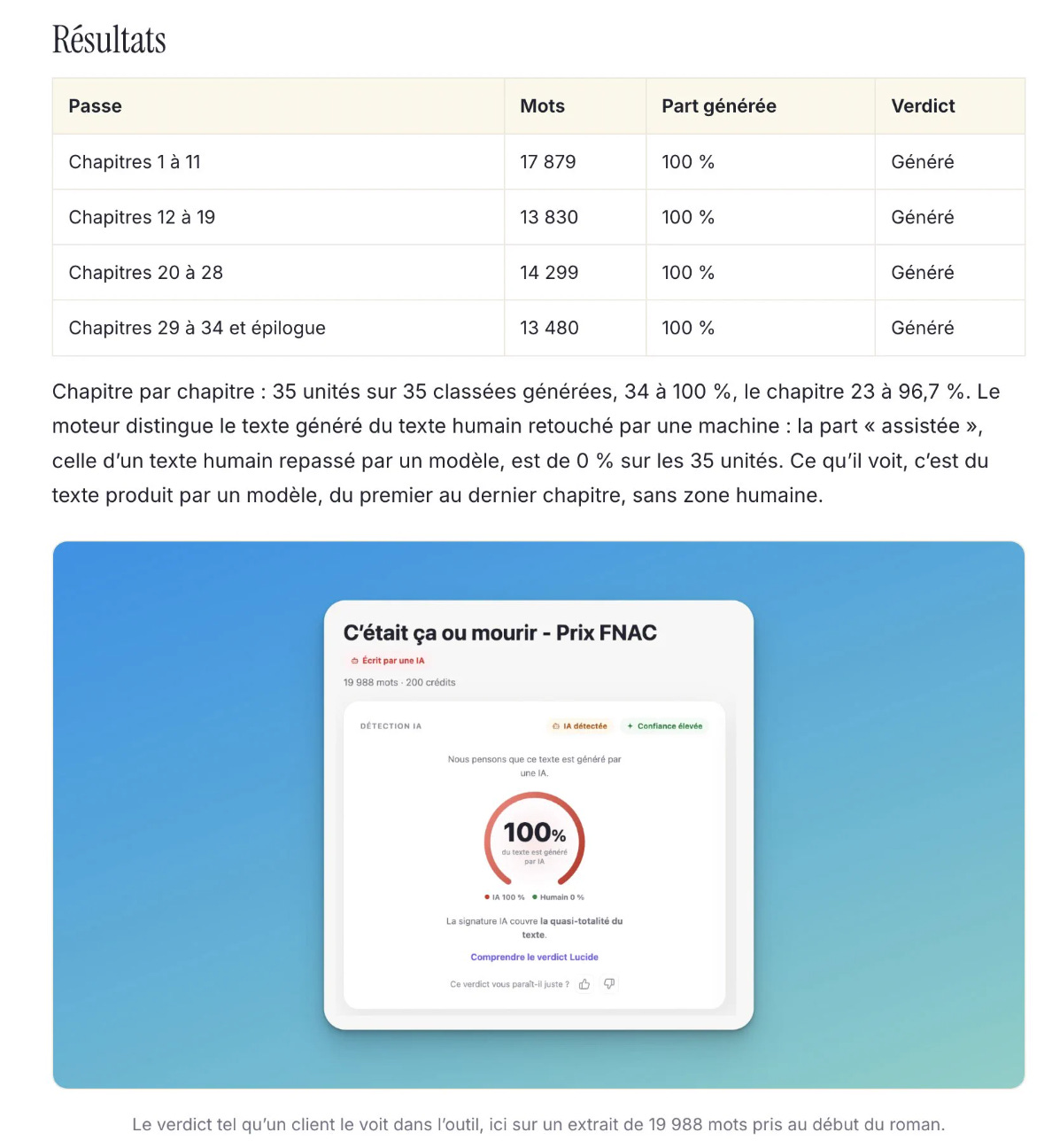
The tests that followed point the same way. Lucide.ai scored 34 of the novel’s 35 parts at 100% generated content. Radio-Canada ran the full text through Pangram and found 94% flagged, while the other Goncourt-listed novels and eight books by authors of Haitian origin all came back human. Orélien’s own texts from before ChatGPT also tested human.
The tests also have limits. When the AFP ran two passages through seven other detectors, the results diverged, and Pangram’s own chief executive says the tool should only start an inquiry. Boréal argued that its reliability had never been established on francophone novelistic prose.
Orélien denies using AI, and his French publisher says he began the novel in 2017 and finished a draft in 2019, before generative AI was commercially available. Those drafts could settle the question, and they have yet to be made public.

A jury that could not see
The first question the affair raises concerns perception. The people who judge books for a living read this one closely, and none of them saw anything. Philippe Claudel, president of the Académie Goncourt, said he had greatly enjoyed the novel and had at no point suspected it could have been written by AI. He also acknowledged that the Académie has neither the technical nor the human means to verify.
“J’achète un livre qui a été écrit par cet être humain qui porte ce nom et je lui fais confiance.”
Philippe Claudel, president of the Académie Goncourt, franceinfo
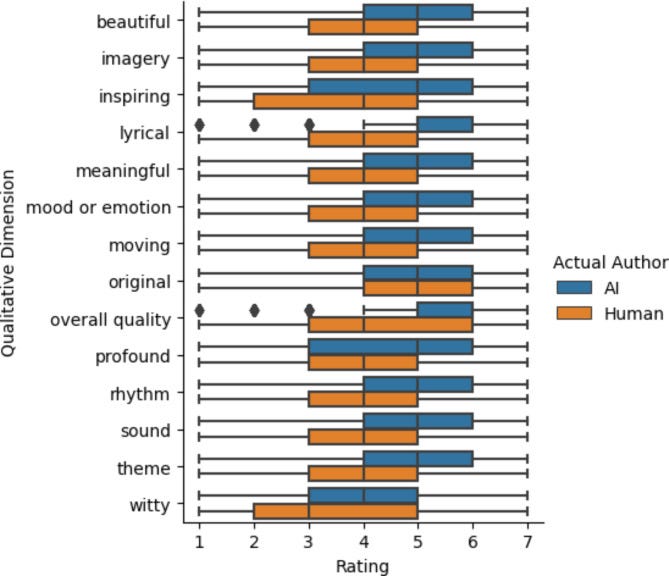
Research suggests this blindness is common and learned. In a study presented at ACL 2025, people who frequently use AI for writing sorted 300 articles into human and machine-written almost perfectly, while people who rarely use it were poor detectors and overestimated their own accuracy. In a 2024 study in Scientific Reports, non-expert readers identified AI-written poems at 46.6% accuracy, below chance, and rated them higher than poems by Shakespeare and Dickinson on qualities such as rhythm and beauty.
What the readers who flagged the novel pointed to were features they associate with machine writing: runs of strange similes, the same idea stated three times in one sentence, stock formulas. Orélien described those same features as his own, rooted in Haitian and Caribbean oral tradition. The same page reads as a machine’s tics to one reader and as a living voice to another.
Which of them a literary jury should be able to tell apart, and whether reading skill now includes that, is a question nobody in the institution had prepared for.

An industry that could not talk about it
Once the question was raised, the institutions had no language for it. On September 25, the Académie Goncourt removed the novel from its first list, describing it as “selon toute vraisemblance très largement le produit d’une intelligence artificielle” on the strength of analyses by researchers and journalists. The decision was not unanimous, and the statement presented neither the passages in question nor the method behind those analyses.
“Ce choix est dicté par la volonté de préserver l’intégrité du prix.”
Académie Goncourt, September 25, 2026
Publishers were in the same position. The major French houses, from Actes Sud and Le Seuil to Gallimard and Robert Laffont, told France Inter they use no detection software at all. In Quebec, none of the six houses that answered Radio-Canada uses such a tool, although five have added AI clauses to their contracts. The responses that did appear were symbolic: Éditions de l’Observatoire launched a “100% humain” label for its literary titles.
On October 6, the Goncourt published its second list. Claudel said all eight remaining novels had been run through an AI detector and had passed “haut la main, si l’on excepte quelques scories ridicules,” and he proposed changing the prize’s rules to forbid the use of artificial intelligence.
A prize that could not see the problem now runs a tool it said it lacked the means to evaluate.
What a “use of AI” ban would cover (a full draft, a translation, a spellcheck, a brainstorm) and who would check it are questions the rule has yet to answer.

The debate it reached for instead
Faced with an accusation it could not evaluate, much of the literary world turned to ground it knew. Grasset spoke of “une campagne de haine,” a hate campaign. Claudel noted that the author is Haitian and Canadian, Black, francophone, foreign, and writing about migrants. In Le Monde, Benjamin Hoffmann argued that a virulent campaign once again targeting a racialized person should prompt vigilance.
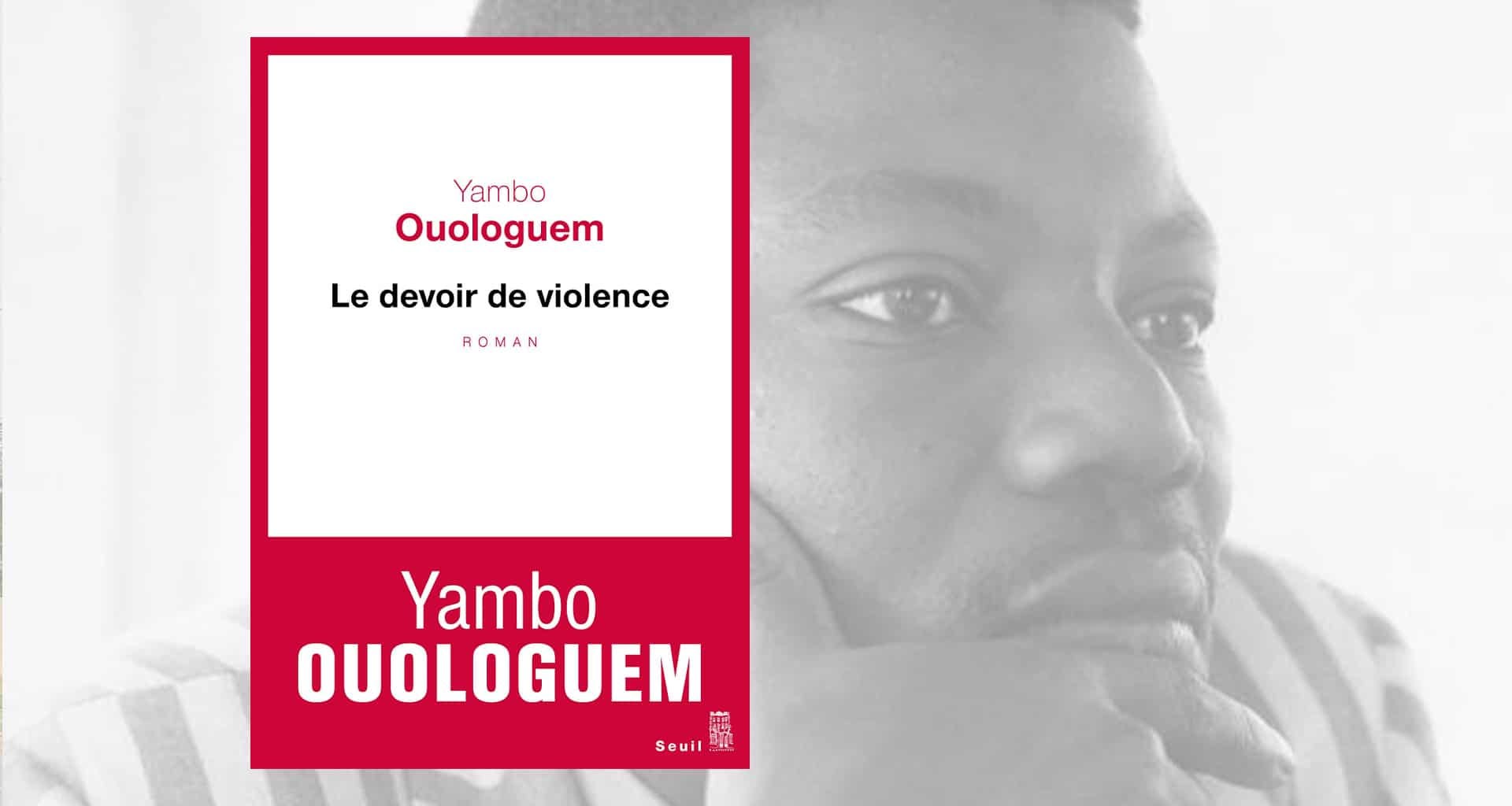
That reading drew on real experience and real history. Orélien said he had faced racist attacks, and Boréal suspended promotion of the book after hateful messages against him. In 1968, Yambo Ouologuem became the first African author to win the Prix Renaudot, was accused of plagiarism months later, and never published again; defenders have long argued that the attacks on his authorship were driven largely by racism.
The people behind the tests stood elsewhere. Samuel Fitoussi, a Figaro columnist, said he was one of the people behind the accusing account, driven by a fear that AI would make reading and writing disappear, and the newsrooms built their controls to test for bias directly.
The two conversations ran side by side on different ground, each answering a question the other was not asking.
The affair leaves open whether the race debate was a response to the case itself, a substitute for an AI debate the industry had no vocabulary for, or both at once.

If readers are moved, what was the prize for?
The hardest question sits with the readers. At the height of the scandal, C’était ça ou mourir reached number one in French bookstores, with 64,966 copies sold in six weeks. Some readers bought it “en soutien,” in support of the author. Others had been moved by it before anyone raised a doubt, Claudel among them. Their emotion was real, whoever or whatever produced the sentences.
French literature has met a version of this before. In 1975, the Goncourt went to Émile Ajar for La Vie devant soi. Ajar was a persona invented by Romain Gary, who had already won the prize in 1956, and the truth emerged only after Gary’s death. Readers had been moved by an author who did not exist, and the book survived the revelation.
The case then splits the question in several directions. If a reader is moved and cannot tell, what exactly would AI authorship take away from that reader? If prizes reward the writing alone, a flagged novel’s place on four first lists says something about what that writing now looks like, and if they also reward the author’s profile and the urgency of the subject, the prizes have never said so. A migration novel adds a further layer, because part of what it offers is lived testimony, and it is unclear whether testimony produced by a machine would still be testimony to the reader who wept over it.

But, should we care? We should at least discuss it openly
The Orélien case may end with drafts that prove his authorship, or with evidence that does the opposite. Either outcome answers the question about one book.
The questions about the literary world stay open either way: what a prize jury is judging when it cannot see how a text was made, what a publisher vouches for when it prints a name on a cover, and what a reader is owed when the emotion arrived intact and the origin is in doubt.
The industry has so far answered with detectors and labels, and the debate it still has to hold is whether a book’s value lives in the experience of reading it, in the person who wrote it, or in a promise between the two that nobody has yet put into words.
NA: AI-assisted tools were used for transcription, reference formatting, and language editing. All intellectual content and conclusions remain solely the author’s.
I like this AI age! And I remember, about half a lifetime ago, having been an avid reader of fiction before that, deciding that reading fiction was a waste of my time.
That was pretty much the time when I read (or, rather, listened to) Dostoevsky’s “Brothers Karamazov”, after which other fiction just seemed rather contrived and trivial.
Roland Barthes wrote “The Death of the Author” in the year that I was born. Or did he? Perhaps, after all, the famous essay was just an arbitrary slice of the intertext.
Dear Anna, I see you are in the middle of no man’s land. It happens to every immigrant, it has to. Yet it’s a very dangerous period to cross it. Don’t do what Red Riding Hood did, hurry up.
https://lundi.am/Mais-quelqu-un-va-t-il-enfin-le-dire