


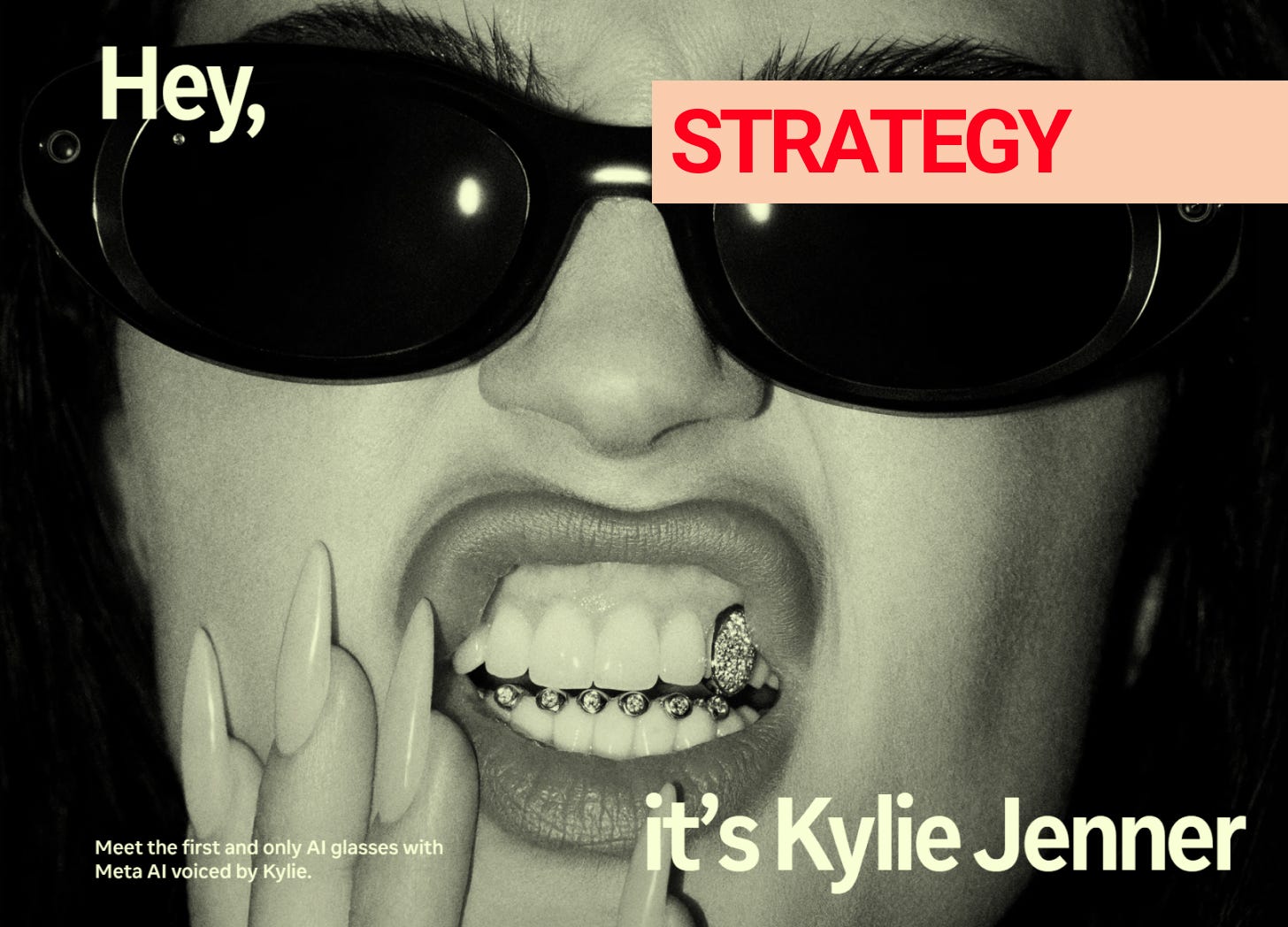
Meta dropped the Ray-Ban name, put Kylie Jenner’s voice inside the operating system, and launched a first-person camera as a beauty object. The commentary reviewed the dystopia. Almost nobody reviewed the engineering when the engineering is the story: every piece of this launch solves a specific, documented problem.

AI Key Takeaways
Meta sold roughly 9 million smart glasses by the end of 2025, holds 73% of a market growing 110% year over year, and is expanding production toward 20 to 30 million units, a volume the tech-enthusiast niche cannot absorb. Mainstream expansion was forced by the company’s own success.
The Kylie Jenner deal is a structural partnership: her voice ships in the operating system, her aesthetic in the hardware, her name in the SKU. It cannot be dissolved without a product recall.
The first-person format needed no introduction. Creator content, the phone-adapter market, and an established POV genre normalized the behavior years ago; the glasses only change the device.
Google Glass is the foil. Five launch errors killed it, and Meta inverted every one: price, early adopters, framing, camera visibility, and timing.
The campaign works because the cultural ground was prepared before Meta arrived. Who prepared it, and over how many years, is its own story.
In June 2026, Meta shipped the first hardware carrying its own name with no legacy eyewear brand attached: Meta Glasses, $299 base, $399 for the Kylie Jenner edition, which includes her voice as the on-device AI assistant, an adjustable metal nose bridge engineered so the frames don’t smudge makeup, and gem-accented lenses designed to read like a paparazzi flash.
The coverage split on schedule. Tech press reviewed the specs. Culture press reviewed the dystopia and filed the Jenner deal under celebrity marketing.
I’ve argued before that the most instructive artifacts of this era are the persuasion objects nobody studies because they’re too busy reacting to them. This campaign is one.
The niche was won, and the niche was a ceiling
The commercial context explains the timing. Ray-Ban Stories, the first generation, sold about 300,000 units. The Ray-Ban Meta line reached roughly 2 million by 2024. Then 2025 alone added 7 million, tripling the cumulative total, and Meta now holds 73% of a smart-glasses market that grew 110% year over year. EssilorLuxottica’s production capacity is being revised from 10 million units a year toward 20 to 30 million.
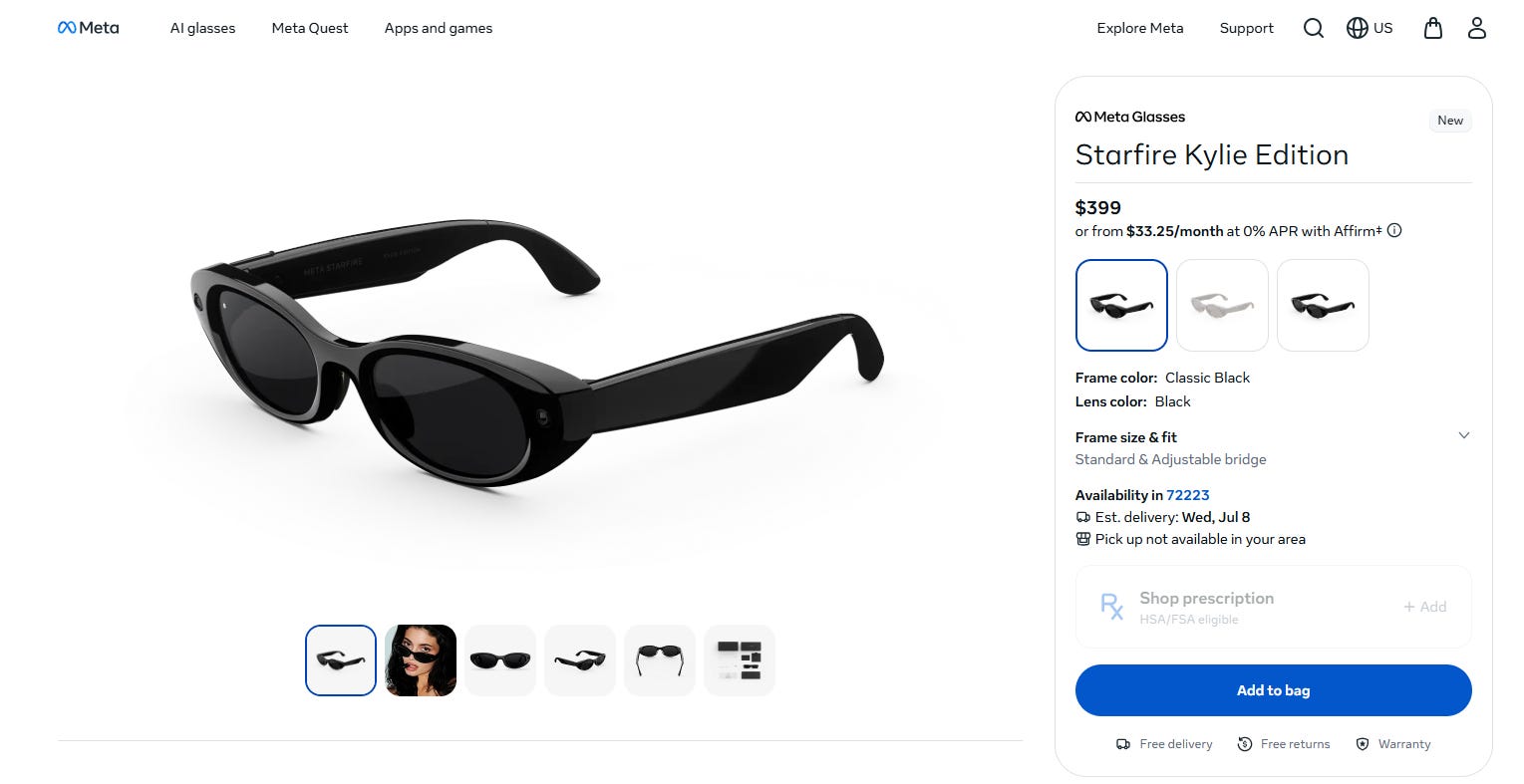
A company does not buy that capacity to keep selling to the audience it already owns. The enthusiast niche is won, and it is arithmetically too small for the factories being built. The expansion has to reach people with no relationship to the product category at all, and that requirement is the campaign’s first sophistication.
The “creepy glasses” reputation lives with tech-aware, older, privacy-conscious audiences. A nineteen-year-old follower of Kylie Jenner carries no mental model of this hardware whatsoever. Meta doesn’t have to repair a reputation with this audience, so right now what it’s building is a first impression. And a first impression, unlike a repair, can be engineered from a blank page. The segmentation underneath the strategy is unspoken and exact: if you care about privacy, you’re too old for the Meta glasses.
The format arrived pre-normalized
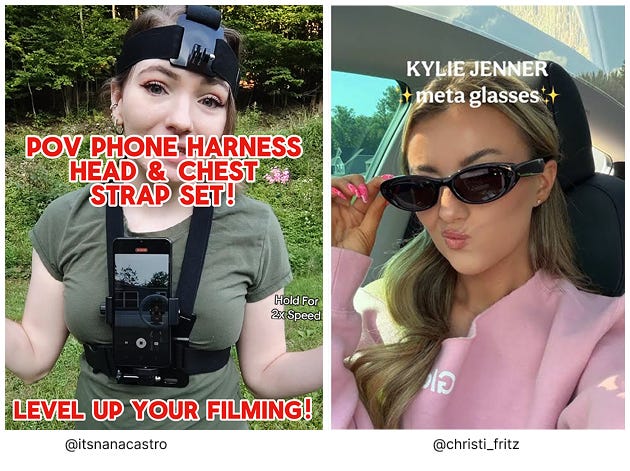
First-person content was already a mature genre before the glasses shipped: POV vlogs, cooking videos, get-ready-with-me routines, nights out narrated from eye level. The creator economy even built a hardware market for it, with phone mounts and chest rigs producing the identical footage at a fraction of the price. The functional need was served years ago.
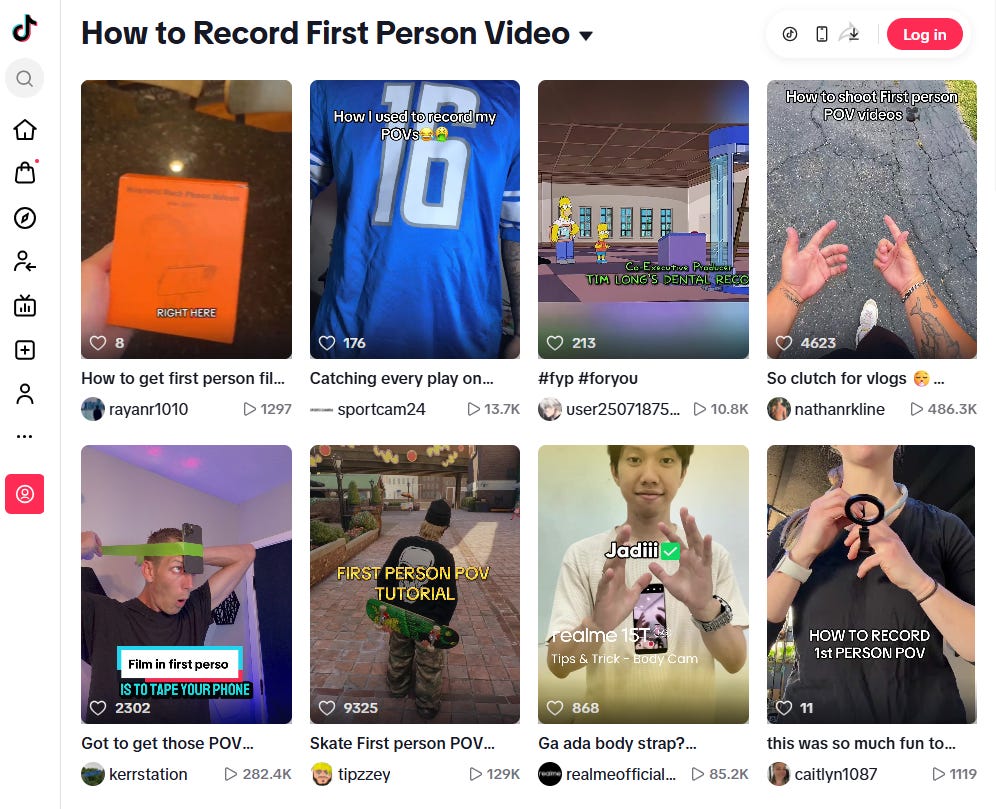
Which clarifies what Meta is actually selling. The glasses solve a social-object problem: the thing has to be something you want to be seen wearing, attached to an ecosystem Meta owns.
Launches fail expensively when they have to create a behavior.
This one only has to move an existing behavior onto more desirable hardware, and the behavior brings its own audience, platforms, and monetization with it.
A partnership that can’t be unwound
The third move is the deal’s architecture. The industry distinction that matters is between an ambassadorship, where a celebrity appears in the campaign, and a structural partnership, where the celebrity is embedded in the product. Jenner’s voice is in the operating system. Her aesthetic decisions are in the hardware. Her name is in the SKU. Unwinding this relationship would require something close to a recall, which tells you how Meta prices it: load-bearing.
The choice of person is just as engineered: Jenner is arguably the most commercially successful product of the surveillance-as-entertainment format; she grew up on camera and converted being watched into a beauty empire.
Putting a first-person camera on her performs a semantic transfer: the act of filming from the body gets associated with someone whose being-filmed made her a billionaire.
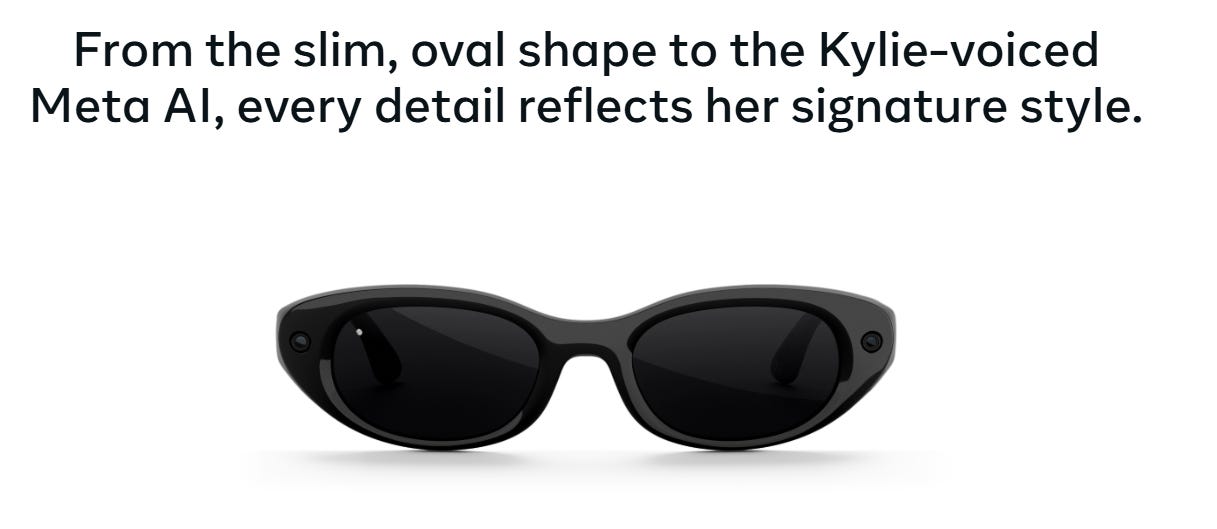
And her audience’s relationship to her is parasocial in the precise sense: rehearsed intimacy, accumulated over years of morning routines and home tours. When the assistant says “Rise and shine” each morning, the voice belongs to someone the wearer feels they know. The emotional distance between “Meta’s sensor” and “my companion” closes before a single privacy question gets asked.
Glass is the foil
Every one of these moves reads sharper against the product that failed. Google Glass died socially, and its five launch errors are a checklist Meta inverted item by item. Price: $1,500 luxury-tech positioning against $299. Early adopters: Silicon Valley insiders wearing a visible camera into bars, generating the “Glasshole” script, against style-conscious young women recruited as cultural permission-givers. Framing: a sci-fi head-up display against a fashion object. Visibility: prominent camera hardware against frames that pass as ordinary eyewear. Timing: 2013, when 44% of Americans didn’t own a smartphone, against 2026, when ownership sits at 91% and a decade of front-facing cameras has done the acclimatizing.
What the campaign proves
None of this required Meta to invent a desire, a format, or a behavior.
The launch’s intelligence is inheritance: it found the places where culture had already done the work and attached a product to them. That is also why calling the campaign manipulative underprices it. Manipulation implies resistance being overcome, and the striking fact of this launch is how little resistance there was to overcome.
The campaign works because the cultural ground was already prepared. I’m currently writing how that ground got prepared, over how many years, and why the generation being handed the camera never had the chance to find it creepy, in an upcoming longer essay that follows this one.
I am also very aware that I did not talk about the strategy to gear the product toward women. Yet. This is also an element that I want to revisit in a following piece.
NA: AI-assisted tools were used for transcription, reference formatting, and language editing. All intellectual content and conclusions remain solely the author’s.