



Index
The floor is now shared
Being the first to switch to AI won’t give you the competitive advantage you think it will
Price competition trap
Shared averageness doesn’t mean shared strategy
Reframe your strategic thinking

The floor is now shared
Competitive strategy has always operated in partial information. You knew your capabilities. You estimated your competitors’. You guessed at client expectations based on lagging signals.
AI collapses a significant portion of that asymmetry at the floor. Any organization with standard tooling can now produce a coherent strategy deck, a functional prototype, a market analysis, or a first-draft design system. You know what clients will stop being impressed by. You know what “good enough” looks like. You know, with reasonable confidence, what your competitor can produce on a Tuesday with a mid-size team and no specialized expertise.
“Far from being a source of differentiation, artificial intelligence will be a source of homogenization.”
— David Wingate, Barclay Burns & Jay Barney, MIT Sloan Management Review, May 2025

Most organizations still treat AI adoption as a competitive position, as if being faster to automate is a durable edge. The time required to replicate a successful software feature dropped from 18 months to 9–12 months in 2025.
The efficiency gains are real. They are also temporary, because they are universal.

Being the first to switch to AI won’t give you the competitive advantage you think it will
The more immediate danger is moving too fast in the wrong direction.
Some organizations are eliminating roles and dismantling processes on the assumption that AI has already replaced the function. In practice, the transition is partial. AI outputs require significant human judgment to evaluate, redirect, and apply. The institutional knowledge being discarded is often quietly load-bearing in ways that stay invisible until it’s gone.
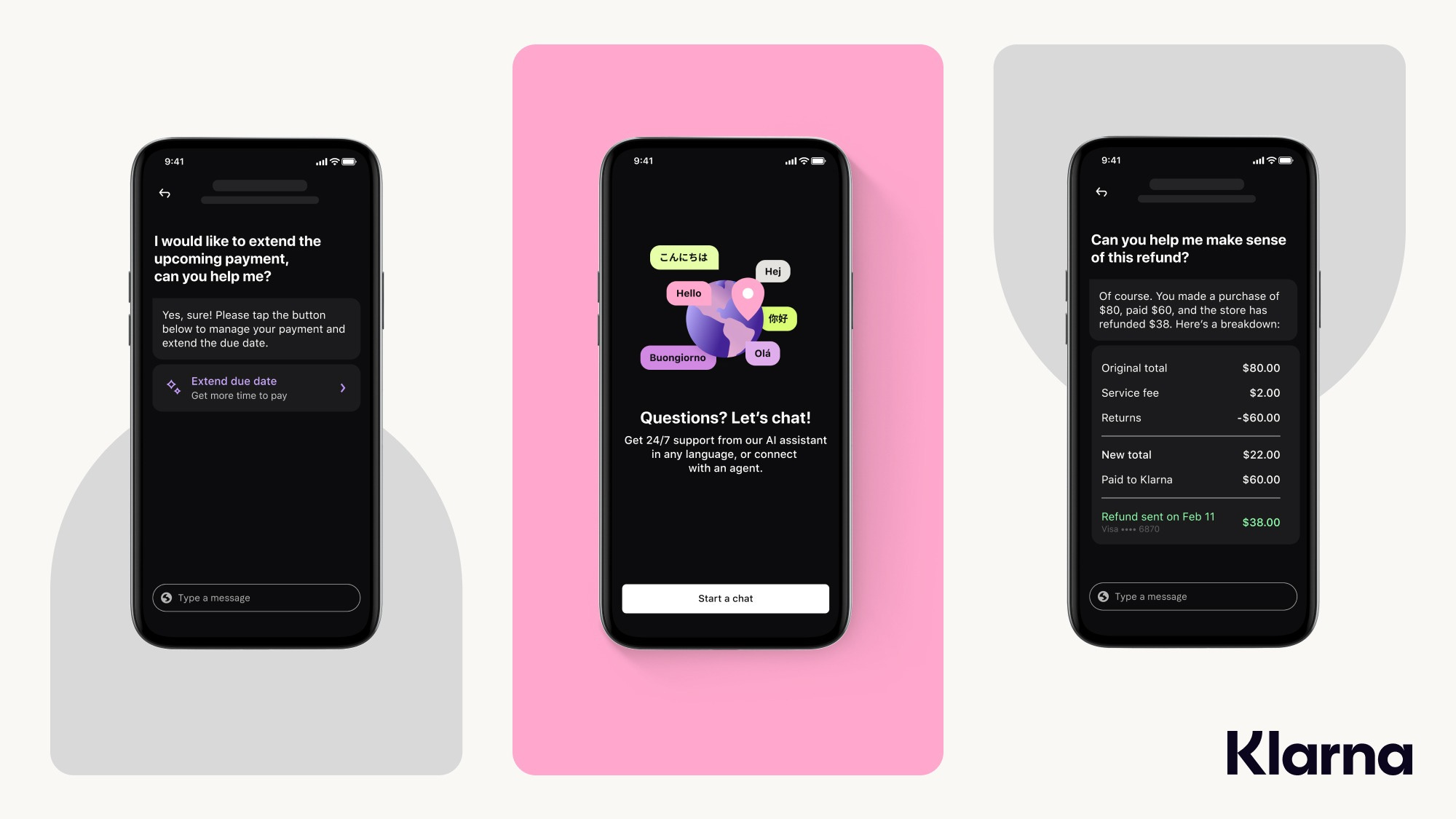
Klarna eliminated 700 customer service agents in 2024, declaring AI had replaced them. The AI handled routine queries and standard resolutions. What it could not handle was the contextual and the relational: the customer who needed to feel heard, the unusual case that required judgment rather than pattern-matching. Klarna began quietly rehiring.
The baseline is incoming. That part is settled. The question is how efficiently you ride the wave.

The organizations cutting too aggressively are eliminating the people who would have helped them navigate it.

Price competition trap
If AI reduces operational costs, competing more aggressively on price must be viable. Right?
AI access is not geographically bounded. Organizations in China, India, and emerging markets have access to the same tools, the same models, the same capabilities, combined with structurally lower labor costs. If your strategic response to the AI baseline is to compete on price, you are entering a race that will be won by the markets with the lowest structural costs.
“When every company can use the same AI models, the same AI-enabled tools, and the same vendor ecosystem, organizational context becomes the differentiator.”
— Ravi Kumar S, CEO of Cognizant, Harvard Business Review, February 2026

If the baseline equalizes capability, and price competition advantages structurally lower-cost markets, the only remaining competitive surface in premium markets is everything above the baseline.

Shared averageness doesn’t mean shared strategy
Once you accept that the floor is shared, the strategic question inverts: now that everyone can do the basics, where is differentiation being rebuilt?
The pattern in organizations that have read the baseline correctly is consistent: they are elevating the disciplines that produce non-replicable differentiation to strategic leadership.

Design is the clearest current example, not because design is universally the answer, but because it illustrates the logic. If AI can produce functional outputs at floor level, and price competition is a losing game in premium markets, the competitive surface migrates to the quality of the experience, the coherence of the product, the depth of the relationship. Those things require investment, leadership, and time, and they cannot be replicated by an API call.
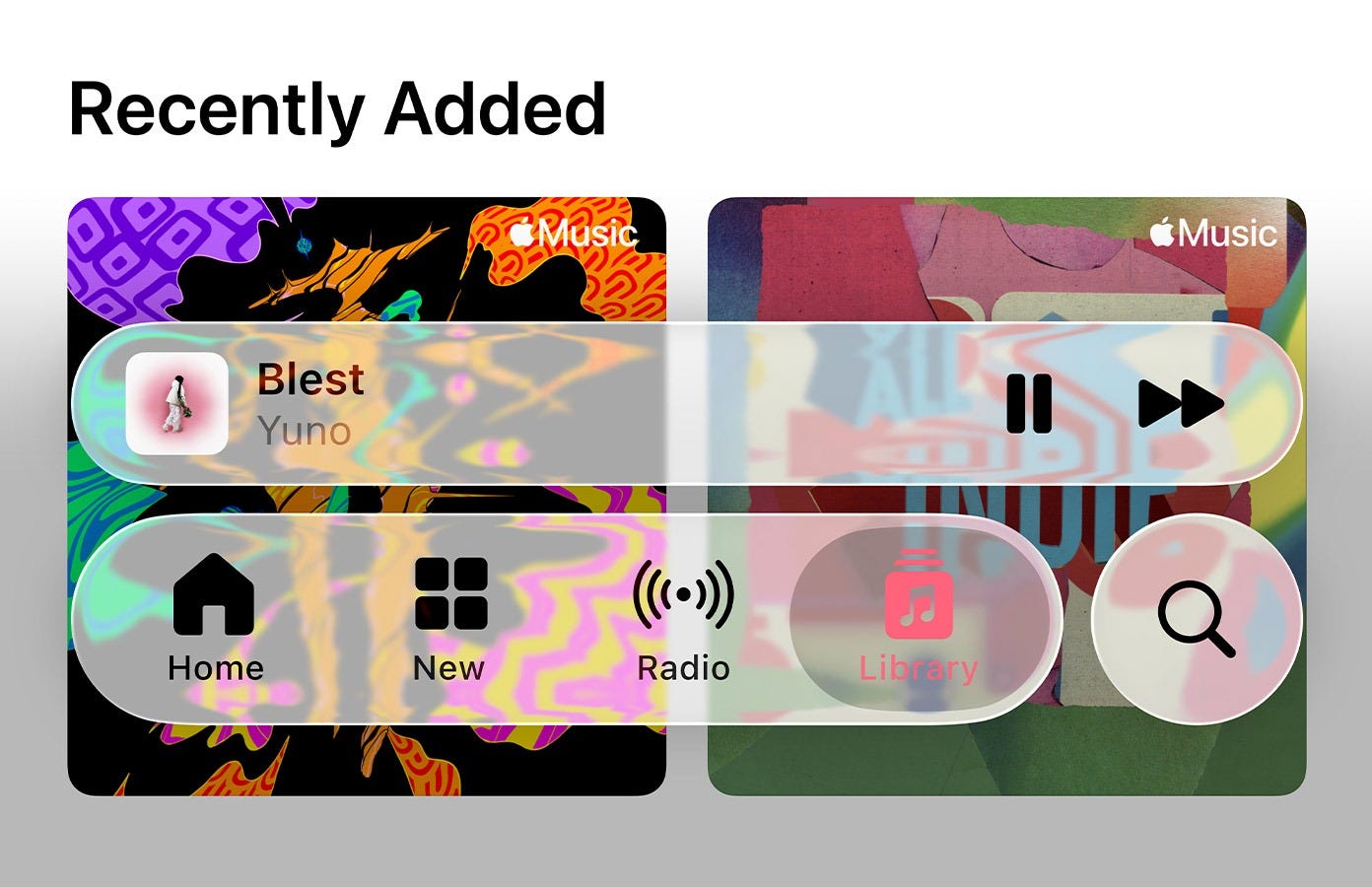
Apple’s Liquid Glass is a sharp case study. iOS 26’s visual language uses real-time GPU-accelerated shader computations to simulate light refraction: physics-based rendering that requires Apple’s custom silicon. It cannot be replicated on commodity hardware. Apple had found a surface where their specific stack creates differentiation that is genuinely hard to copy.

The template here is not “invest in design.” It is: identify the intersection of your unique capabilities and the new expectations the baseline has established, and build there deliberately. For Apple, that’s hardware-software-design integration. For a professional services firm, it might be contextual judgment and institutional relationships. For a logistics company, it might be operational data no competitor has access to.

Reframe your strategic thinking
Most organizations are asking: how do we use AI better than our competitors?
The more productive question: what do we own that the baseline cannot replicate, and are we investing in it accordingly?
The baseline is the same for everyone. For the first time, you can see the floor. You know what your clients will expect as minimum. You know what any competent competitor can deliver. Whether you race toward the floor or build deliberately above it is the strategic choice available to you right now.