



As we’re talking about rockets, one question becomes unavoidable: was the Greenland acquisition by Trump truly insane? Check my article on the subject: Trump wanted the ice, not just the rocks


The physics work
The geography of consent
NASA is out, Space Force is in
Orbital data havens
The stars aligned (conclusion)

November 4, 2025: Google announces Project Suncatcher; its plans to launch AI data centers into orbit by 2027. Within one month, China announces a competing gigawatt-scale constellation. Jeff Bezos confirms “gigawatt data centers in space within 10-20 years.” Eric Schmidt reveals his Relativity Space acquisition was specifically for orbital infrastructure. Elon Musk: “SpaceX will be doing this.”
Six separate announcements. Four weeks. All orbital data centers.
AI compute demands are doubling every 3.4 months, fifty times faster than Moore’s Law, since 2012, while traditional computing improved 7x, AI scaled 300,000x. Nuclear plants take 10-15 years to build. By the time you finish the reactor, you need 10,000x the capacity you designed for.
The math broke. So they’re leaving.
Not because space is better.
Because Earth has people, and people have objections.

The physics work
“It is estimated that space-based harvesters could potentially yield eight times more power than solar panels at any location on the surface of the globe” - Scientists beam solar power to Earth from space for 1st time ever
A solar panel in sun-synchronous orbit generates eight times more energy than on Earth. Dawn-dusk orbit means 24/7 sunlight. No night, no clouds, no atmospheric filtering. Cooling happens through radiator panels venting heat as infrared into the -270°C vacuum. No water consumed. No air conditioning. No taking 21% of Ireland’s electricity grid to keep servers from melting.
Google’s testing radiation-hardened TPU chips in particle accelerators right now. China’s launching its “Chenguang-1” prototype satellite by January 2026. The hardware survives. Laser inter-satellite links handle data transmission at terabits per second, and SpaceX already proved this with Starlink.
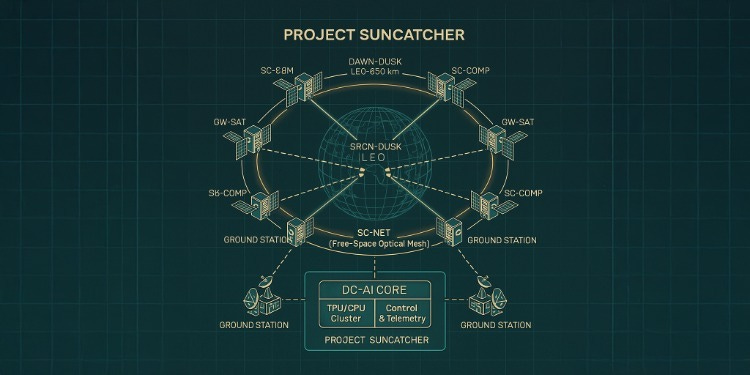
Launch costs are the constraint. Currently between $1,500 and $2,900 per kilogram. SpaceX’s Starship targets $200. When that number drops below the regulatory cost of building on Earth, the equation flips.
Training AI models is batch processing: latency doesn’t matter much. You can wait 40 milliseconds for signals to bounce to orbit and back. Real-time ChatGPT queries stay on Earth. But training GPT-6? That can happen hundreds of kilometers overhead while you sleep.

The geography of consent
$64 billion in US data center projects were blocked or delayed in the past two years. Arizona’s Tucson rejected a $3.6 billion Amazon data center over water concerns, as the facilities consume water equivalent to 100,000 households. In a desert. Virginia has 42 opposition groups actively fighting expansion. Ireland capped growth because data centers already use 21% of national electricity.
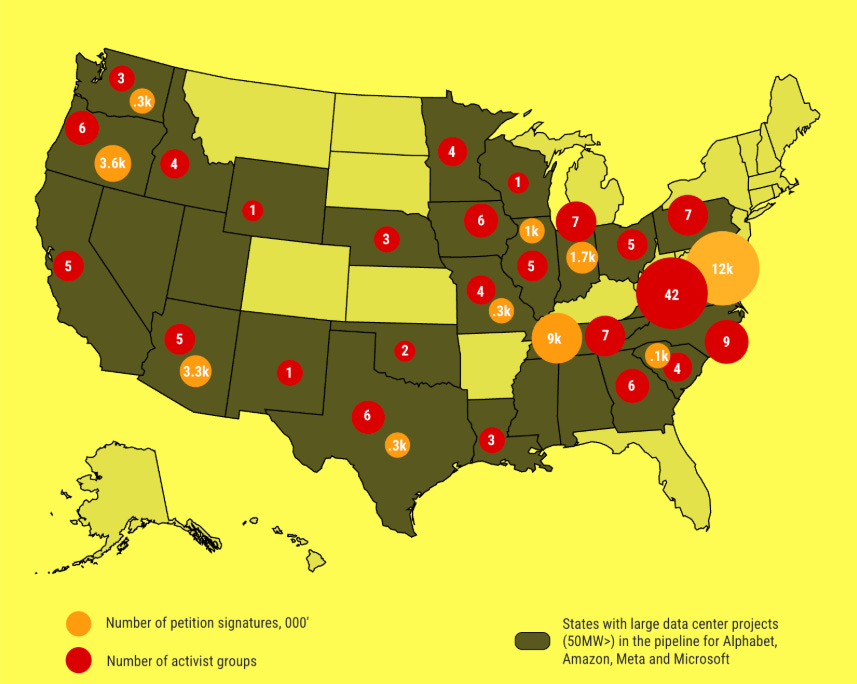
In Europe, permits require environmental compliance certificates, protected species exemptions that NGOs challenge in court, compatibility with local planning documents. Solar projects have waited two years just for municipalities to rezone land.

This is about sovereignty, and the expression of power (or powerlessness)
Let’s take a look at France, for the sake of the argument.
I am French and left the country over a decade ago. I did not live through the rise of the ecological consciousness that started around 2015 and is now forcing mayors who want to keep their mandates to stop the construction trucks. I haven’t developed the same sensitivity, having moved to an American state where a square foot isn’t considered habitable without AC.
So from where I stand, some expressions of the people’s sovereignty seem unreconcilable: when people ask for more local jobs, but refuse to build factories, when the government wants AI startups, but regulates them to death. When citizens want ownership of their data, but not of the datacenters.
So what would work? Rockets. Rockets would work.
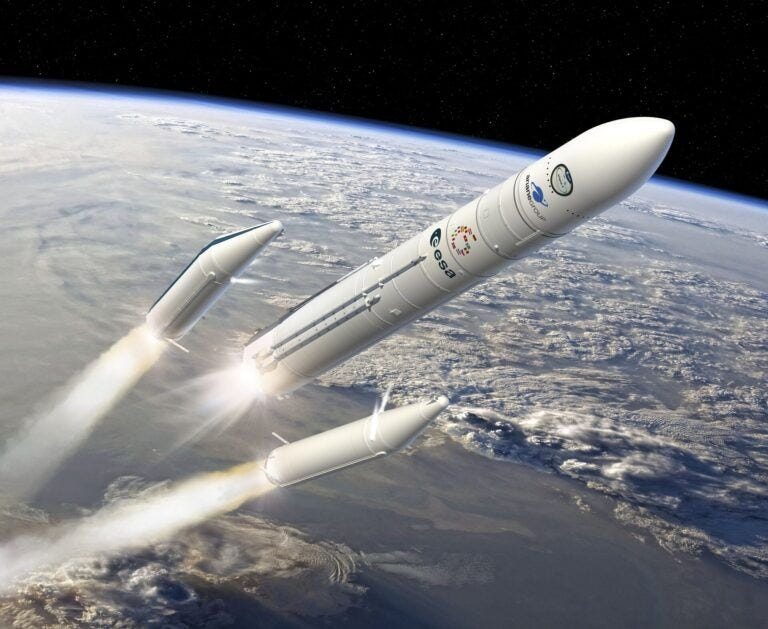
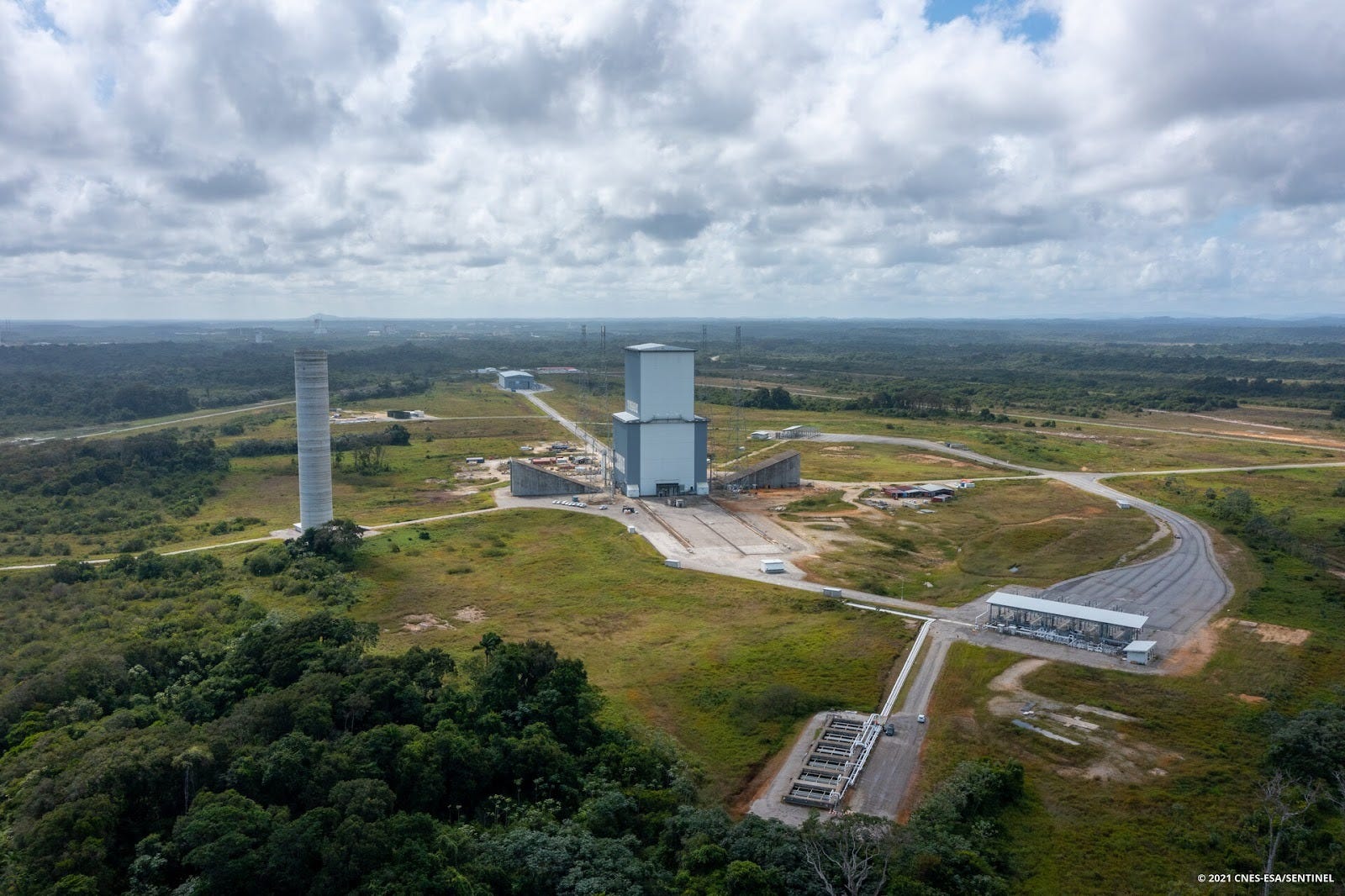
France operates a €3 billion annual space operation: Ariane 6 launched successfully from French Guiana in July 2024. The country can’t get permits to build data centers on European soil but can launch them from an equatorial spaceport where local environmental regulations don’t apply to what happens in orbit. Plus, the law in space states that where you send it from defines ownership.

Except citizens aren’t ready to spend money on a space race.
What changes the equation is private money. Schmidt buying Relativity Space, Bezos funding Blue Origin, Musk’s SpaceX. Europe has the technical capability but lacks both the private capital depth of America and the authoritarian decisiveness of China.

China announces, democracies negotiate
China announced its orbital constellation in late November 2025. First satellite launches in weeks. No environmental impact statements. No public hearings. Beijing decides, Beijing builds.

Western democracies must negotiate. Permits take months to years. Public hearings, zoning approvals, grid connection studies. Microsoft’s Three Mile Island nuclear restart has a 2028 operational target after years of regulatory approval. The company committed $1.6 billion to restart the 835 MW reactor under a 20-year power purchase agreement at $110-115/MWh: double typical rates
Space solves the political problem. Zero constituents in orbit. No local water supply to drain. No residents complaining about electricity bills. No activists with legal standing to sue.

NASA is out, Space Force is in
2025, Trump proposes a 24% cut to NASA’s budget, Mars Sample Return mission canceled, Climate research programs eliminated. Over 4,000 scientists and engineers quit or retired.
Meanwhile, Space Force’s budget doubled from roughly $15 billion at its 2019 creation to $30 billion in 2025. The money flows to contractors: Lockheed, Northrop, SpaceX, Blue Origin.
NASA gets defunded. Space Force gets funded and contracted to private companies. Private companies self-fund commercial infrastructure while using national launch capacity. Corporate sovereignty in space with military protection but zero civilian oversight.
Schmidt, Bezos, and Musk now control access to orbit, not governments. When NASA can’t fund science missions and democracies can’t sell voters on “$100 billion for orbital data centers,” private capital fills the gap.

Voters won’t approve massive space infrastructure spending when they can’t afford housing. But voters tolerate “private companies creating jobs,” even when those jobs don’t materialize. The public gets removed from the decision.
These companies hold military contracts. Space Force satellite systems, defense communications, reconnaissance platforms. National governments provide regulatory clearance and protection. SpaceX launches both Starlink internet satellites and classified military payloads on the same rocket. When these companies become essential to national security, governments can’t regulate them aggressively without undermining their own defense capabilities.

Orbital data havens
Under the 1967 Outer Space Treaty, satellites are sovereign territory of the “launching state.”
A Google data center launched from French Guiana on a SpaceX rocket raises immediate questions: Is it US territory? French? International space?
Consider a French citizen’s data being processed on that satellite. The EU’s GDPR claims extraterritorial jurisdiction over any data belonging to EU citizens, regardless of where it’s processed. The US claims the satellite is flagged American under launching state doctrine. Neither can physically enforce their interpretation.
Physical inaccessibility equals enforcement impossibility. No police force exists in orbit. The EU could fine Google for GDPR violations, but shutting down a US-flagged satellite would constitute an act of war.
China is building a separate constellation for exactly this reason. Beijing won’t allow Chinese data touching US infrastructure. We’re heading toward a bifurcated internet in orbit: Western Space Cloud versus Chinese Space Cloud. Russia will likely build a third. Each sovereign constellation, each nation protecting its data processing from foreign jurisdiction.
For companies, this creates leverage governments can’t match.

When regulatory cost exceeds launch cost, orbit wins.
France can impose environmental reviews taking three to five years, or companies can launch in 18 months and process data where French law arguably doesn’t apply.
The 1972 Liability Convention complicates enforcement further. Launching states are liable for damages, not companies. If a Google satellite collides with a Chinese station, the US government pays compensation. This forces governments to either regulate private space infrastructure heavily or protect private space assets militarily. Most are choosing the latter.
We’re watching corporate platforms emerge that states simultaneously regulate and defend. The traditional boundaries between commercial and sovereign activity are dissolving at 800 kilometers altitude.

The stars aligned
Technical conditions aligned.
Radiation-hardened chips survive. Laser links work. Orbital cooling via radiation works.
Economic conditions converged.
Reusable heavy-lift launch is approaching cost parity with regulatory friction on Earth. When permits take longer than rocket development, the equation shifts.
Political realities forced the issue.
Democratic governments can’t build fast enough, authoritarian governments can bulldoze humans but face international backlash, and private companies bypass both by operating in jurisdictional gray zones.
Legal frameworks created opportunities.
Space is a regulatory black hole where Earth-bound law becomes optional. When terrestrial legal compliance costs more than leaving the planet, corporations optimize accordingly.
Strategic integration provided protection.
Military-commercial integration means government protection without government control. Space Force defends private assets while private companies provide military infrastructure.

AI needs gigawatts. Humans need those same gigawatts. Democracies can’t force humans to give them up fast enough to stay competitive. So the race moved to where humans aren’t.
The first orbital data centers launch in 2027. It is transparent that the end goal is to build infrastructure no government can regulate and no competitor can access.
As we’re talking about rockets, one question becomes unavoidable: was the Greenland acquisition by Trump truly insane? Check my article on the subject: Trump wanted the ice, not just the rocks