




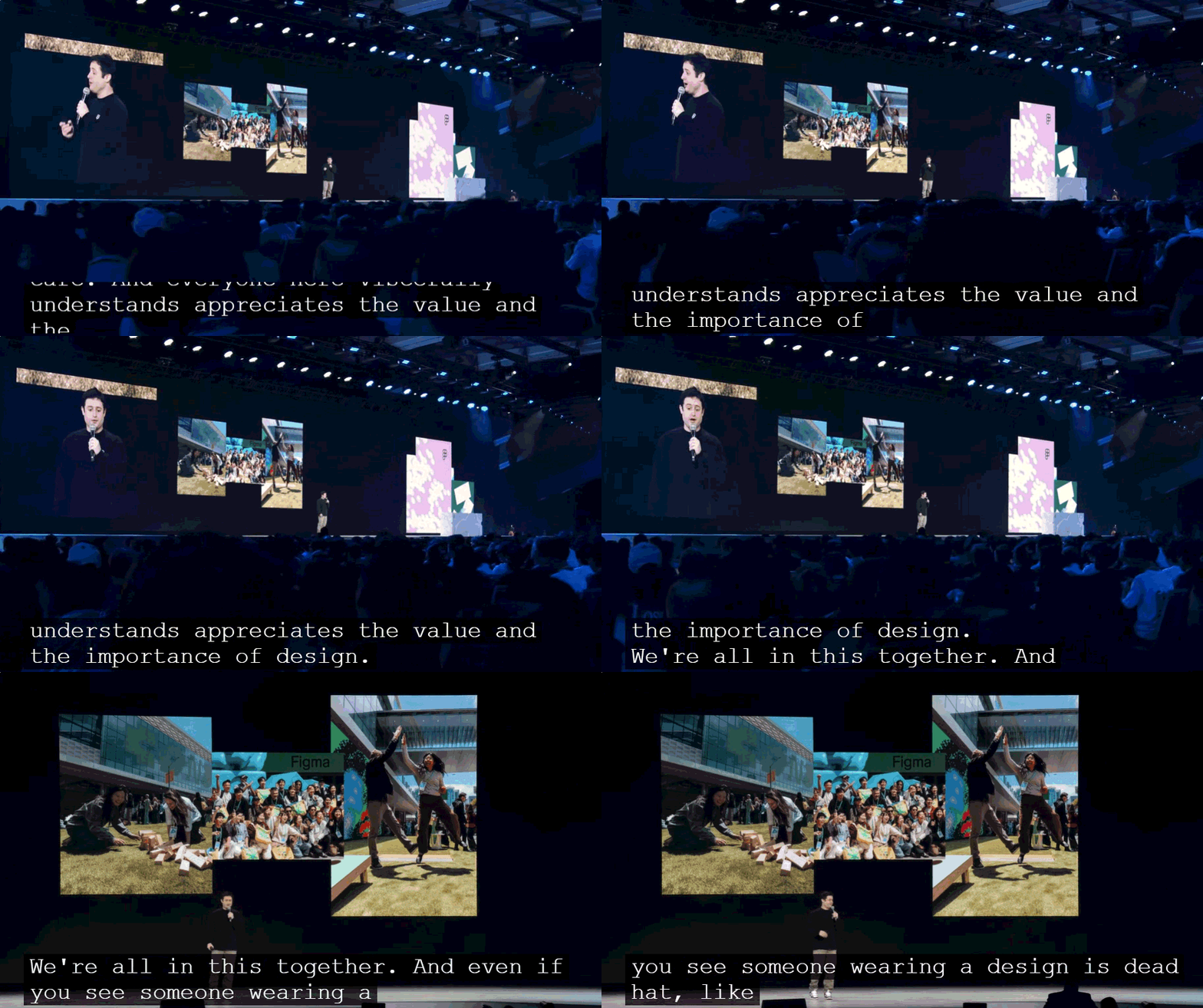
At Config 2026, Dylan Field told a room full of designers: “AI has lowered the floor, but it has not raised the ceiling. You will raise the ceiling.” It was reassurance, and it worked. People cheered.
But reassurance is diagnostic.
You don’t say it to people who aren’t afraid.
He could have demoed code layers, Motion, and shaders and let the products talk. He stopped to address the fear instead, which means the fear was loud enough in the room to need answering from the main stage.
The fear is specific: across every field, AI tooling is now aimed at doing the design work without the designer. Text-to-UI generators, coding agents that go from sentence to interface, design features bolted into general assistants. Each is an argument that the designer is a step you can cut. Everyone in this room entered knowing it, thinking it.

The call is coming from inside the house
Figma’s response to “AI is trying to cut designers out” is to put AI into the designer’s own tool. The threat is coming from inside. And the room can’t leave.
Figma won the category; if you work on a team, you use it. So the people most resentful of AI on principle now have it inside the one instrument they can’t refuse, shipped by the vendor they depend on.
The reassurance can’t lean on the obvious sales pitch (”look how much faster this makes you”) because speed is exactly what threatens this audience. Faster is the knife.

So it pivots from capability to identity: not “AI replaces you,” but “you’re the center of the process,” the one orchestrating the agents and the code and the connectors.
That’s a more durable promise than “AI can’t do what you do,” which expires every quarter as the models improve. A position survives a better model in a way a skill does not. It’s a genuinely smart move.
It’s also a bet on a moat Field doesn’t own. The intelligence under all of it is rented. Figma’s agent runs on third-party models from OpenAI and Anthropic, the same companies now building design tools of their own. So the differentiation depends on human judgment staying scarce relative to the models, while the models are supplied by vendors with every incentive to erode that scarcity. Each upgrade Field pays for to stay competitive raises the floor further toward the ceiling he just promised was safe.
None of this is a complaint about the strategy. Putting AI in the canvas is the correct competitive move, and Figma can fairly say it would rather the AI live inside a tool built around the designer’s judgment than inside a tool built to skip the designer entirely.

What is striking to me, what is interesting it’s the position it puts him in: the man holding the knife, in a room no one can leave, explaining that the knife is for them. Field didn’t have to give that speech. But he did.
NA: AI-assisted tools were used for transcription, reference formatting, and language editing. All intellectual content and conclusions remain solely the author’s.