



This article explores the topic of the Greenland annexation by the US, and its potential implications for the AI race. I only realized the connection watching the orbital data center announcements roll out in November 2025. Check my article on the subject: Google is sending rockets to space


August 2019: Trump floats buying Greenland. Denmark’s prime minister calls it “absurd,” late-night television tears it apart for a week, and every headline focuses on rare earth minerals, and breaking China’s monopoly on the elements that go into your smartphone and the F-35 fighter jet.
Nobody mentions the glaciers.
January 2025: Drew Horn tells reporters he evaluated Greenland “for data center development.” Horn worked at Trump’s Department of Energy, and he’s not talking about mining, but about data centers. He’s direct about it: “It literally is the best place in the world for data centers.” Did you hear about it? Me neither.
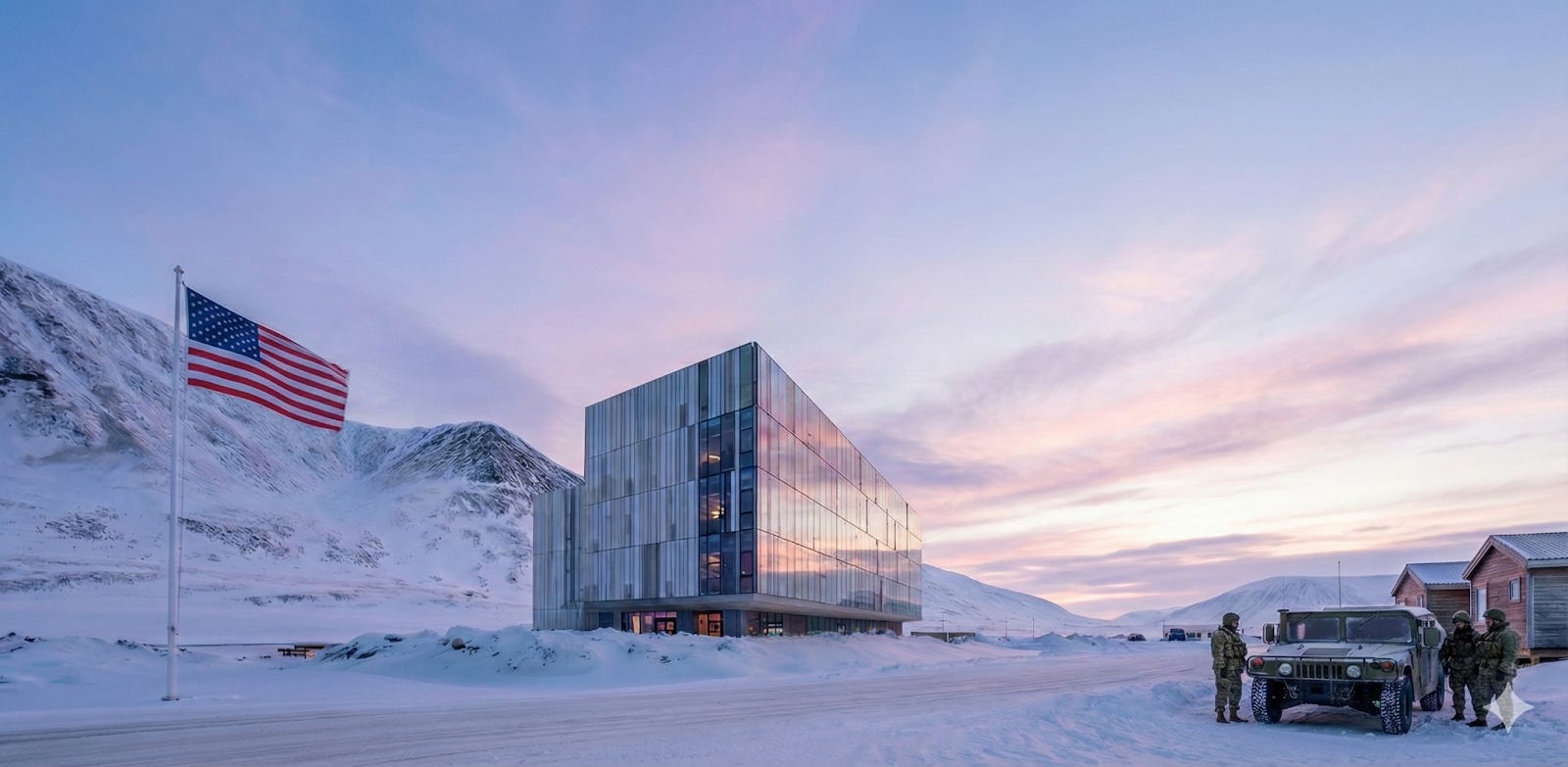
Six years separate those two statements. What changed in between? ChatGPT launched, and AI energy consumption went from academic curiosity to infrastructure crisis practically overnight. Data centers now burn through 415 terawatt-hours globally, heading toward 945 TWh by 2030 according to IEA projections. Arizona killed a $3.6 billion Amazon facility over water usage, Virginia has 42 organized groups fighting data center expansion, and Ireland capped growth entirely because the facilities already consume 21% of the country’s electricity.
The Greenland proposal looked insane in 2019. Turns out it was just early.

The math
Greenland’s ice sheets melt at a rate of 210 to 360 cubic kilometers annually, water flowing downhill from elevations exceeding 1000 meters. That elevation drop creates hydropower, enough to run the entire US AI computing fleet with room to spare.
Southern Greenland stays below freezing most of the year.
Data centers normally spend 40% of their electricity budget running air conditioning systems to prevent servers from overheating. In Greenland you crack the vents and let Arctic air do the work: free cooling, stable baseload hydro that flows constantly because glaciers keep melting, no intermittency issues like solar and wind. The physics just works.
Iceland already proved the model.
Facebook built a data center in northern Sweden using outside air for cooling, Google runs facilities in Finland the same way, and Iceland itself hosts everything from BMW’s crash simulation computers to cryptocurrency mining operations, achieving Power Usage, the lowest effectiveness rate in the industry, while running on 100% renewable energy.
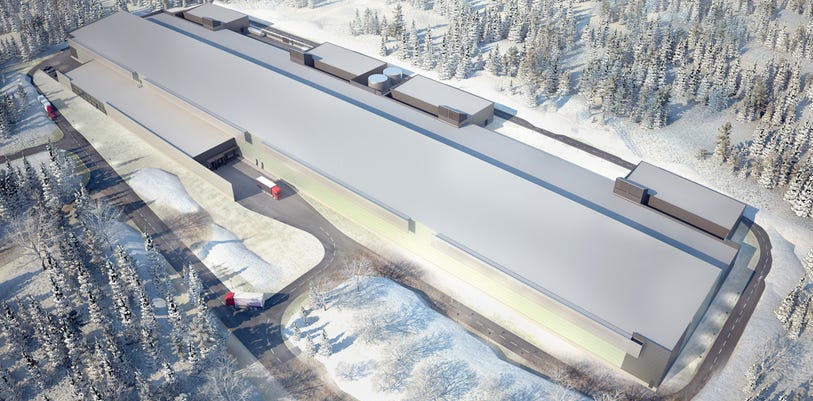
But Iceland maxes out around 3 gigawatts of total capacity. Greenland offers 60 to 120 gigawatts (theoretical potential). That twenty to forty times difference in scale matters when AI compute requirements double every 3.4 months and you’re trying to plan infrastructure for the next decade.
The rare earth story gave political cover.
Drew Horn runs GreenMet, a company that brokers critical minerals deals between government and private sector, and Bloomberg profiled him extensively in August 2025 with the entire focus on the Tanbreez rare earth deposit. Data centers get mentioned in passing, almost as an afterthought. Not conspiracy, just that “break China’s monopoly on defense supply chains” sells to Congressional appropriations committees while “maybe put servers near glaciers” sounds like speculative real estate.
But the fundamental constraint on computing at massive scale has always been cooling and power. Just didn’t matter for policy until it suddenly mattered desperately.

The timing problem
ChatGPT didn’t launch until November 2022. Between 2015 and 2019, data center energy consumption stayed essentially flat even as workloads tripled, with efficiency improvements managing to keep pace with demand growth. GPT-3 came out in 2020, but the explosive growth trajectory that makes Greenland’s geographic advantages strategically critical didn’t start until the 2022-2023 generative AI boom.

In 2019, AI energy concerns lived exclusively in academic research papers. Not policy documents, not newspaper headlines, not budget allocation discussions. The current panic with IEA projecting demand doubling by 2030, Goldman Sachs estimating $60 billion to train a single frontier model with the required infrastructure, none of that had registered with policymakers or real estate strategists in 2019.

So why Greenland in 2019?
Three possibilities present themselves. First, genuine foresight from people who understood exponential curves and saw where computing demands would go even without predicting the specific catalyst. Second, standard real estate and strategic asset acquisition thinking (you don’t need a single justification for a major purchase, you build a bundle of reasons that compound). Third, operational security and competitive intelligence: tech companies don’t telegraph their infrastructure strategies years in advance, but they do send signals through proxies.
The rare earth angle worked politically because it was concrete and immediate.
China controlled over 85% of rare earth element refining capacity, had already demonstrated willingness to weaponize that supply against Japan in 2010, and posed obvious national security threats that were easy to explain to Congressional appropriations committees.
Data centers in 2019 meant nothing to anyone outside the industry. The mineral story made the pitch viable to decision-makers. The thermodynamics might have mattered more in the long run.

What changed
Training GPT-4 required running 25,000 A100 GPUs continuously for three months, consuming enough electricity to power a small city. A single ChatGPT query uses ten times more energy than a Google search, and by 2030 the computational demands of training a single frontier model could exceed the annual electricity consumption of entire countries.
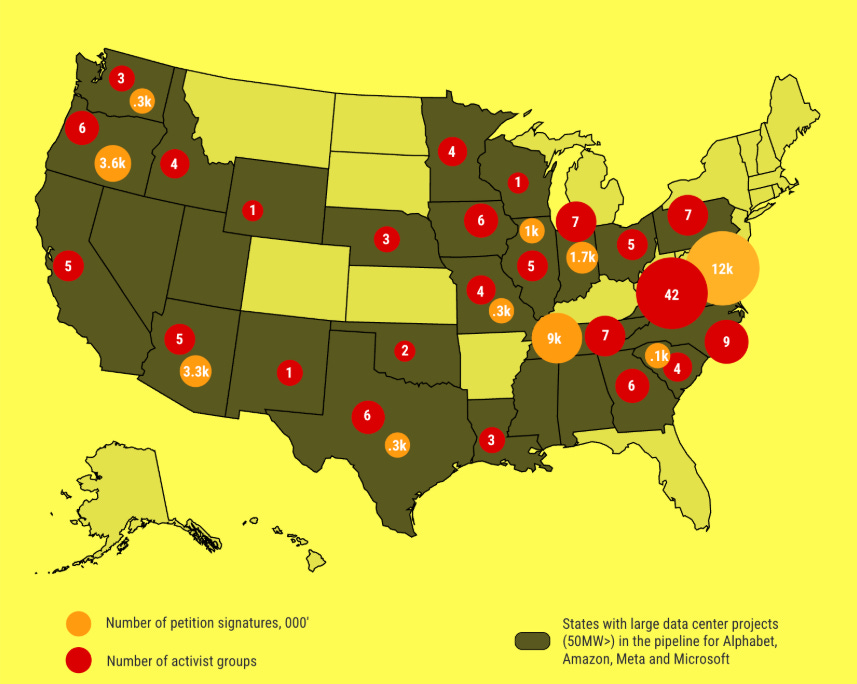
The United States has $64 billion worth of data center construction projects that have been blocked or delayed over the past two years alone. Local communities simply don’t want them: they consume water equivalent to serving 100,000 households, they strain electrical grids that weren’t designed for that kind of sustained load, and they drive up electricity costs for residential customers.
A national poll found that only 44% of Americans would welcome a data center in their community, which is actually less popular than nuclear power plants.
Iceland works as a proof of concept but doesn’t scale beyond its natural limits.
A nation of 370,000 people connected to the outside world by three submarine data cables has a proven cooling model that achieves the lowest power usage effectiveness in the industry, but you fundamentally cannot run Western AI infrastructure from a place that small no matter how good the conditions are.
Greenland could have worked at scale.
Researchers have cataloged over sixty potential hydropower sites, with twenty of them suitable for energy-intensive industrial applications. The natural lakes function as built-in reservoirs, and while the surface freezes the water remains liquid below the top two meters, allowing year-round hydroelectric operation without the engineering challenges of preventing ice damage to infrastructure.
Denmark said no. Greenland said no. The strategic asset remained unavailable, and the window closed.

The Accidental accuracy
Six years of hindsight clarifies the pattern without requiring any assumption of strategic genius.
Trump’s advisors weren’t visionaries who somehow predicted the ChatGPT revolution years before it happened: give them some credit for understanding resource constraints, but not that much credit.
The available evidence suggests a more mundane sequence: rare earth minerals provided the primary motivation, data center potential registered as a secondary opportunity, and strategic geographic positioning came along as part of the package deal. Drew Horn visited Greenland in 2019 after Trump floated the acquisition, doing the kind of opportunity evaluation that follows proposals rather than driving them.

Without realising it, they targeted exactly the constraint that would become decisive for the next generation of computing infrastructure.
Where can you run computers that consume gigawatts of power and generate corresponding amounts of waste heat without either running out of electricity or cooking the processors? Greenland has geographic and geological advantages that no other accessible location on Earth can match.
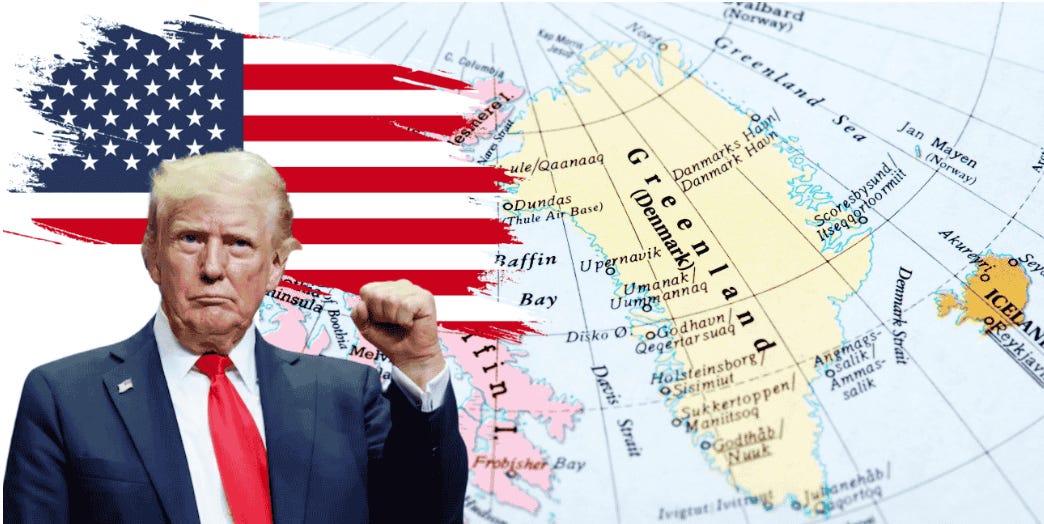
The proposal looked absurd in 2019 and looks prescient in 2025, not because anyone accurately predicted the specific trajectory of the AI boom, but because the underlying constraints were always there waiting to matter. Energy availability and cooling capacity determine where you can physically locate computing infrastructure at massive scale. That fundamental truth didn’t change and it just didn’t matter for infrastructure planning until suddenly it became the primary constraint practically overnight.
Iceland proved the Arctic cooling concept works in practice.
Greenland offered the scale to actually matter for global infrastructure needs. When you’re building data centers for the next generation of computing, you’re not optimizing for current workloads that you understand, if you’re smart, you’re building infrastructure for exponential growth patterns that you can’t fully predict but know are coming.
The Arctic provides some options.
Greenland was objectively the best option in that set. And it got rejected as absurd colonial overreach before anyone took the technical merits seriously.
That failure forced the current Plan B we’re watching develop. November 2025 brings the orbital announcements: Google planning data centers launching by 2027, China announcing a competing constellation within a month, Bezos confirming Blue Origin’s plans, Schmidt revealing that his Relativity Space acquisition was specifically for this kind of orbital infrastructure development. They’re taking computing off the planet entirely because the best terrestrial location wasn’t politically available when it mattered. Now the baseline plan involves putting servers hundreds of kilometers overhead instead of on the Arctic coast.

What space reveals about ice
I only realized the connection watching the orbital data center announcements roll out in November 2025.
Six separate companies: Google, China’s state apparatus, Bezos, Schmidt, Musk: all declaring the same infrastructure strategy within the span of a few weeks. That timing signals desperation, not some grand coordination. When Plan A fails, Plan B emerges fast and everyone reaches for it simultaneously.
If the Greenland acquisition had worked, none of the orbital plans would be necessary. You’d have conventional construction using proven techniques instead of launching rockets, established hydropower infrastructure instead of experimental solar arrays in orbit, free atmospheric cooling instead of radiative heat dissipation into vacuum. But the political window closed before the technical need became obvious. Denmark refused, Greenland refused, and the international mockery killed any serious discussion before it could develop.


The media coverage saw 18th-century colonialism and stopped there. Nobody asked the strategic question: why would you actually want the world’s largest island? From an infrastructure development perspective, not a territorial acquisition one, the proposal targeted the single best location on Earth for AI-scale computing. Not the rocks underneath. The ice on top.
The genius wasn’t intentional, and the mockery wasn’t wrong about the political problems. But the underlying logic was exactly right, just arriving six years before the world was ready to understand why it mattered.
More people will figure this out now. The orbital announcements make Greenland’s advantages obvious in retrospect: when building rockets and launching them into space becomes the easier path than negotiating with Denmark over Arctic infrastructure, perhaps the original negotiation starts looking more reasonable. The discussion might reopen. The physics haven’t changed, the need has only grown, and Plan B is expensive enough that Plan A starts looking smart again.