


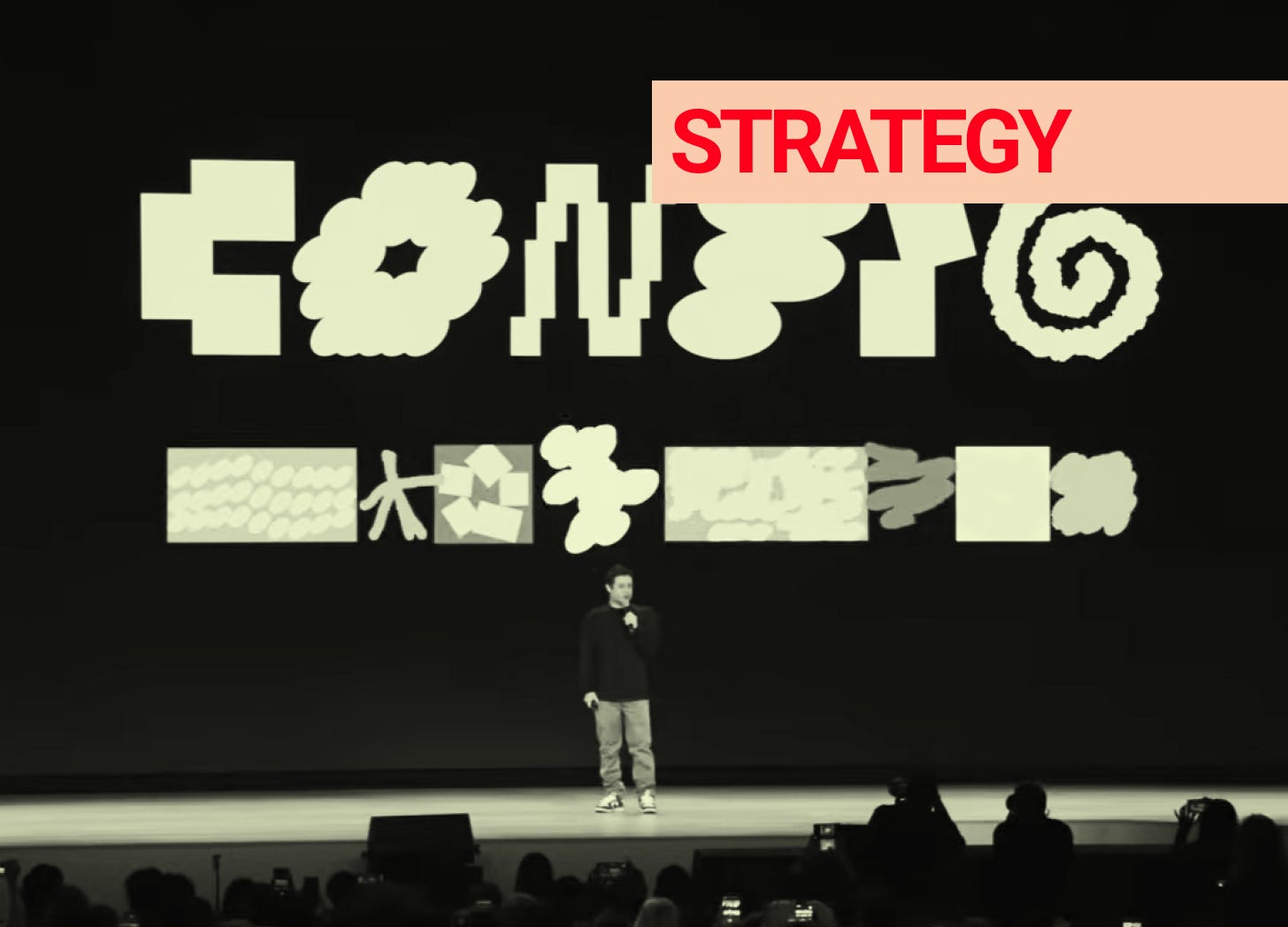

Figma is a technical tool. Using it well takes craft and fluency: a designer’s command of the thing. The pricing tiers admit as much: full editor, viewer, commenter, a hierarchy of who can make versus who can only watch.
So the strange thing about Config 2026 is what Figma chose to celebrate: the headline of its biggest keynote was, in effect, a plan to remove the technicality that defines it: letting people who can’t operate the tool produce results as if they could.
A company built on a skill barrier spent its main stage lowering it.
Why would it do that?
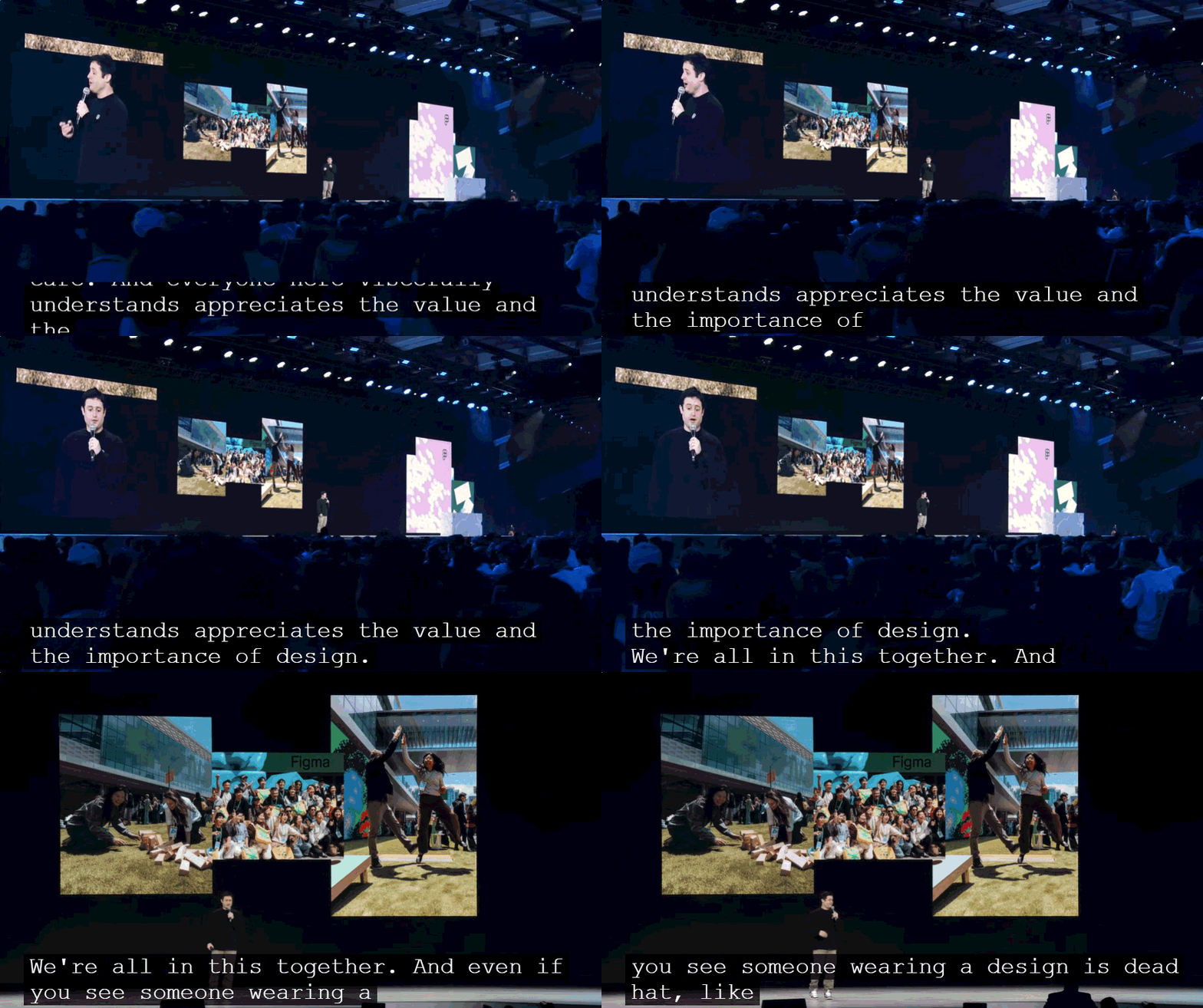

A technical tool is designed for technicians
Start with what the barrier actually was. The difficulty was never incidental; it was the protection. Knowing how to design in Figma was scarce, and scarcity is what made it valuable. The wall filtered out everyone who couldn’t clear it, and the professionals lived safely on the other side, not because the software lacked capability, but because using it required an expertise most people didn’t have. Friction was the moat.
AI’s single function is to drain that moat. “Speed” is the word used on stage, but speed is just friction subtracted: fewer steps, less expertise required to get from intent to output. Every feature that lets you prompt instead of know is a section of wall removed. Why would a company demolish the barrier its own users depend on?
Because the barrier that protects the user is the same barrier that caps the company.
The friction keeping designers scarce also kept Figma’s market small and expert-only. “Design for everyone” and “a protected profession” are opposite conditions. A wall that lets everyone through is not a wall. Removing the technicality opens Figma to every non-designer who was previously locked out, which is an enormous market and a terrible deal for the people who were safe behind the lock. The growth case and the security case split, and Figma, reasonably, chose growth.
And it had no choice but to choose. The floor is dropping across the entire field regardless. That’s what AI does everywhere: it removes the need for the expert rather than serving him. Design already runs on that current: Cursor lets non-coders ship software, text-to-UI tools turn a sentence into an interface, general assistants generate passable layouts on request. The wall was coming down whether Figma touched it or not. So the move is a reaction. The incumbent decided it would rather be the one removing the wall than the last tool defending one the market has already walked past.
That is the full answer to why a tool for experts would remove the expertise: because the expertise protected its users but throttled its market, and the field left no reward for standing still.

Which is also why the keynote needed a line like
“you will raise the ceiling.”
It’s what you tell the experts while you remove the requirement to be one.
NA: AI-assisted tools were used for transcription, reference formatting, and language editing. All intellectual content and conclusions remain solely the author’s.