I want AI. Not in my backyard.
Cover that Data Center which I cannot bear to see
Most Americans use AI. Most Americans oppose having a data center near their home. These are the same people
While writing this article, I couldn’t stop thinking about this quote from Tartuffe, Molière's 1664 portrait of a man who masks appetite behind virtue. In its most famous scene, he demands that something visible be hidden, a demand made by the very man who cannot stop looking at it. No spectator is fooled. The discomfort is about being asked to see what everyone already knows is there.
“Couvrez ce sein que je ne saurais voir:
Par de pareils objets les âmes sont blessées,
Et cela fait venir de coupables pensées.”
“Cover that bosom which I cannot bear to see:
By such objects souls are wounded,
And that gives rise to guilty thoughts.”
Tartuffe, ou l’imposteur (1664), III, 2, Tartuffe de Molière
AI Key takeaways
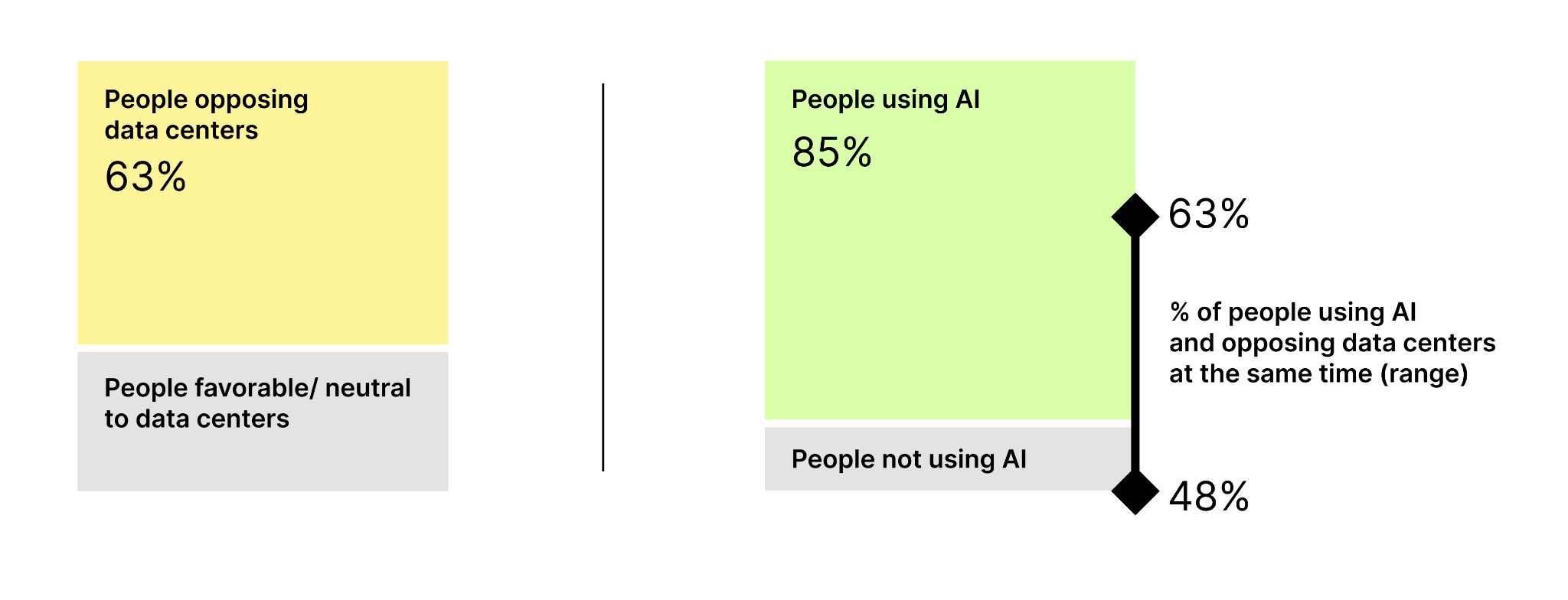
Most Americans use AI. Most Americans oppose having a data center near their home. These are the same people.
The standard response to opposition is that communities don’t understand what they’re opposing. They do. Knowing more makes them more opposed, not less.
People support wind power, renewable energy, and AI in the abstract. They reliably oppose the infrastructure for all three in the specific. This is not a contradiction unique to AI.
Gas has the same supply chain problem. Nobody thinks about it anymore. That’s where AI infrastructure is probably headed too.
People oppose data centers
People use AI
We know they are the same people
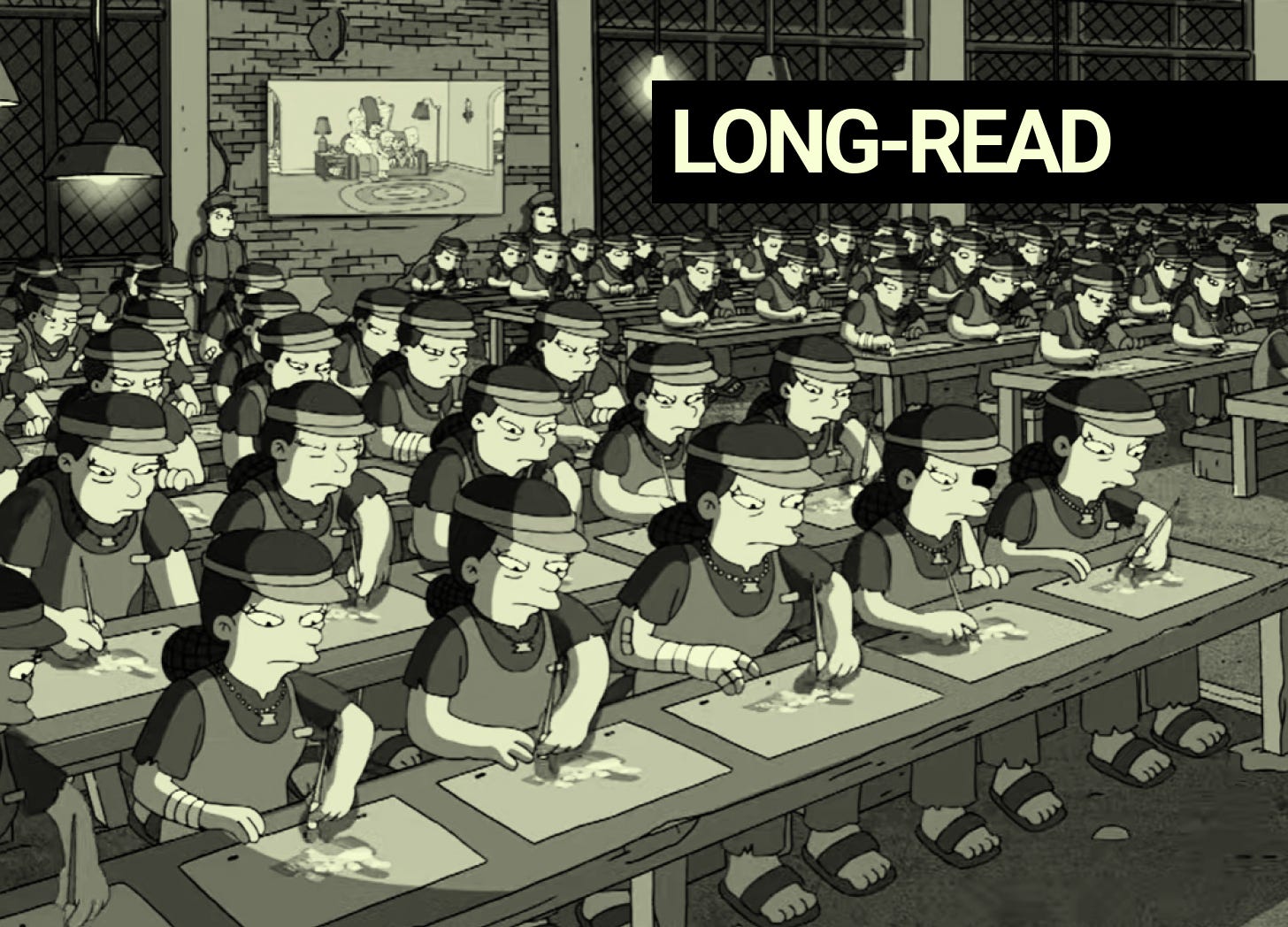
Banksy intro for The Simpsons
Education is not the variable
It’s data centers, but also windmills, nuclear plants, etc.
The Natural state
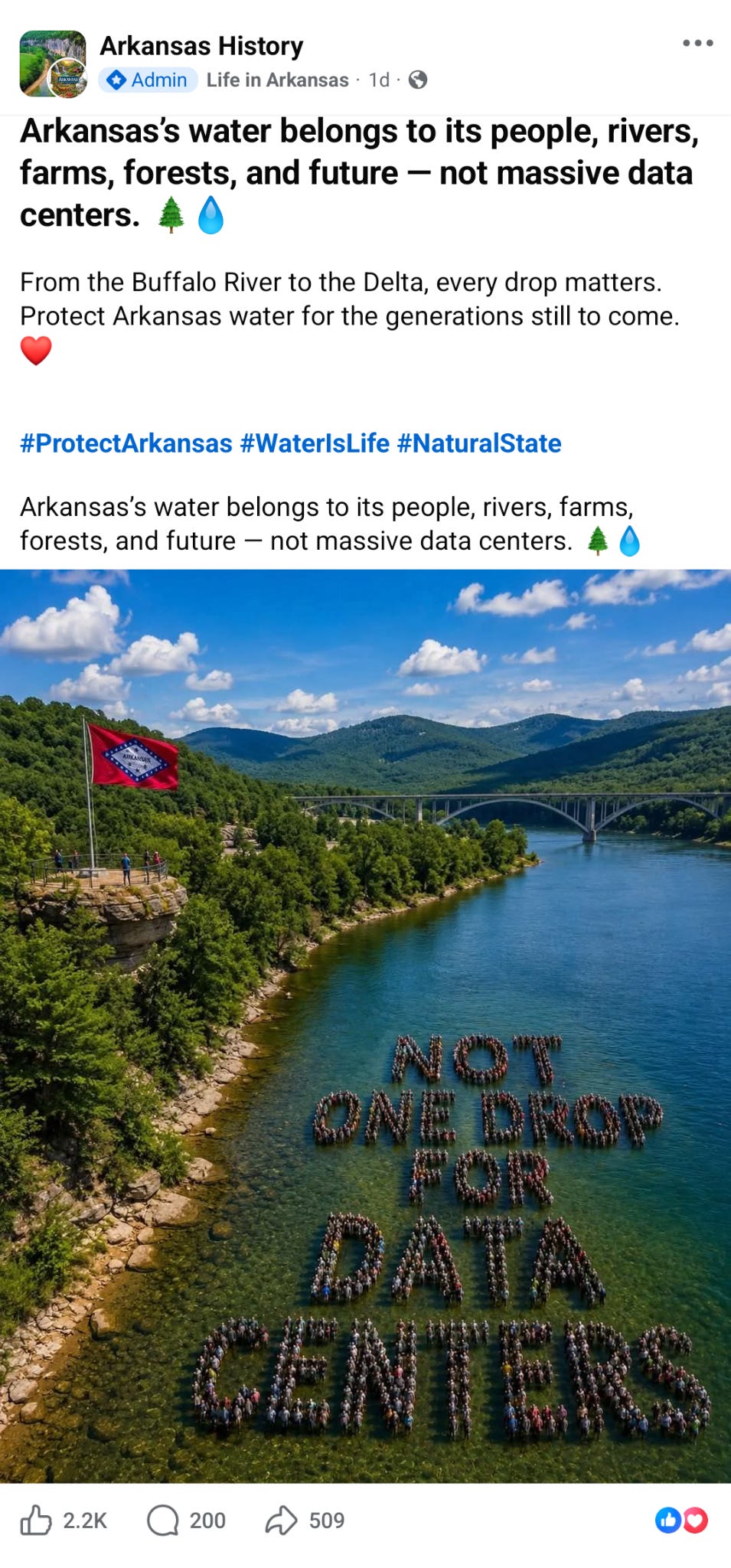
On my facebook feed, a militant anti-data center post on the Facebook page “Arkansas History,” tagged “Life in Arkansas.” The image depicts a large crowd of people standing in a river, their bodies arranged to form the words “NOT ONE DROP FOR DATA CENTERS.” The Arkansas flag is visible on a cliff in the background. The image is obviously AI-generated.
This article is about the obvious dissonance amongst AI users.
People oppose data centers
More Americans oppose local data center construction than oppose nuclear plants. The opposition is cross-partisan, cross-demographic, and grows sharper the closer the construction gets to home. Support for local construction collapsed by more than forty points in a single year.
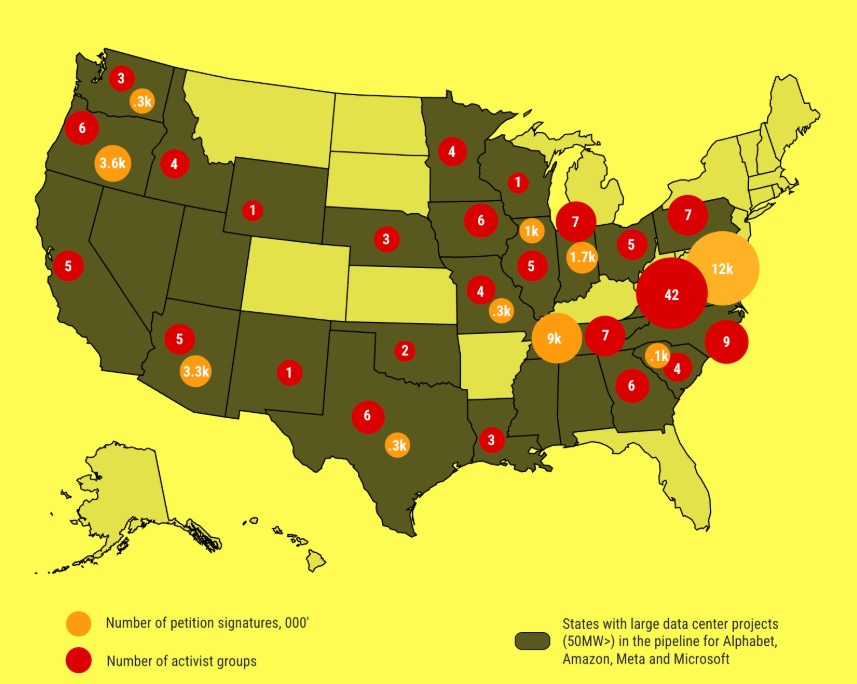
The map shows the geography of the emerging data center backlash and how it compares to states where Amazon, Google, Meta, and Microsoft (hyperscalers) have 50 MW> data center projects in the early planning stage. - source: Datacenterwatch.org
The communities with the most direct experience are the most opposed. In Virginia’s Loudoun County, data centers directly fund schools and suppress property taxes. A majority of residents still believe they are making their tax bills worse, and comfort with a local facility there has more than halved since 2023. Communities that benefit on paper are pushing back.
When surveys specify that data centers power artificial intelligence, opposition runs higher than when facilities are described neutrally as places that store and process data. People know what they are opposing, and the opposition intensifies when the connection to AI is made explicit.
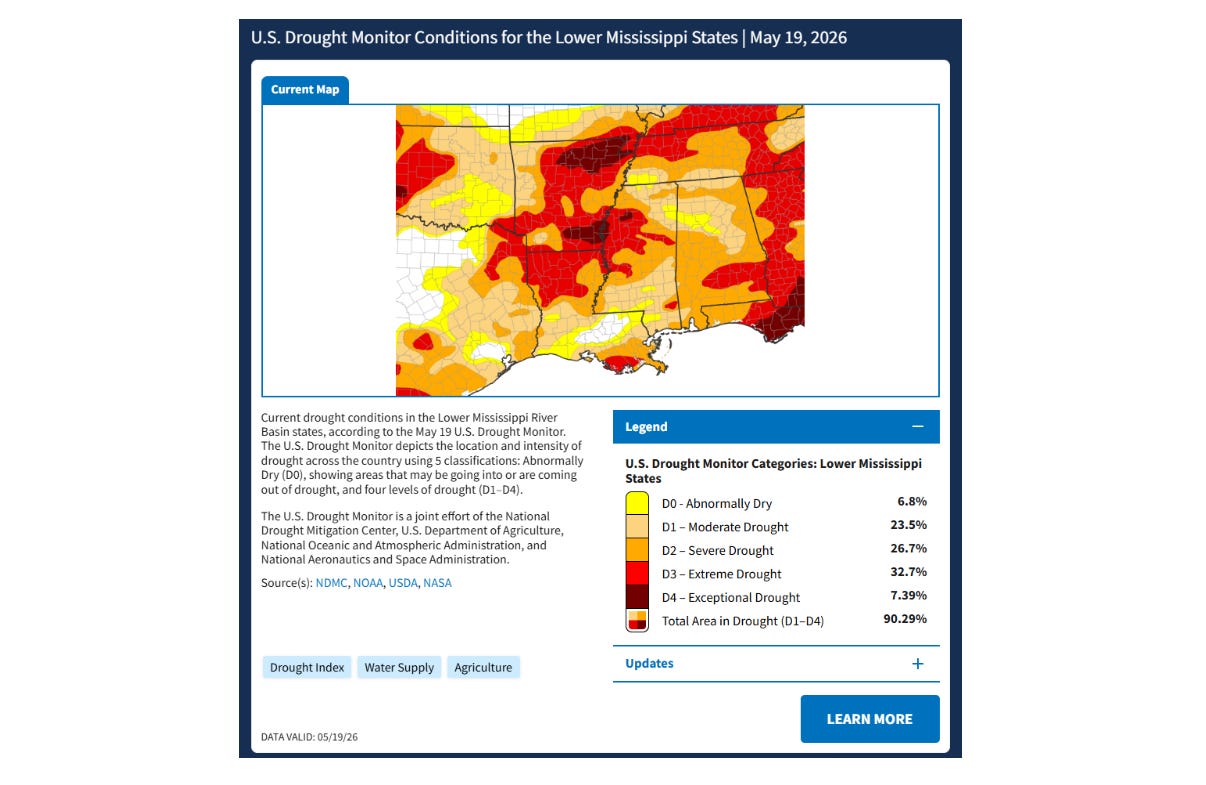
In Arkansas, the opposition has a specific material basis. Nearly the entire state is currently in severe drought, with precipitation running over a foot below average since August 2025. Data centers consume millions of gallons of water daily for cooling, drawing from the same municipal sources that residents use. They clear forests and wetlands to build, eliminating wildlife habitat and the natural buffers that regulate water and flood risk. The noise from cooling systems is audible up to two miles away, disrupts animal communication and migration, and produces low-frequency sound that affects human health even when inaudible. Opposing a data center in a drought-stricken state is not a position that requires explaining.
People use AI
Most American adults have used AI tools, and adoption cuts across the same demographic lines as the opposition: across age, education, income, political affiliation.
Leon Festinger identified cognitive dissonance in 1957: when a person holds two conflicting beliefs simultaneously, the discomfort produced does not typically lead to changed behavior. It leads to mental reorganization (reframing, compartmentalization, selective attention) that allows both beliefs to coexist. Research on consumer behavior has documented this consistently across supply chain contexts for decades. AI has a widely consumed resource. The infrastructure behind it is visible, contested, and showing up in people’s backyards. That combination is what makes the dissonance legible right now.
We know they are the same people
The University of Houston’s Hobby School of Public Affairs asked both questions to the same participants. The vast majority said they use AI. Of those same people, nearly two thirds said they oppose having a data center built within a mile of their home. One group, holding both positions simultaneously.
This is consistent with decades of research on how consumers relate to supply chains. When given the option to find out whether a product was made using child labor, a significant portion of consumers declines. The avoidance is strongest among people who care most about the underlying issue: knowing would create an obligation to act differently, and the cost of that change outweighs the cost of not knowing.
In 2012, a significant share of iPhone users said they were less likely to buy Apple after learning about working conditions in Chinese factories. A similar share said they had not heard any reports at all. iPhone sales hit a record that year. Workers at Foxconn’s Zhengzhou facility currently earn a few dollars an hour.
Education is not the variable
The standard industry response to opposition is that affected communities don’t understand what they’re opposing. Bring information, the argument goes, and resistance softens. The same argument is made about women’s lower AI adoption rates: that the gap reflects a literacy problem.
Women use generative AI at significantly lower rates than men. A majority of women say they never use AI at work. The proposed fix is education. For tech, it’s a marketing problem. Really? The vast majority of deepfake videos online depict women, and nearly all of them are pornographic. More than half of deepfake victims in the US have contemplated suicide. Women in public life are documented to be self-censoring online to avoid AI-generated abuse. Lower adoption among women is a rational response to a documented pattern of harm.
I write extensively about this in a previous article: Give them all the computational power in the world, and they will use it to harass women
The jobs argument runs on the same logic: they are too dumb to understand. Communities are told that data centers bring employment, and that opposition reflects a failure to grasp the economic opportunity. The permanent workforce of a large data center typically amounts to a few dozen people. Construction jobs are temporary, often lasting less than a year, while the tax breaks awarded to developers can run for a decade or longer. In Virginia, where the data center industry is most established, one permanent job is generated for every thirteen million dollars invested.
The top barrier to AI adoption is lack of trust, not lack of understanding. Treating informed resistance as ignorance is a way of not having to respond to it.
It’s data centers, but also windmills, nuclear plants, etc.
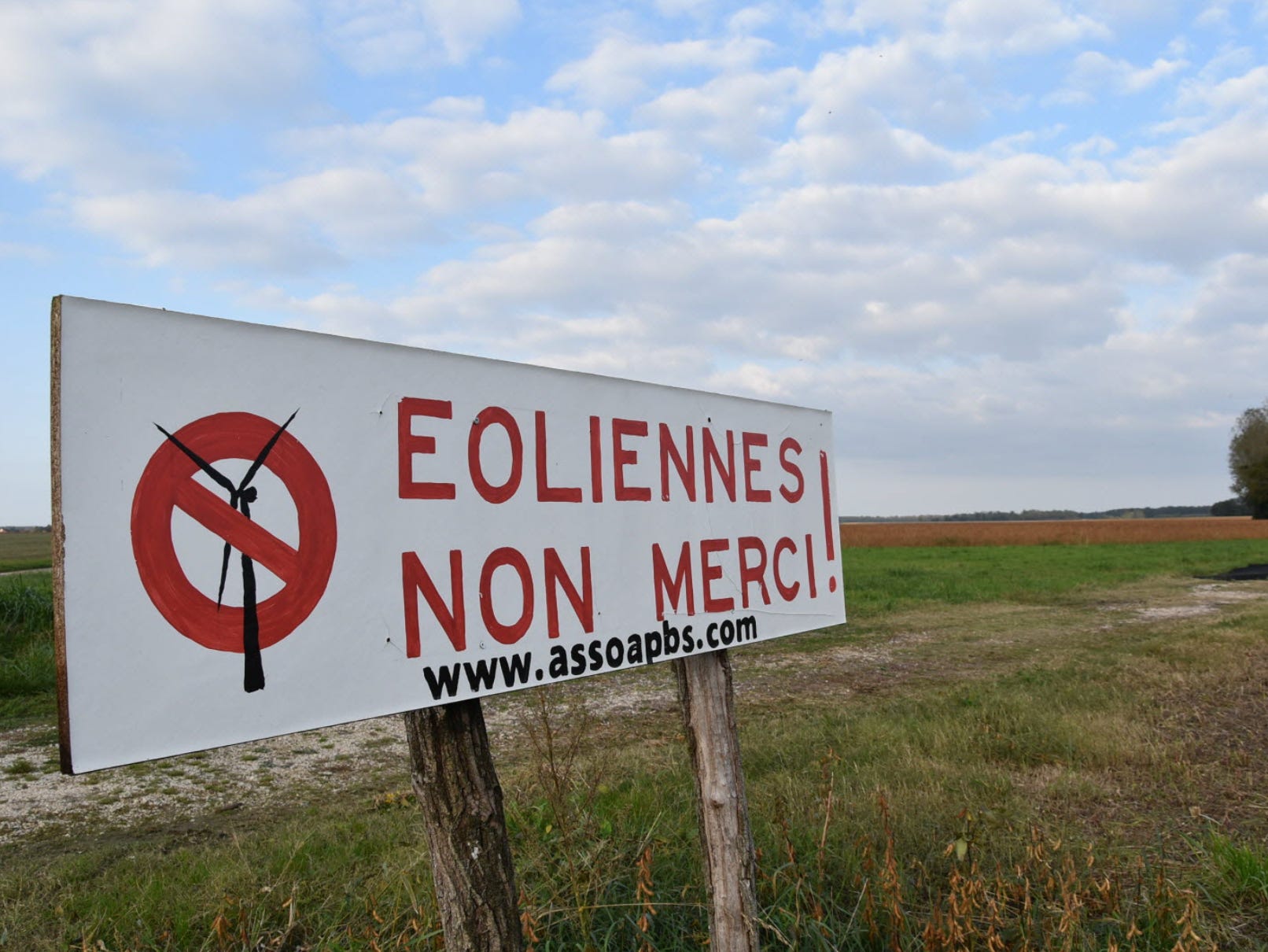
Wind turbines are clean energy infrastructure. The French broadly support wind power. So do most Americans. The opposition to local wind projects runs on identical grounds to the opposition to data centers: landscape, noise, wildlife, proximity. In France, getting a wind farm permitted takes up to nine years.
Not because the public rejects renewable energy in principle, but because the public that supports it in the abstract reliably opposes the infrastructure for it in the specific.
In April 2025, a French court annulled permits for the country’s largest planned onshore wind farm following a lawsuit by local residents. The coalition that brought the case spanned the political spectrum. They were against clean energy here.
NIMBY (Not In My Backyard) describes the gap between what people support as policy and what they accept as neighbors. Data centers are the latest version.
The Natural state
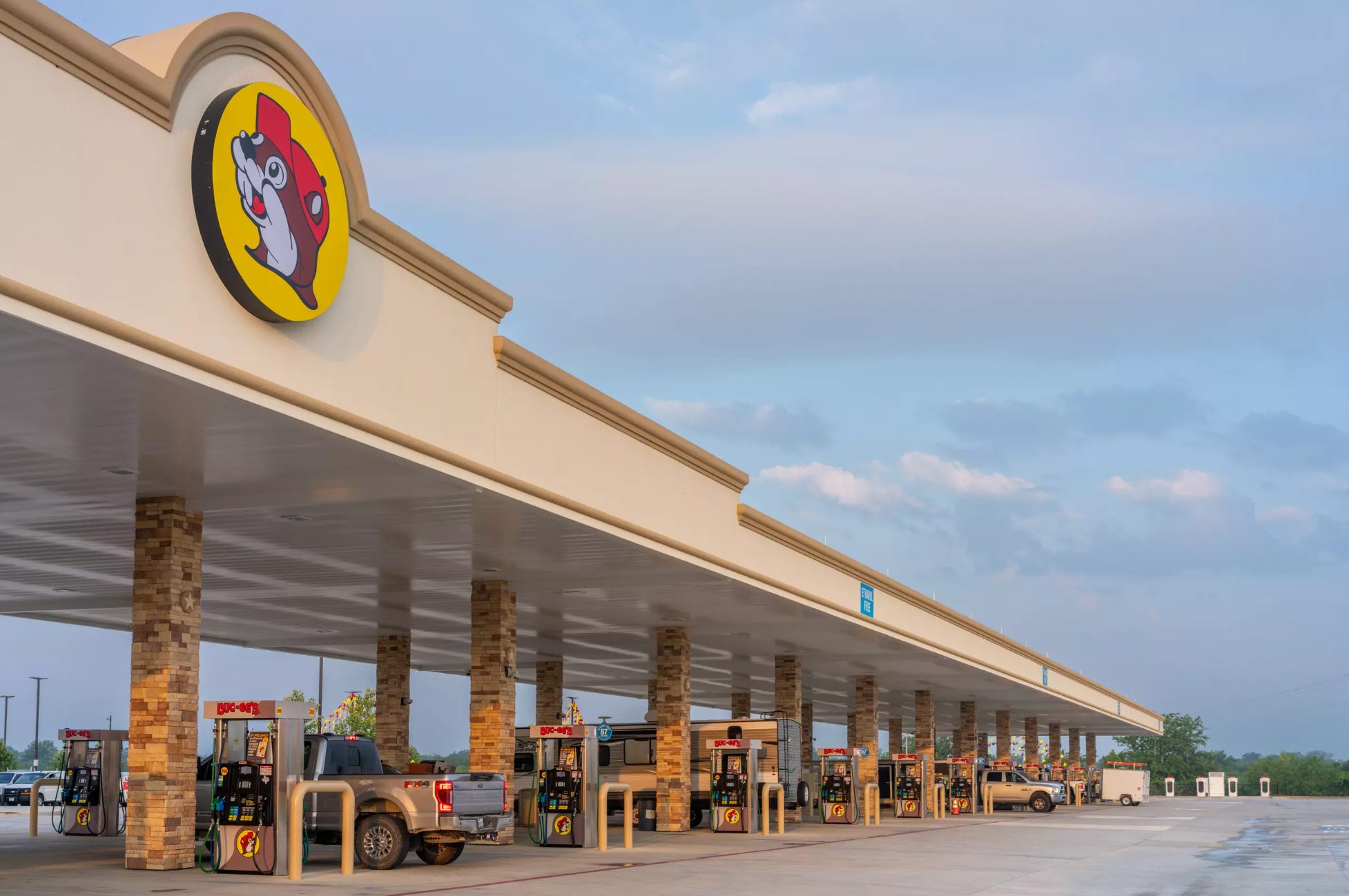
In August 2026, Arkansas will get its first Buc-ee’s: a travel center in Benton built on 82 acres of previously undeveloped land, graded and cleared for the purpose. The groundbreaking drew hundreds of people and was the largest in Buc-ee’s history. The governor attended. The location is expected to draw millions of visitors a year. People are excited. I am excited!
Buc-ee’s is infrastructure for fuel distribution. A data center is infrastructure for AI distribution. Both are the physical cost of a resource that people consume and expect to have available.
Gas is old enough that its supply chain has become invisible, and nobody standing at a pump thinks about the refinery, the pipeline, the tanker route, the extraction site. The infrastructure receded into the background decades ago, which is why a travel center the size of a small airport can open in a drought-stricken state, on land that was recently undeveloped, to widespread celebration.
AI is new enough that its infrastructure is still visible, still being built, still being contested. Once it settles into the background, as it always does, the opposition will likely follow the same arc. Probably?
Opposing data centers while using AI, welcoming a fuel distribution monument while living through a drought: the through line is our relationship to resources. We want what the infrastructure delivers. We would prefer the infrastructure somewhere else.
NA: AI-assisted tools were used for transcription, reference formatting, and language editing. All intellectual content and conclusions remain solely the author’s.












Love this.
Also add prisons to the list.