


A delivery robot in Los Angeles finds its way using photographs that Pokémon GO players took of lampposts and storefronts. A bankruptcy judge priced fifteen million genomes at $305 million. A smart-ring CEO swore on stage that your sleep data will never be sold, and he was telling the truth. Three stories, one machine running underneath.

AI Key Takeaways
Consumer products accumulate datasets as a side effect of use, and the dataset’s real value tends to surface after the product’s original purpose has ended.
The lifecycle recurs in five stages: capture, accumulation, trigger, second life, denial. The cases differ; the sequence holds.
The transfer uses a different door every time: a licensed model (Niantic), a court-supervised auction of the whole company (23andMe), a content license (Reddit).
Consent attaches to the product, and the asset’s life attaches to the dataset, so every second life begins outside the consent that funded the capture.
The public has learned the pattern faster than the industry has learned to talk about it, which is why sincere denials now read as evasions.

Coco Robotics runs delivery robots in Los Angeles and a handful of other cities. When one of them crosses a street, it checks its position against a model trained on 30 billion images of urban space, and it can place itself to within centimeters. The images were taken by people playing Pokémon GO and Ingress.
“We’re excited to bring the Niantic Spatial and Coco Robotics engineering teams together in this unique design partnership. It gives us reliable access to localization services that further improve robot navigation,” - Zach Rash, Co-Founder and CEO of Coco Robotics
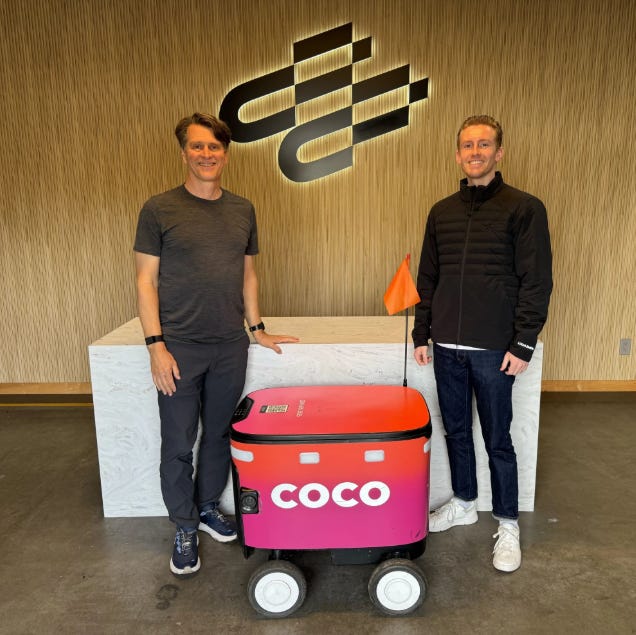
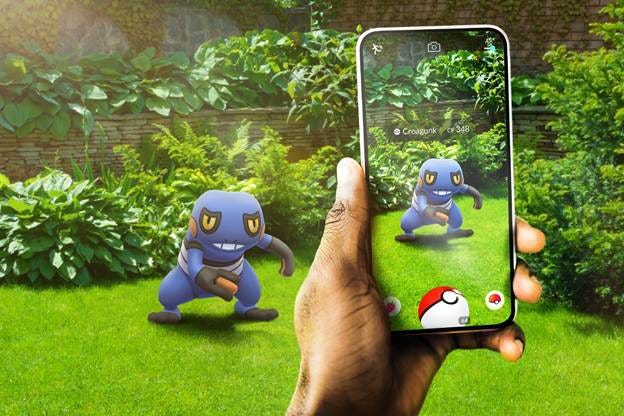
The scans were quest steps, rewarded in Poké Balls, disclosed in the terms, aimed at public landmarks. Then, in March 2025, Niantic sold its games division to Scopely for $3.5 billion and spun its technology out as Niantic Spatial, a company whose website leads with the phrase “real-world foundation models for physical AI.” In December 2025, Niantic Spatial announced a partnership with the defense firm Vantor to put its positioning capability into navigation for drones operating where GPS is jammed or denied. The route from a Snorlax hunt to a military drone took a few years and broke no promises along the way.
What happened to those scans is a lifecycle. It runs on ordinary business logic, no secrets required, and its stages are visible in public filings and press releases. Once you can name them, you will find the same machine running in a genetics company’s bankruptcy, in a smart ring’s public relations crisis, in a fitness app’s heatmap, in fifteen years of Reddit threads. Consumer products accumulate datasets as a side effect of being used. The value of the dataset tends to surface later, in another market, after the product’s original purpose has ended. This essay is about the machine.

The machine has five stages
The same sequence appears in every case that follows.
Capture. A product collects data as a side effect of use. The collection is disclosed and consented, and the consent is framed entirely by the product’s purpose: scan the landmark, spit in the tube, wear the ring to bed.
Accumulation. The dataset compounds while the product runs. It sits on the books at a value near zero, because nothing has forced anyone to price it.
Trigger. A business event forces a price: a pivot, a bankruptcy, a licensing deal, an acquisition. The trigger has nothing to do with the users, who usually learn about it from the news.
Second life. The value realizes in a market the original consent never imagined. Mapping. Drug discovery. Robotics. Model training. Defense.
Denial. The company states, accurately, that it has never sold anyone’s data. The transfer used another door.
The stages matter because the public debate is stuck at stage one, auditing collection practices, while the value and the risk live at stages three through five.

The map outlived the game
Each stage of the machine is documented in Niantic’s case.
Capture: players scanned real locations as an opt-in game mechanic for most of a decade.
Accumulation: MIT Technology Review reports the resulting training set at 30 billion images of urban environments, thousands of overlapping views per location, taken at different angles, times of day, and weather conditions.
Trigger: the Scopely sale, which converted a games company holding a side-effect dataset into a spatial-AI company holding a core asset, funded with $250 million to develop it.
Second life: first delivery robots, then, through Vantor, drones for the defense market.
Stage five arrived on schedule. When the drone coverage landed in mid-2026, Niantic Spatial told Kotaku that player data was never shared with the defense contractor. The statement holds up. That is the shape of the modern transfer: the dataset stays in place, and the value extracted from it walks out the front door wearing a license agreement.
“Now as part of Scopely, Pokémon GO data is not shared with Niantic Spatial. AR Scans collected through Pokémon GO were submitted voluntarily by players who opted into the feature and were subject to the applicable Terms of Service and Privacy Policy at the time. The discontinuation of AR scanning and the end of data sharing with Niantic Spatial were part of the transition planning associated with Pokémon GO‘s move to Scopely.”

The genome bank outlived the company
23andMe entered bankruptcy in March 2025 holding DNA from about fifteen million customers, and its collapse produced something rare: a public price for a consumer dataset. Regeneron, a pharmaceutical company, won the first auction at $256 million. The court reopened the bidding, and in late June a judge approved the $305 million offer of TTAM Research Institute, a nonprofit led by 23andMe founder Anne Wojcicki. Between the two auctions the company remained dead. The asset gained $49 million.
Bankruptcy is the stage-three trigger in its purest form, because it removes all discretion: a court requires that assets be enumerated, marketed, and sold to the highest bidder. The kit business had stopped working years earlier; a genome only needs to be sequenced once, so the product model consumed its own market. The bank the kits filled was the durable thing, and both serious bidders wanted it for the same second life, research and drug development, a purpose customers had been invited to opt into under a company that, by the time the question mattered, existed only as an estate.

The revolt arrived before any event
Oura is the case where nothing happened, and that is what earns it a chapter.
In 2025 the company published a blog post about a new factory in Fort Worth and partnerships in support of military readiness. A rumor cycle concluded that Palantir had access to customer health data. Customers posted videos throwing away their rings. At Fortune’s Brainstorm Tech conference, CEO Tom Hale answered from the stage: “We will never sell your data to anyone, ever.” The verifiable reality was small: a company Oura had acquired held an ordinary software contract with Palantir, and no customer data flows through it.

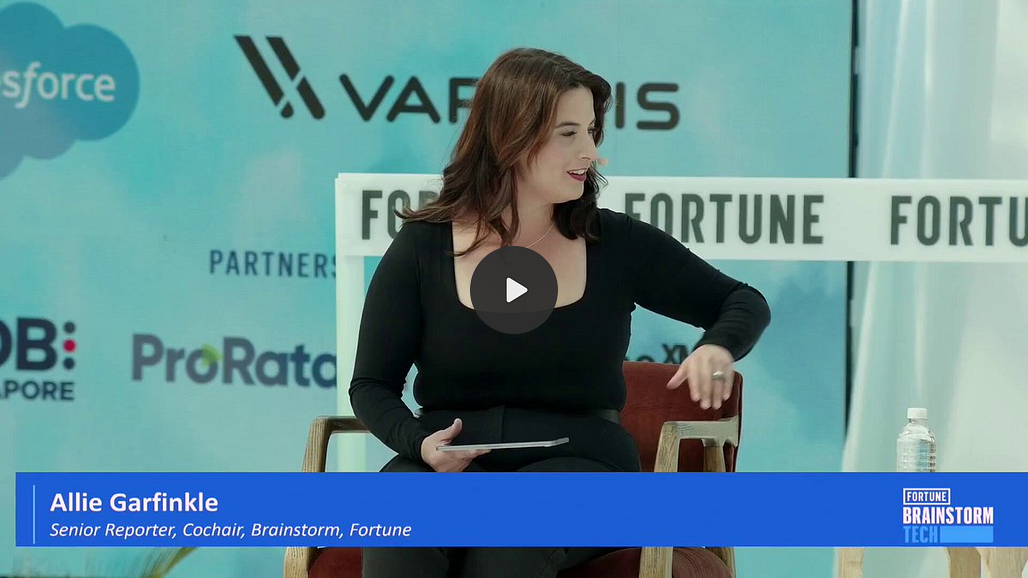
“We will never sell your data to anyone, ever.”
- Fortune’s Brainstorm Tech conference, CEO Tom Hale
Read through the lifecycle, the panic is pattern recognition. Oura’s customers have watched the machine complete its cycle elsewhere. A sleep-and-body dataset drawn from millions of people, held by a growth-stage company signing defense-adjacent partnerships, sits visibly at stage two, and the crowd priced the trajectory.
I have written about privacy cynicism, the settled belief that collection is pervasive and beyond individual influence Check my article about the Panopticon generation.
The ring-trashing videos are the other face of that literacy. The audience has learned the machine, and it no longer waits for stage four to react.
Hale’s promise deserves a close reading, because it is the strongest reassurance the industry knows how to give, delivered sincerely, on the record. It is a promise about the sale of data.
Niantic sold no data. A court sold the company that contained 23andMe’s. Reddit licensed access to its archive. Every executive disavows the same mechanism, and the machine does its work through the others.

The pattern predates the panic
None of this arrived with the current AI wave. In January 2018, Strava published a global heatmap of user workouts, and an analyst noticed jogging loops glowing in the Syrian desert. Soldiers’ exercise logs, aggregated, had drawn the perimeters and internal layouts of military bases that appeared on no satellite map. A running app’s side effect turned out to be open-source intelligence. In February 2024, the same week it filed for its IPO, Reddit announced a deal reported at $60 million a year giving Google access to its archive for AI training. Fifteen years of people talking to each other became a priced input for someone else’s model, and the pricing event was, again, a corporate milestone with no user in the room.
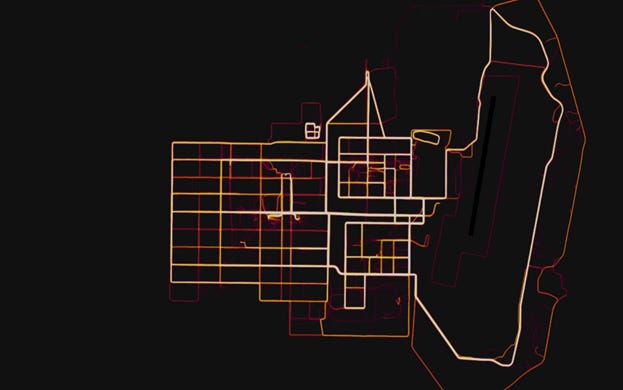
The doors differ every time: an aggregate visualization, a content license, a court-supervised auction, a licensed model. The machine is the constant, and its age is the point. This is a structural property of consumer data, observable across a decade, in fitness, genetics, gaming, and forums. It will be a structural property of whatever ships next.

Consent is versioned to the product
The research world solved a version of this problem long ago, which is how I know the consumer world hasn’t. When a participant consents to a study, the consent names a purpose, a duration, and a custodian, and reusing the material for a new purpose means going back to the participant. Product consent attaches to the product.
The dataset outlives the product, and the consent does not travel with it.
Every player who scanned a Pokéstop agreed to something real. The entity they agreed with no longer makes games. The question “may we use your scans to guide drones where GPS is jammed” was never asked, because at capture time the use did not exist, the partner did not exist, and the company as currently configured did not exist. The second life begins, structurally, outside the consent that funded the capture.
Privacy practice keeps aiming at the wrong lifespan: policies version with the product, deletion rights attach to the account, promises are about sale. The asset’s life is longer than all three.

What the denial answers
There will be more Ouras, because the reassurance template is ready and every company can sign it in good faith: we have never sold your data, and we never will. All of the companies in this essay could put their names to that sentence today. Nobody sold your data. The asset moved anyway. Hold the next partnership announcement, the next pivot, the next bankruptcy docket against that sentence.
The product is the visible thing, and products will keep dying the way products die: pivoted, acquired, shut down, auctioned for parts. The dataset is what survives, and at some point the trust conversation will have to move to where the survival happens: custody terms that outlast acquisition, deletion that outlasts bankruptcy, consent that names the second life or forbids it. Until then, the most accurate privacy policy on the market is one no company has published: whatever you help us collect will outlive whatever you thought you were using.
NA: AI-assisted tools were used for transcription, reference formatting, and language editing. All intellectual content and conclusions remain solely the author’s.
The data which companies collected in the past is now easier to monetize, I think that's true.
Wish I had that Pokémon go data set!
AI does not write well in default mode. When you try to think about what it’s saying, the language is stilted and confusing. I understand these are your thoughts but, for example, I don’t know what this headline means without thinking hard about it.