



AI key takeaways
Users are intentionally adopting “performative imperfection,” such as typos and casual syntax, as a signal to prove their content is human-made rather than generated by AI.
Authors use three distinct types of signaling—defensive, prestige, and liability—to differentiate their work from the homogenized output of algorithms.
This trend represents a “CAPTCHA inversion” where humans must actively perform behaviors to prove their identity against a backdrop of machine-generated content.
These flawed stylistic choices serve as a tribal marker, allowing users to identify themselves as part of a community that rejects the polished, uniform aesthetic driven by modern technology.
The movement faces a paradox where, as soon as these “authentic” flaws become an accepted style guide or convention, they will lose their ability to prove genuine human authorship.

Index
When “AI-Generated” Became a Slur
The first is defensive signaling:
The CAPTCHA Inversion
Distressed Jeans and the Politics of Group Authenticity
This Is Not About Good and Bad Writing
The Homogenization That Made This Necessary
The Paradox Waiting at the End

There is a quiet typographic rebellion happening across the internet. Writers are leaving typos in. They are swapping polished em dashes for double hyphens -- like this 😉 -- the way a typewriter would. They are abandoning clean, structured prose for run-on sentences, casual asides, and the kind of rambling that signals a person was actually sitting there, thinking in real time. These are not accidents. They are tiny artisanal protest signs. And they all say the same thing: “a human was here.”
Welcome to the era of performative imperfection: where making your work look worse is the most sophisticated thing you can do.
When “ai-generated” became a slur
Not long ago, “AI-generated” was a neutral descriptor. A technical fact. Today it functions as a cultural verdict, the equivalent of “plastic,” “mass-produced,” or “fake.” To say something is AI-generated is to say it is unearned. That nobody suffered to make it. That it doesn’t count.
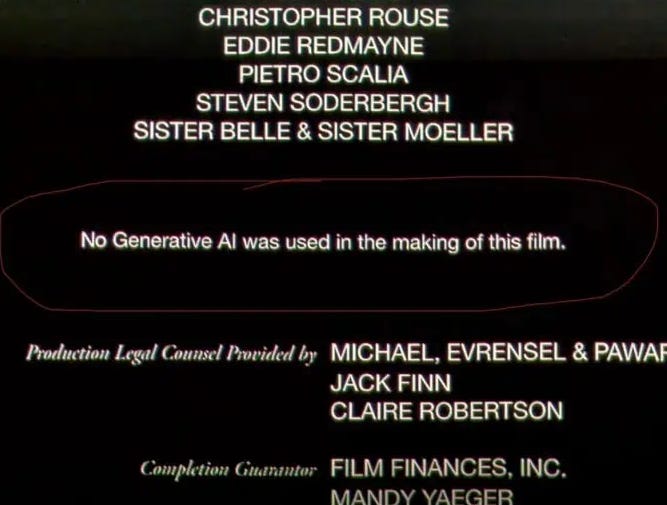
YouTube creators now open videos with disclaimers: “this was made by a human.” DuckDuckGo has leaned into an explicitly anti-AI stance in its communications, positioning itself against a homogenized, algorithmically smoothed internet. The film *Hereditary* has been labeled in certain contexts with a “human only” credit, that is, objectively, a strange thing to have to say about a piece of art. The organic sticker, once reserved for tomatoes, is now being applied to sentences.
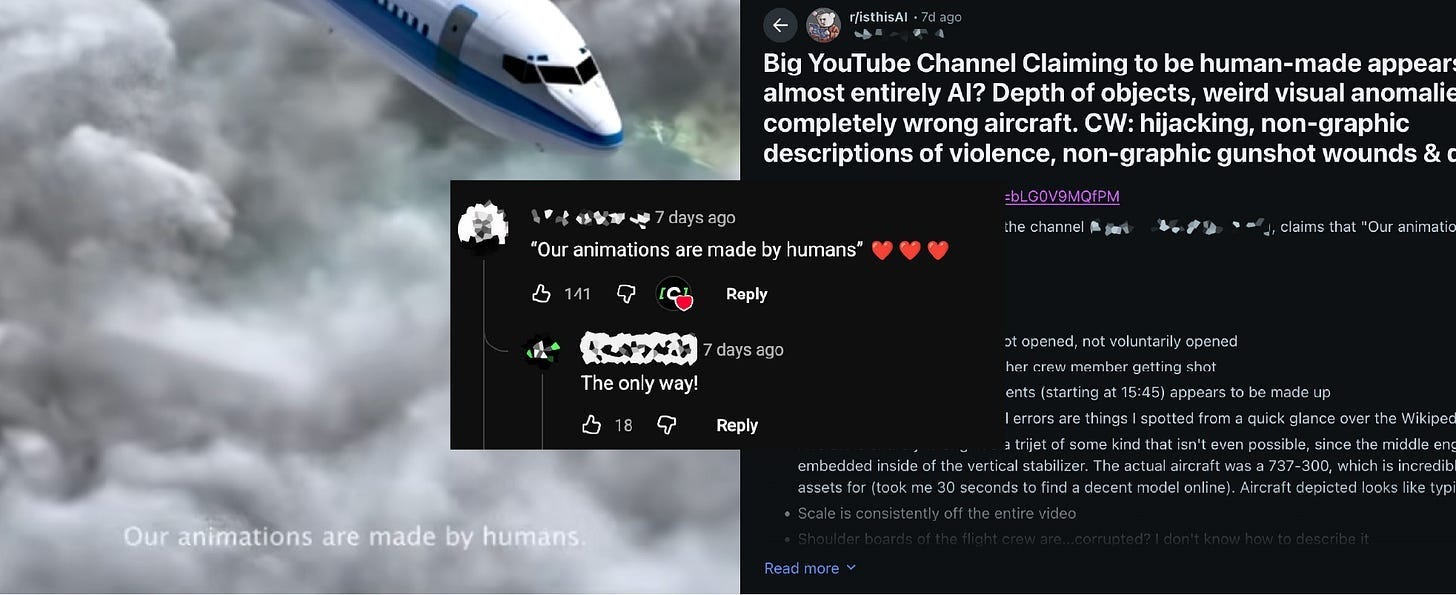
First result when googling ‘Human made YouTube’ in 12/2025: The creator advertises the ‘human-made’ label. The viewer looks for it and praises it. The suspicion that the mention may be deceitful is discussed on Reddit.
Three kinds of signal
The behaviors clustering around this anxiety are not all the same. Let’s break them down:
The first is defensive signaling:
The typos, the double hyphens, the hyper-casual register act as counter to pre-emptive accusation by performing imperfection. AI would never leave this in, therefore, the fact that it is here proves I did.
You add a double hyphen. You never did it before. It says you write like a person from “before computers” a typewriter convention that no autocorrect, no word processor, no AI would ever preserve. It carries a kind of trad-wife logic applied to typography: a nostalgic, almost aggressive retreat to the pre-digital.
The second is prestige signaling
the YouTube label, the film credit, the brand that explicitly declares its content human-made. This is about claiming a quality stamp. Human-made has become what organic, handcrafted, or small-batch once were: a marker of values, not just method. The same way Apple spent years quietly signaling that it did not sell your data as a positioning statement about what kind of company it was, above and beyond a deciding factor for most users, creators are now using “human-made” to upscale their work. There is effort here, the signal says. There is identity. Someone cared enough to do this the slow way.
The third is liability signaling
In workplaces across industries, people are quietly prefacing their AI-assisted work with disclaimers. “Just a heads up, I used NotebookLM to summarize this RFP. 🙂There may be gaps.” This is about dissociation, separating the self from the tool’s potential errors before anyone can conflate them. The implicit message is: “I am aware you can recognise the AI style, I am not hiding that I used it, and its mistakes are not mine.”
This anxiety has now moved into contracts and formal agreements. Consulting firms are opening client engagements with explicit conversations about AI use. Government RFPs increasingly contain clauses that prohibit the use of AI models for research. Legal and professional frameworks are being written, in real time, to draw lines that did not need to exist before.
Nobody is writing contract clauses about whether you can use Excel. Nobody is asking permission to use Photoshop. The fact that AI requires its own paragraph in a statement of work tells you something about the semiotic weight it carries. About how loaded the tool has become, and how much people feel the need to mark their relationship to it before anyone else can.
The CAPTCHA inversion
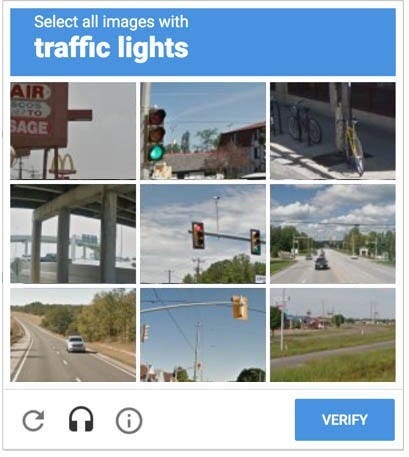
The original CAPTCHA logic was simple: machines are trying to get in, humans are the gatekeepers, we build a wall. The human was never in question. The robot had to prove it wasn’t a robot.
What we are watching now is that architecture in reverse. The human is trying to get out \-- trying to prove to an audience that they are not the machine. The burden of proof has flipped. Humans now perform humanity to access trust.
Distressed jeans and the politics of group authenticity
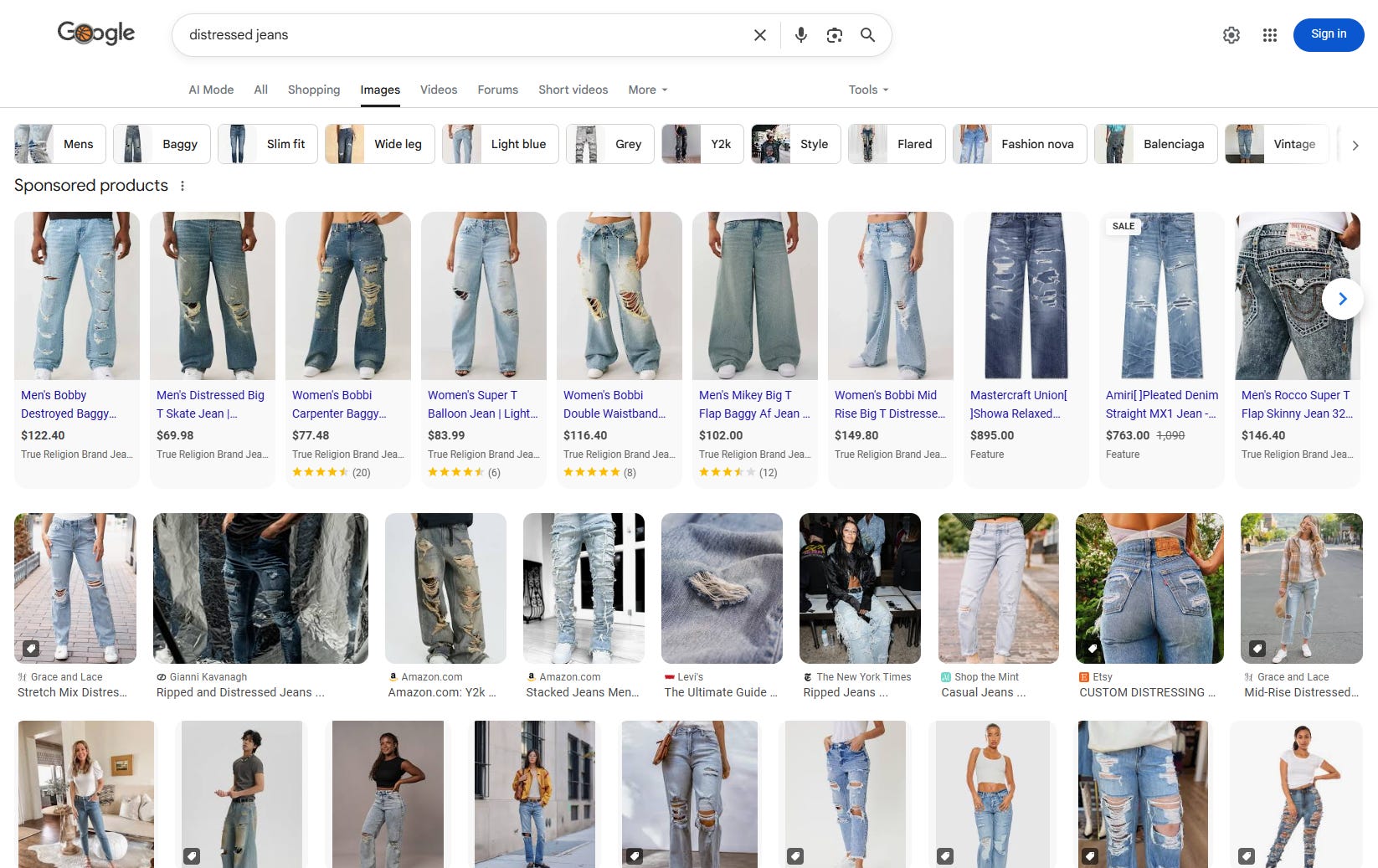
Yes, the distressed jean represents a rejection of the pristine, a performance of having lived, a manufactured version of wear that used to mean something. But it is worth noticing that distressed jeans are not a niche provocation. They are not one designer doing something transgressive in a small run. They are half the jean market. Not some radical digression. The signal is I belong to a group that values this aesthetic. The imperfection is shared. The identity being performed is tribal.
The same is true of the performative typo. Nobody is doing this alone in a vacuum. People do it specifically because it became a recognizable style, a legible register, a set of codes that a specific community understands and uses to identify itself. It is authenticity-as-membership.
The signal says: “I am not a machine” and also: “I am one of us.”
This is not about good and bad writing
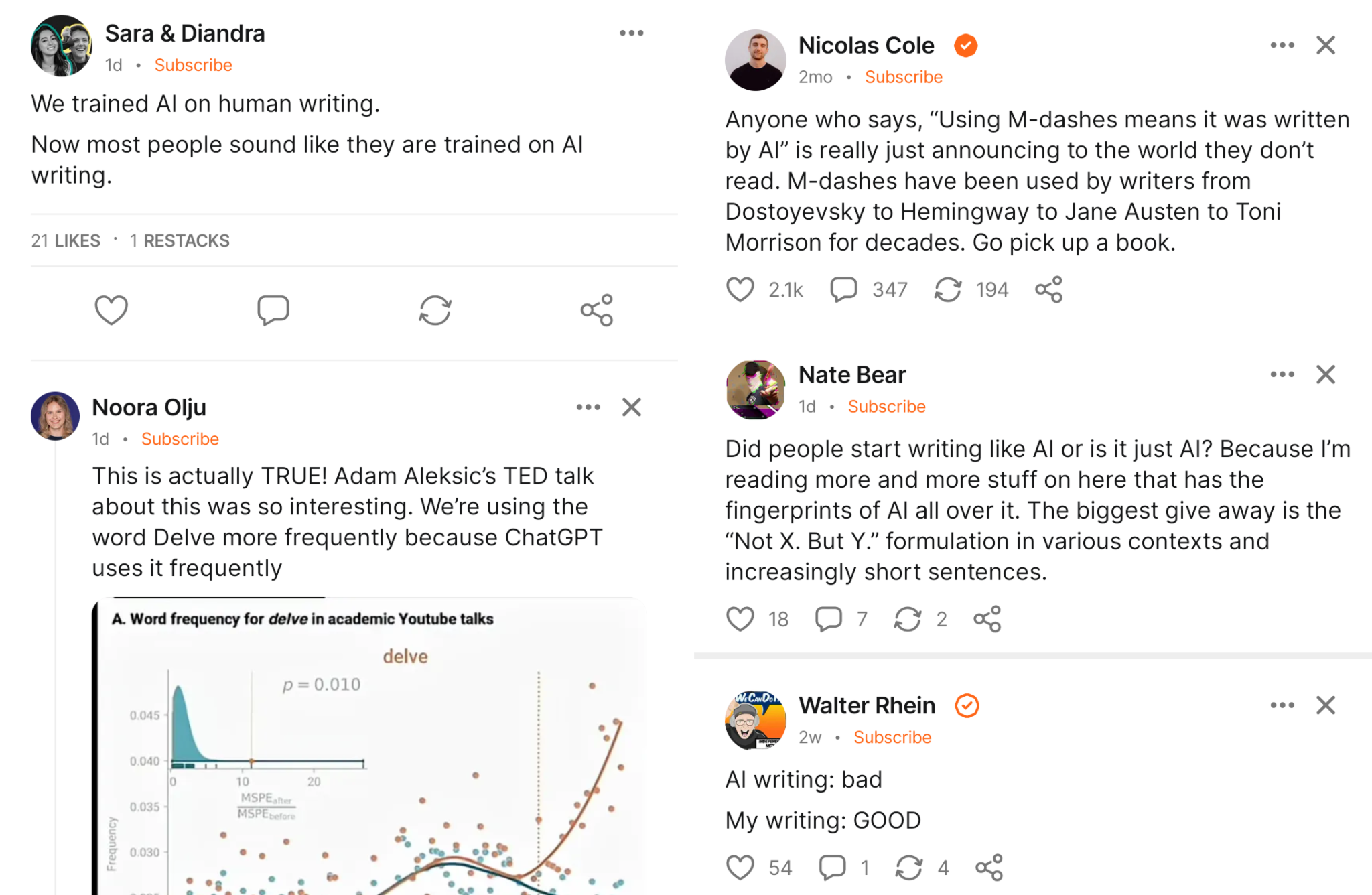
None of this is about quality. There is no universal standard of good prose that exists across time and cultures. And to believe otherwise is to misunderstand how language works.
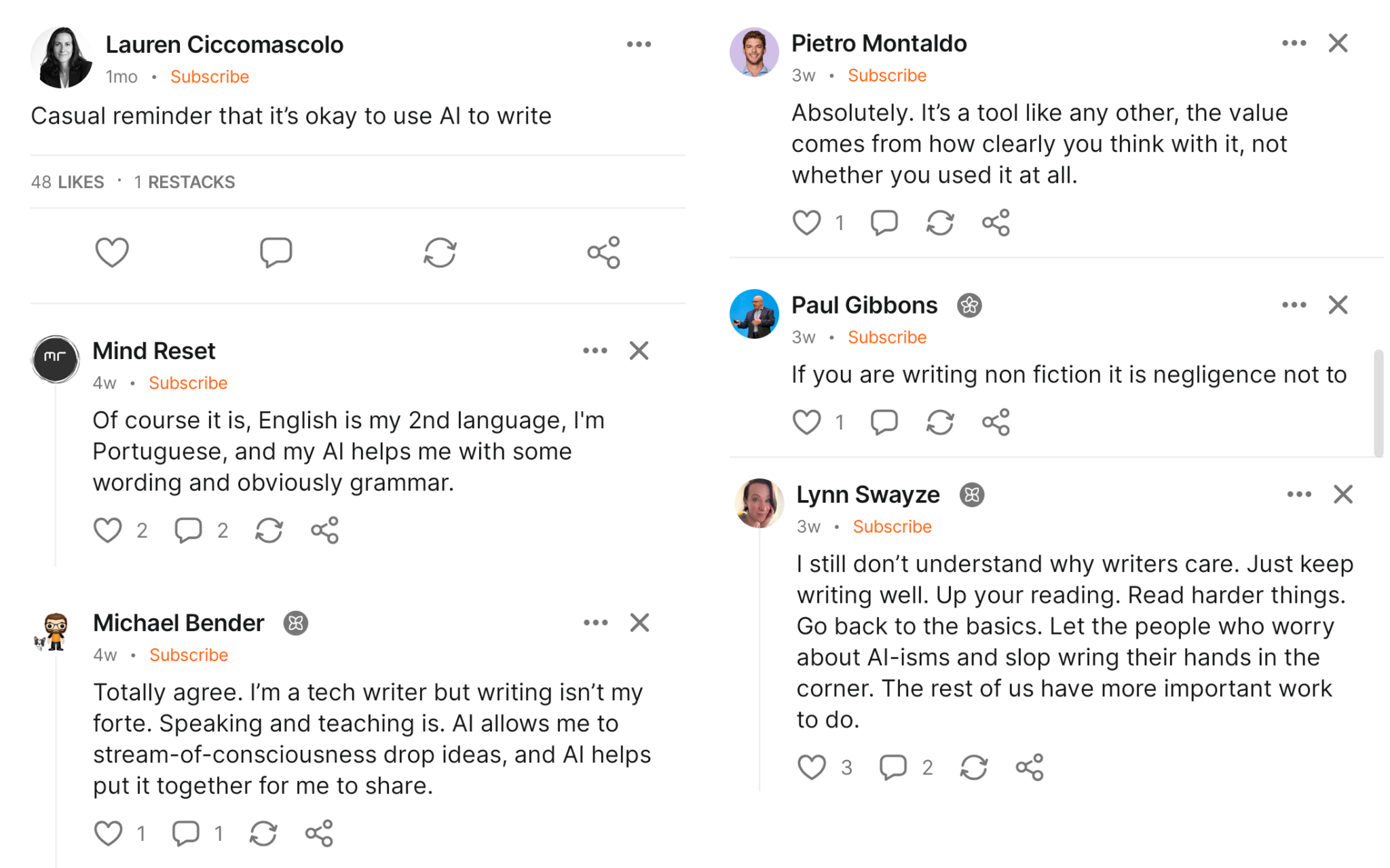
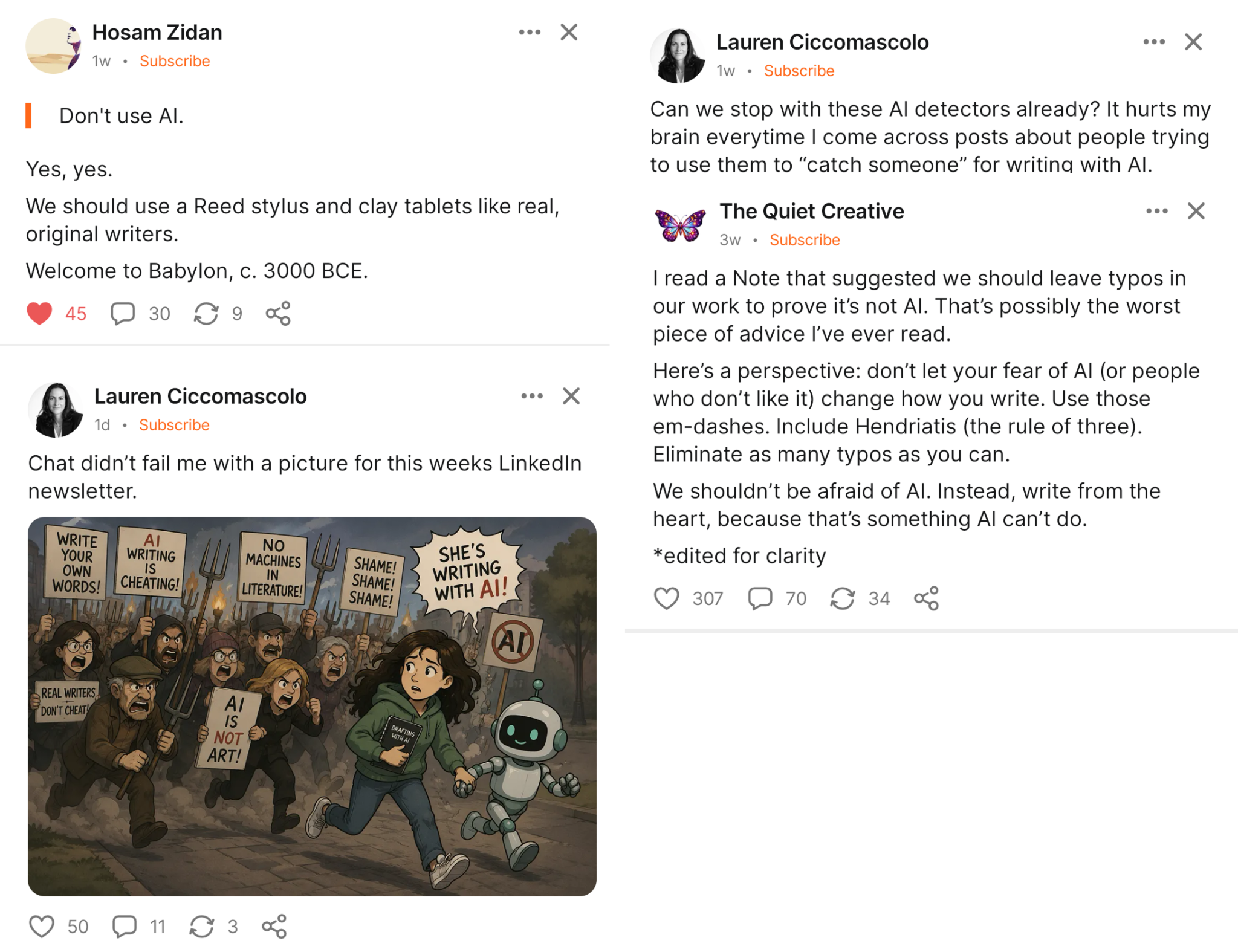
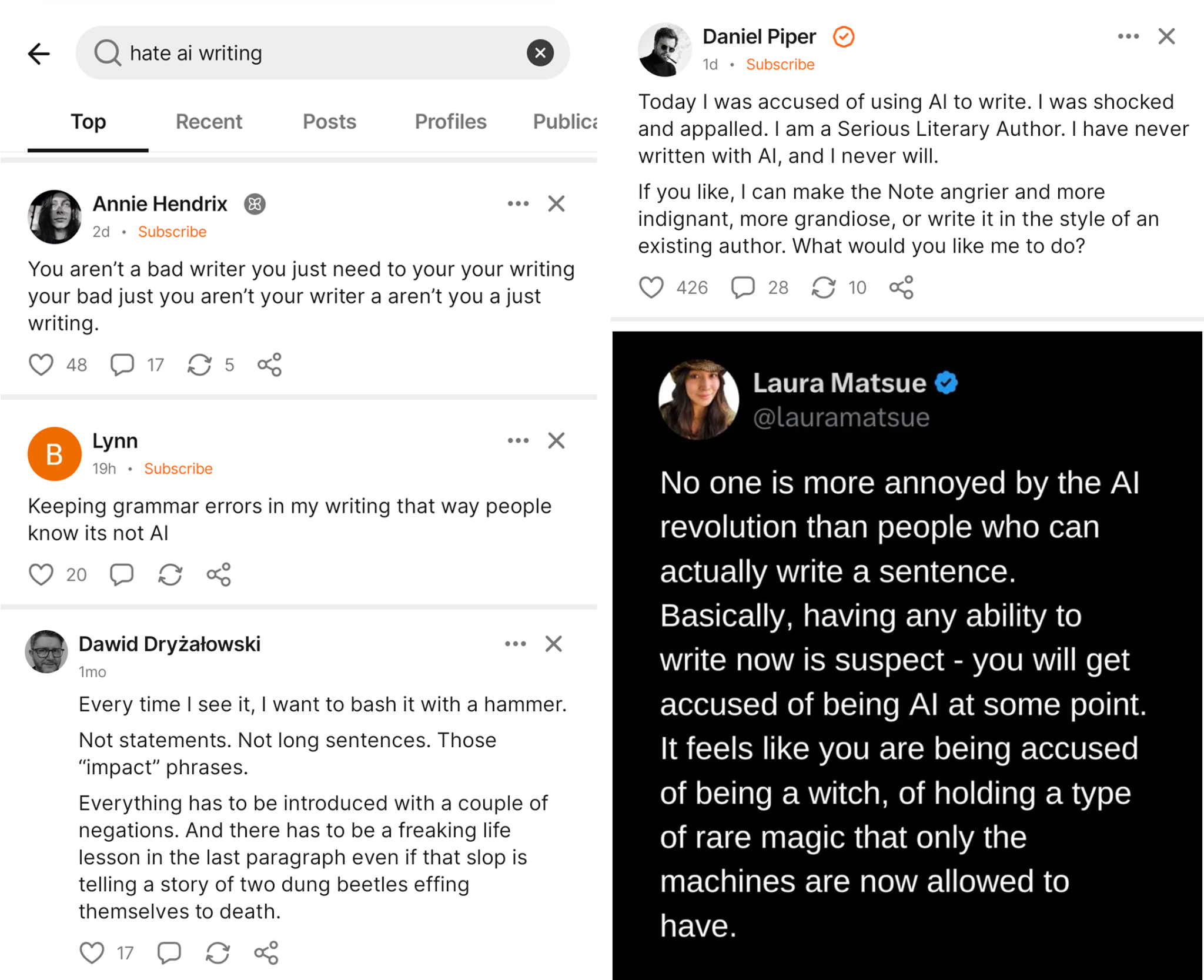
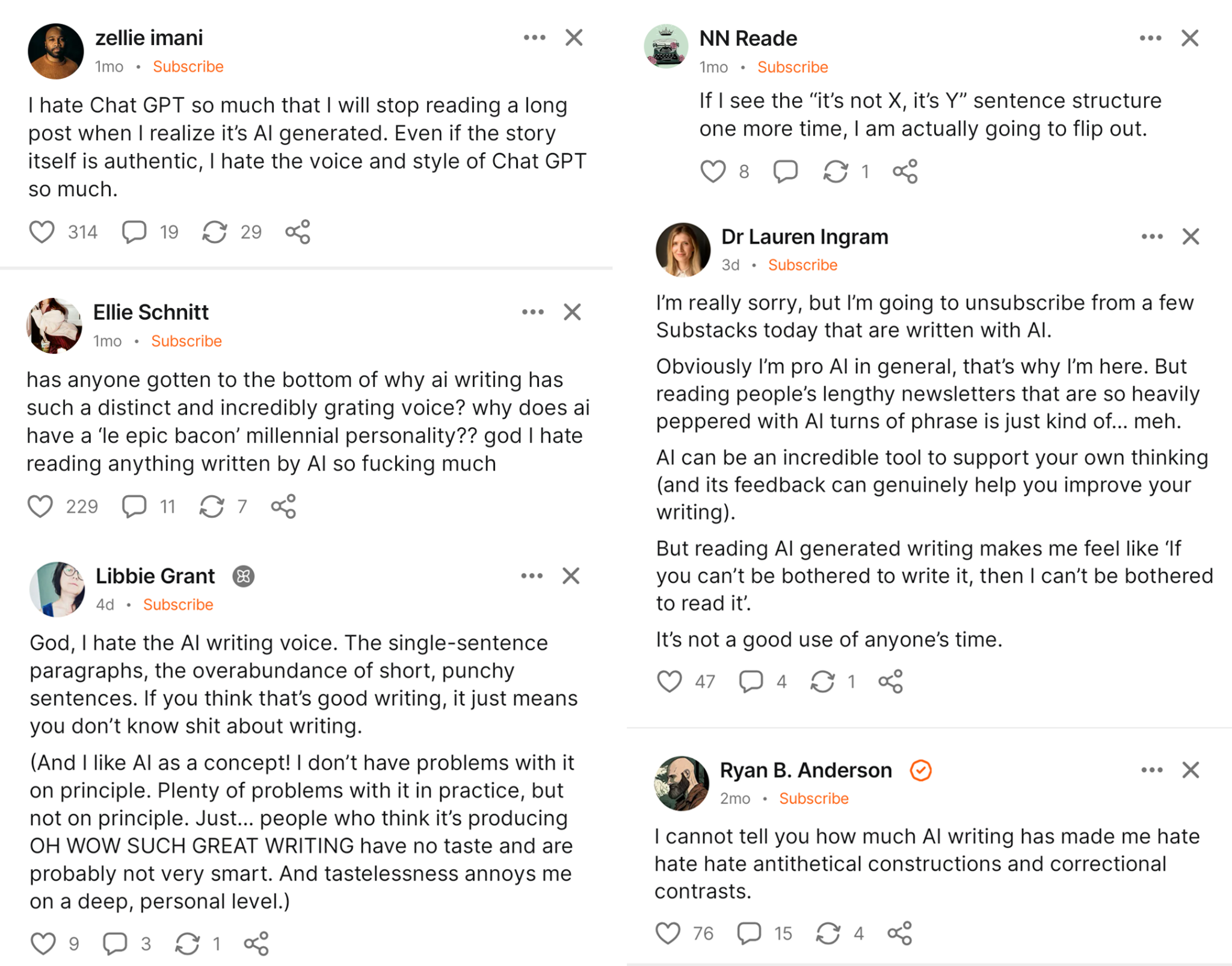
Search results for ‘AI writing’ on Substacks - June 2026
Language lives. Living languages evolve, in accent, in structure, in register, in style, because they are made by people, and people change. Dead languages, like Latin or classical Greek, are fixed precisely because they are no longer spoken. The moment a language stops evolving, it stops being alive.
What gets called linguistic degeneration is almost always just linguistic change viewed from the wrong end of the telescope. Viewed by someone who learned the previous convention and mistakes their familiarity for correctness.

The same dynamic plays out in every artistic and cultural movement.
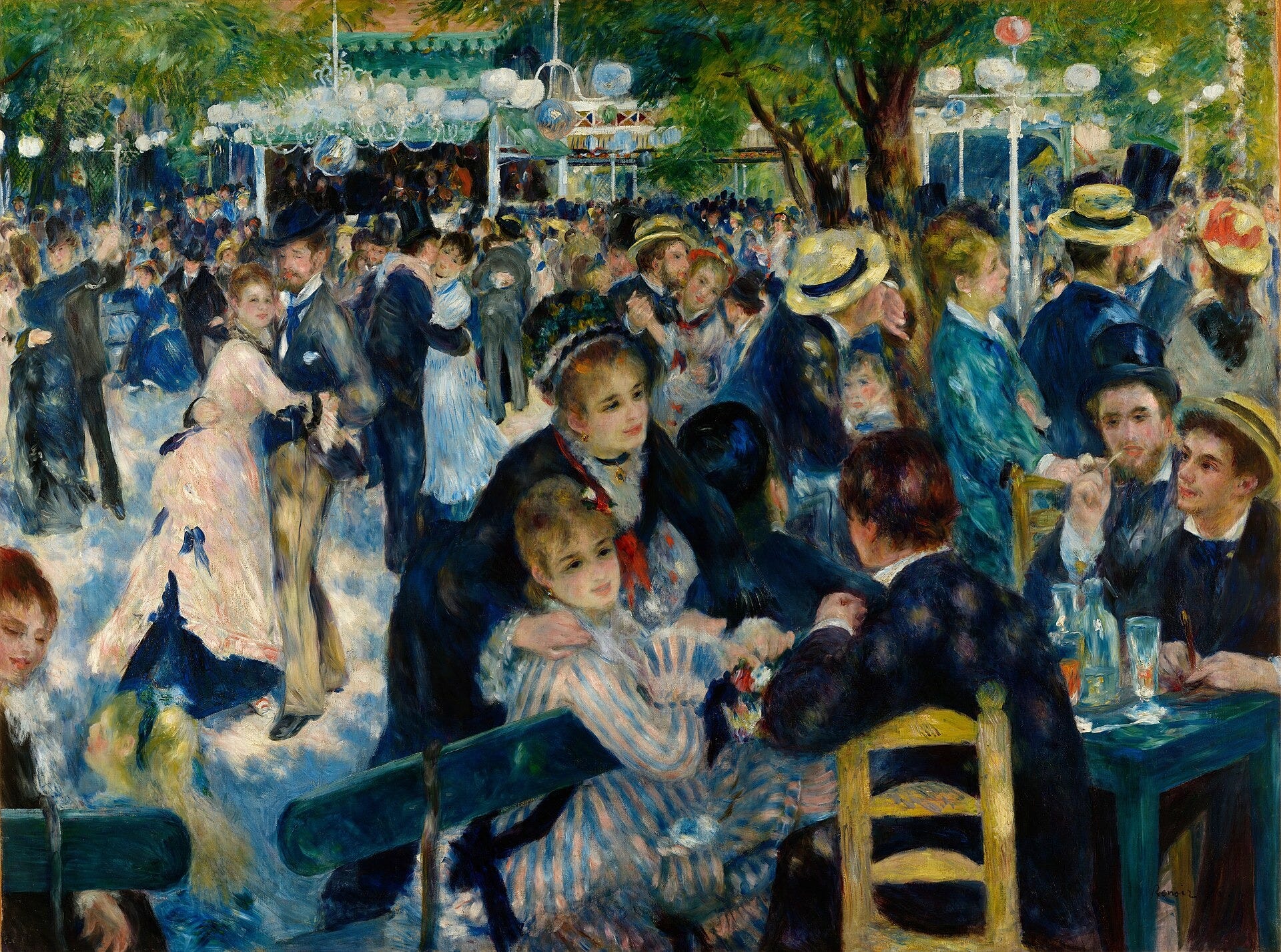
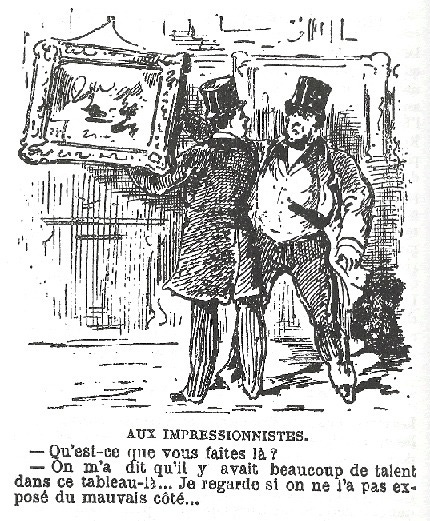
The Impressionists were named as a dismissal: critics used the word “impressionist” to mock what they saw as unfinished, sloppy, insufficiently realist work. The Fauves were named after the French word for wild beast. Again, an insult, meant to mock the rawness and color of their painting. Both groups took the name and wore it. They understood that the reaction against them was, in itself, evidence that something real was happening. The new register always looks wrong to the people fluent in the old one.
It is not a coincidence that Impressionism emerged in direct response to a technical shift: the invention of photography. Once a machine could produce a perfect likeness, the human claim to value had to find new ground: feeling, movement, light, subjectivity. The aesthetic moved precisely because the technology forced it to.
We are in a structurally identical moment. And the hyper-casual, typo-laden, double-hyphen style of writing is a new movement, finding its name.
“Mohsen Askari argues in AI Magazine that we need to abandon the notion that authorship is defined by the absence of tools -- seeing AI as part of a continuum from the pen to the typewriter to the reference manager. The sharpest part of his piece is the analogy to photography in France in 1839. Painter Paul Delaroche famously declared: ‘From today, painting is dead!’ The camera’s ability to mechanically capture the world posed an existential threat to painting not unlike our response to AI.”
— Robert Diab, Authorship After AI, citing Mohsen Askari in AI Magazine (2025) — robertdiab.substack.com
The homogenization that made this necessary
We are living through a period of radical aesthetic homogenization. Every major city has the same Zara, the same H&M, the same Starbucks on the corner. Logos that once had personality have been redesigned into the same clean, linear sans-serif font. Safe, legible, frictionless, indistinguishable. Social media and globalization have flattened regional and cultural differences into a single set of dominant trends. People are getting the same surgeries, referencing the same beauty codes, inhabiting the same aesthetic vocabulary regardless of where they live.
It didn’t start with AI. The extension of homogenization into the last territory that felt private: language. Your particular way of saying a thing. The weird aside, the idiosyncratic comma placement, the half-thought you left in because it was true even if it wasn’t finished. The last refuge of the self.

And so the reaction -- the typos, the stamps, the disclaimers -- is not really about AI at all. It becomes about identity. About the threat of erasure that was already underway, and the need to leave a mark that is irreducibly yours. Not toward perfection. Toward pointed, specific, unmistakable imperfection.
The paradox waiting
The moment performative imperfection becomes a style guide, it stops being imperfection. The double hyphen becomes a convention. The casual aside becomes a template. The artisanal typo gets optimized. And then we are exactly back where we started: performing authenticity through a new set of legible codes, which will themselves eventually be read as hollow, contaminated, untrustworthy.
NA: AI-assisted tools were used for transcription, reference formatting, and language editing. All intellectual content and conclusions remain solely the author’s.